What is the signal output of a capacitive level meter?
Leave a message

As a reputable supplier of Capacitive Level Meters, I'm often asked about the signal output of these devices. Capacitive level meters are widely used in various industries for measuring the level of liquids, solids, and slurries. Understanding their signal output is crucial for proper installation, operation, and integration into control systems.
Basics of Capacitive Level Meters
Capacitive level meters operate based on the principle of capacitance. Capacitance is the ability of a system to store an electric charge. In a capacitive level meter, the capacitance between a sensing electrode and a reference electrode (or the container wall) changes as the level of the material being measured changes. This change in capacitance is then converted into an electrical signal.
The basic components of a capacitive level meter include a sensing probe, an electronic circuit, and an output interface. The sensing probe is inserted into the container holding the material, and it interacts with the material to cause a change in capacitance. The electronic circuit measures this change and processes it to generate an output signal.
Types of Signal Outputs
There are several types of signal outputs commonly used in capacitive level meters:
Analog Output
- 4 - 20 mA Current Loop: This is one of the most popular analog output signals in industrial applications. The 4 - 20 mA current loop provides a linear relationship between the measured level and the output current. A current of 4 mA typically represents the minimum level (e.g., empty tank), while 20 mA represents the maximum level (e.g., full tank). The advantage of the 4 - 20 mA current loop is its immunity to electrical noise and its ability to transmit signals over long distances. For example, in a chemical processing plant, a capacitive level meter with a 4 - 20 mA output can accurately measure the level of corrosive liquids in a storage tank and send the signal to a control room located far away.
- 0 - 10 V Voltage Output: Some capacitive level meters offer a 0 - 10 V voltage output. Similar to the 4 - 20 mA output, the voltage is proportional to the measured level. However, voltage outputs are more susceptible to electrical noise and have a limited transmission distance compared to current loops. They are often used in applications where the distance between the level meter and the control system is relatively short, such as in small-scale laboratory setups.
Digital Output
- Relay Output: A relay output is a simple on - off signal that can be used to indicate a specific level condition, such as high level or low level. When the measured level reaches a pre - set threshold, the relay contacts close or open, depending on the configuration. Relay outputs are commonly used for level alarms or for controlling pumps and valves. For instance, in a water storage tank, a capacitive level meter with a relay output can be set to turn on a pump when the water level drops below a certain level and turn it off when the tank is full.
- Modbus Communication: Modbus is a widely used serial communication protocol in industrial automation. Capacitive level meters with Modbus output can communicate with other devices, such as programmable logic controllers (PLCs) and human - machine interfaces (HMIs), over a serial bus. This allows for more advanced data transfer, including real - time level measurements, diagnostic information, and configuration settings. For example, in a large - scale industrial plant, multiple capacitive level meters can be connected to a central PLC using Modbus communication, enabling centralized monitoring and control of all the level measurement points.
Factors Affecting Signal Output
Several factors can affect the signal output of a capacitive level meter:
Material Properties
- Dielectric Constant: The dielectric constant of the material being measured has a significant impact on the capacitance and, therefore, the signal output. Different materials have different dielectric constants, and the level meter needs to be calibrated accordingly. For example, water has a relatively high dielectric constant, while some oils have a lower dielectric constant. A capacitive level meter calibrated for water may not provide accurate measurements for oil unless it is re - calibrated.
- Conductivity: Conductive materials can also affect the signal output. In some cases, conductive liquids can cause electrical interference, which may require special grounding and shielding techniques to ensure accurate measurements.
Environmental Conditions
- Temperature: Temperature changes can cause the expansion or contraction of the sensing probe and the material being measured, which can affect the capacitance and the signal output. Most modern capacitive level meters are equipped with temperature compensation circuits to minimize the impact of temperature variations.
- Humidity: High humidity levels can cause moisture to accumulate on the sensing probe, which can change the capacitance and lead to inaccurate measurements. In such environments, the level meter may need to be protected with a moisture - resistant coating or enclosure.
Applications and Signal Output Requirements
The choice of signal output depends on the specific application requirements:
Industrial Process Control
In industrial process control applications, such as chemical manufacturing, food and beverage production, and oil and gas refining, accurate and reliable level measurement is essential. Analog outputs like 4 - 20 mA are commonly used because they can be easily integrated into existing control systems. For example, in a chemical reactor, a capacitive level meter with a 4 - 20 mA output can provide continuous level information to a PLC, which can then adjust the flow of raw materials and control the reaction process.
Safety and Alarm Systems
In safety - critical applications, such as overflow prevention and leak detection, digital outputs like relay contacts are often used. A relay output can be connected to an alarm system or a safety valve to trigger an immediate response when a dangerous level condition is detected. For instance, in a fuel storage tank, a capacitive level meter with a relay output can be set to activate an alarm and close a shut - off valve if the fuel level exceeds the maximum safe level.
Remote Monitoring
For remote monitoring applications, digital communication protocols like Modbus are preferred. With Modbus, the level data can be transmitted over a long - distance network to a central monitoring station. This is particularly useful in applications where multiple level measurement points are spread over a large area, such as in a water treatment plant with multiple storage tanks located at different sites.
Our Product Offerings
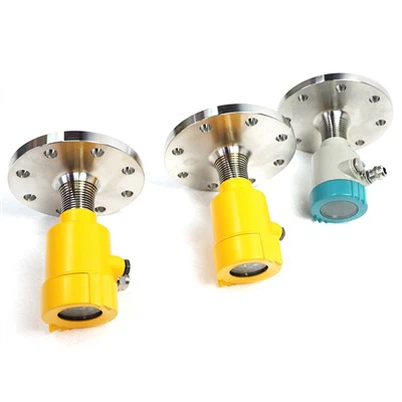
As a leading supplier of Capacitive Level Meters, we offer a wide range of products with different signal output options to meet the diverse needs of our customers. Our Industrial Capacitive anti - corrosion liquid level transmitter is designed for measuring the level of corrosive liquids in harsh industrial environments. It features a 4 - 20 mA analog output for accurate and reliable level measurement.
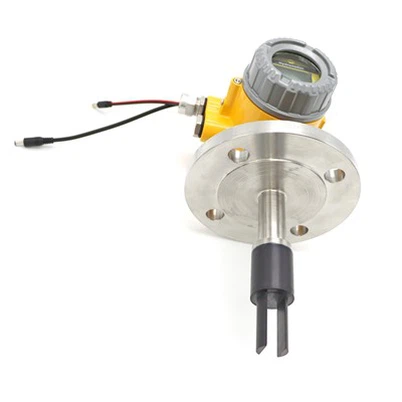
Our Level switch capacitance is an ideal choice for simple level detection applications. It provides a relay output to indicate high or low level conditions, making it easy to integrate into existing control systems.
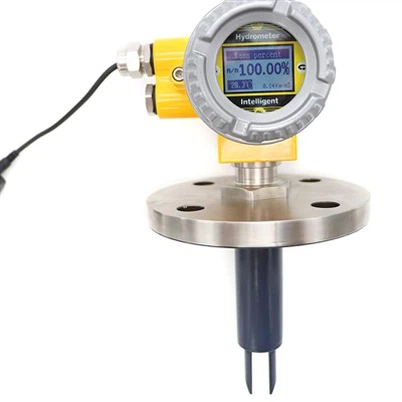
For more advanced applications, our RF level switch offers Modbus communication, allowing for real - time data transfer and remote monitoring.
Conclusion
The signal output of a capacitive level meter is a critical aspect that determines its functionality and compatibility with different applications. Whether you need an analog output for continuous level measurement, a digital output for level alarms, or a communication protocol for remote monitoring, there is a capacitive level meter solution available. As a supplier, we are committed to providing high - quality products with reliable signal outputs to help our customers achieve accurate and efficient level measurement in their operations.
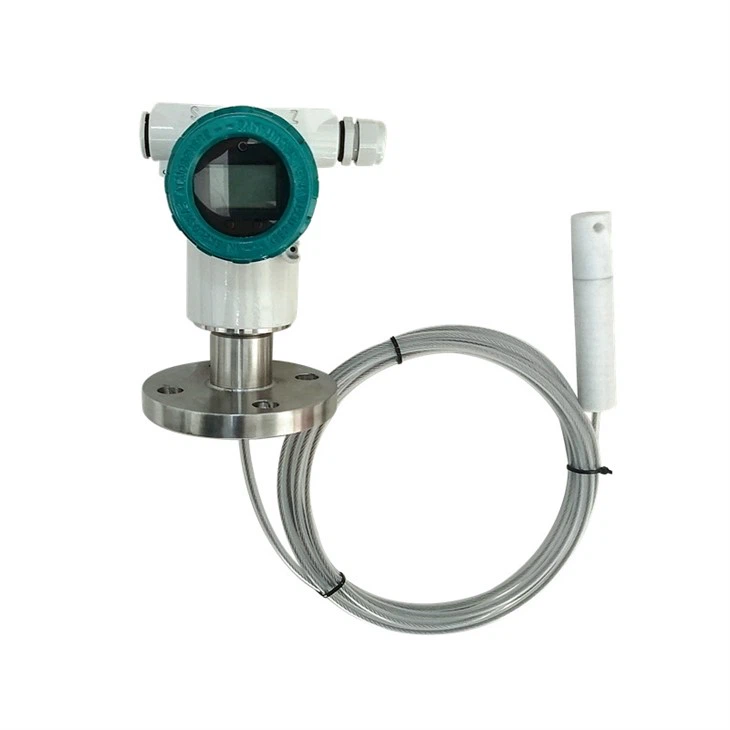

If you are interested in our Capacitive Level Meters or have any questions about signal output or other technical aspects, please feel free to contact us for a detailed discussion and to explore the best solutions for your specific needs. We look forward to the opportunity to work with you and contribute to the success of your projects.
References
- "Capacitive Level Measurement Technology" - A technical guide by an industry expert.
- "Industrial Instrumentation Handbook" - A comprehensive reference book on industrial measurement and control.