
Your Leading Interface Meter Supplier
Shandong Aipuxin Automation Instrument Co., Ltd. was established in 2012 and is a professional enterprise engaged in the development, design, and production of intelligent automation sensor products. The tuning fork-type interface meter is an advanced instrument that combines tuning fork technology and intelligent signal processing technology. It is mainly used for accurate measurement and control of material or liquid levels. The product is suitable for process measurement in automated production in industries such as petroleum, chemical, energy, metallurgy, environmental protection, medicine, food, hydrology, etc.
Why Choose Us?
Broad Market
Shandong Aipuxin Automation Instrument Co., Ltd.'s products are mainly for dealers and end users in Europe, America, Southeast Asia, and other regions.
Accept ODM
Aipuxin's products are rapidly innovating and upgrading, and can be customized according to different customer needs to meet their ideal user experience.
Complete Qualifications
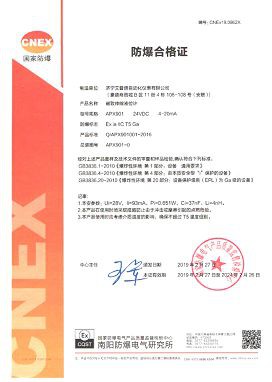
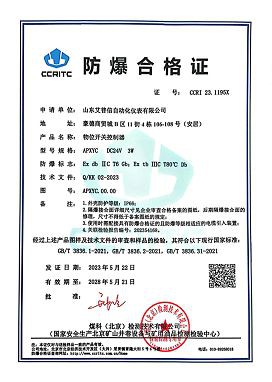
The company has obtained ISO 9001 quality management system certification, product explosion-proof certification, SIL certification and CE certification. We also have a number of patent certificates that recognize our innovative and market-leading products.
Advanced Equipment
Our company has more than 50 professional production equipment, which covers all production links from raw material processing to finished product assembly, which can meet the production needs of various complex products.
Types of Interface Meter
Oil-Water Interface Meters
These meters are designed to detect the interface between oil and water layers, commonly used in monitoring wells and tanks.
Hydrocarbon Detection Meters
Some interface meters are equipped to detect the presence of hydrocarbons, emitting an alarm when hydrocarbons are sensed.

|
Name |
Tuning fork densitometer |
|
Function |
Test Density |
|
Measuring medium |
Various liquids and slurries |
|
Application |
Density Measurement |
|
Measurement range |
0-2.5 g /cc (0-2500 kg/m3) |
|
MOQ |
1 Set |
|
Measurement accuracy |
soil 0. 002 g /cc (soil 2 kg/m3) |
|
Temperature range |
-50 c ~+150 c |
|
Fluid viscosity range |
0-2000 cP |
|
Liquid receiving material |
316 stainless steel |
Features of Interface Meter
Sensor accuracy to 1.0 mm or 1/200 ft.
>>
Certified intrinsically safe.
>>
16 mm (5/8") diameter probe.
>>
Easy access 9V battery.
>>
Automatic shut off after 5 minutes.
>>
Replacement tapes are interchangeable with other Meters.
Customizable
Material
316 stainless steel.
Dimension
Vibrating type.
Warranty
1 years.
Usage Requirements of Interface Meter

Grounding: Always ground the meter by attaching the grounding clip to a metal well casing or a suitable ground rod for safety and to protect the electronics.
Probe Cleaning: Clean and dry the probe after each use to prevent contamination and ensure accurate readings.
Tape Rewinding: Always rewind the tape onto the reel after use to prevent damage and ensure proper storage.
Avoid Sharp Edges: Avoid sharp-edged borehole casings to prevent damage to the tape.
Avoid Entanglement: Do not use the unit as a guide for backfilling boreholes, as the probe and tape may get locked in the backfill.
Battery Check: Check the battery condition before measurements and replace if necessary.
Turn Off: Make sure the meter is turned off before storage.
Storage: If storing for longer than two months, remove the 9V alkaline battery to avoid potential leakage.
Tape Splices: Do not splice the tape to maintain Intrinsic Safety Certifications.
Tape Guide: Where possible, use a tape guide to protect the tape from scraping on well casing.
Usage of Interface Meter
Liquid Level Detection: Tuning fork sensors find extensive use in monitoring and controlling liquid levels in tanks, reservoirs, and pipelines. These sensors offer exceptional accuracy and reliability, making them ideal for critical applications such as fuel storage, chemical processing, and water treatment. Whether it's detecting the level of corrosive chemicals or preventing overflows in storage tanks, tuning fork sensors provide real-time data to ensure efficient operations and prevent potential hazards.
Slurry and Sludge Monitoring: In industries that deal with slurry and sludge, such as mining and wastewater treatment, monitoring the concentration and settling behavior of these materials is crucial. Tuning fork sensors, with their ability to withstand abrasive and viscous media, offer an optimal solution for these applications. By continuously measuring the level and density of slurry or sludge, these sensors enable operators to maintain optimal process control, preventing blockages, optimizing mixing, and ensuring efficient dewatering.
Solid Material Detection: Many industries, including pharmaceuticals, food processing, and mining, rely on accurate detection of solid materials to ensure product quality and prevent process disruptions. Tuning fork sensors, equipped with appropriate probe designs, can reliably detect the presence or absence of granular solids, powders, and bulk materials. This enables seamless automation, preventing equipment damage, minimizing product losses, and enhancing overall productivity.
Interface Detection: In applications where two immiscible liquids or materials with different densities are present, the precise detection of the interface between them is crucial. Tuning fork sensors excel in such scenarios by monitoring the change in vibration frequency when the fork passes through different mediums. This capability makes them an excellent tool for interface detection in oil-water separation, emulsion breaking, and liquid-liquid extraction processes, ensuring efficient separation and quality control.
Bubble Detection: The presence of air bubbles in various fluid systems can cause significant disruption, leading to inaccuracies in measurements, reduced efficiency, and even equipment damage. Tuning fork sensors, with their high sensitivity and response time, can accurately detect the presence and characteristics of bubbles in liquids, gases, and multiphase flow systems. This enables operators to take prompt corrective actions, such as purging or adjusting process parameters, to ensure smooth and uninterrupted operations.
|
Selling Units |
Single item |
|
Single package size |
55X25X25 cm |
|
Single gross weight |
5.500 kg |
Certificate




FAQ
Shandong Aipuxin Automation Instrument Co., Ltd. is one of the most professional interface meter manufacturers and suppliers in China, specialized in providing high quality customized service. We warmly welcome you to wholesale cheap interface meter in stock here from our factory. For price consultation, contact us.