

AIPUXin: Your Professional In-line Density Meter Supplier!
Shandong AIPUXin Automation Instrument Co., Ltd. specializes in the development, design, and production of intelligent automation sensors. As market demands change, our company has developed RF capacitive liquid level switches, magnetostrictive liquid level transmitters, RF capacitive liquid level transmitters, microwave material level switches, radar liquid level transmitters, tuning fork density meter series products, etc. We have been working hard to create first-class products and become a first-class enterprise.
Our Advantages
Professional Production Equipment
Our modern factory is equipped with advanced CNC lathes, Mounters, oscilloscopes, sandblasting machines, argon arc welding machines, Ammeter, computer wire stripping machines, high-temperature test boxes, etc.
Continuous Product Innovation
Our company continues to innovate products, has more than 200 products, and has obtained more than 80 patents. CE certification, ISO9001, SIL certificates, etc., which enhance the credibility of our products and improve their competitiveness.
Strict Quality Inspection
Our R&D, design, and production strictly comply with international standards, and each process has strict operating procedures. More than 30 sets of testing and processing equipment help ensure product quality.
24-Hour Service System
The professional service team can quickly solve the problems users encounter and also provide customers with lifelong technical services. Video tracking services and emails make it easy for us to communicate with our customers on the fly.
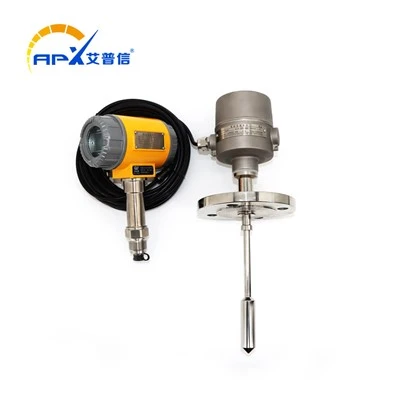


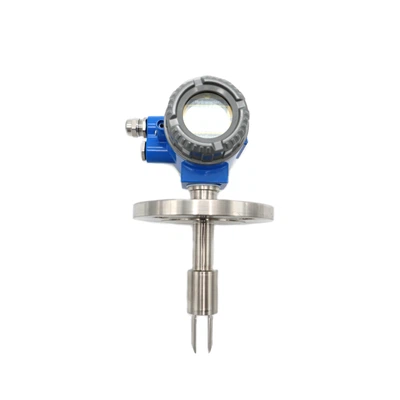


An in-line density meter, also known as a density sensor or densitometer, is a device used to measure the density of a fluid or substance in real-time as it flows through a pipeline or process line. It provides continuous monitoring and feedback on the density of the material being measured without the need for manual sampling.
Types of Density Meters
Tuning Fork Density Meter
The sensor is designed according to the principle of vibration. This vibrating element resembles a two-toothed tuning fork. The fork is vibrated by a piezoelectric crystal located at the root of the tooth. The frequency of the vibration is detected by another piezoelectric crystal. Through phase shifting and amplification circuits. The fork is stabilized at the natural resonant frequency. The liquid flowing through the fork causes the vibration to change. This change in vibration alters the resonant frequency. The electronic processing unit calculates the accurate density value. The density meter is not ideal for measuring crystallization and fouling media. This is mainly used to detect interfaces in pipelines and control concentrations in various industries. It is also used to refine sugar and detect the density of stirred mixtures.
Typical Application:
Petrochemical industry, food and wine industry, pharmaceutical industry, organic and inorganic chemical industry, and mineral processing (such as clay, carbonate, silicate, etc.).
Online Density Meter
The measuring tube vibrates continuously at a certain resonant frequency—the vibration frequency changes with the density of the fluid. Therefore, the resonant frequency is a function of the fluid density. The density of the fluid can be accurately obtained by measuring the resonant frequency. The density measurement can also directly measure the fluid’s mass flow rate in the closed pipeline. This is done using the principle of Coriolis force. The mass flowmeter can measure mass flow, density, and temperature at the same time. Moreover, the measurement accuracy is high and the operation is stable. Therefore, it is widely used in the flow and density detection and control of the production process in the petrochemical field.
Typical application:
This device has many uses. In the petrochemical industry, it can detect oil levels and interfaces. In the food industry, it can be used for processing grape juice, tomato juice, and more. It also has applications in the dairy and paper industries. Additionally, it can test various chemical substances. It can also be used in mining brine, potash, natural gas, lubricating oil, biopharmaceutical, and other industries.
Differential Pressure Density Meter
The differential pressure density meter is the gravity difference △P=ρgh generated by the liquid column. When h remains constant, the differential pressure value measured by the transmitter is divided by gravity and length to find the density. The differential pressure density meter is a simple, practical, and cost-effective product.
Typical Application:
The sugar industry and the winemaking industry both produce different types of liquids. These liquids include fruit juice, syrup, and grape juice. They also produce alcohol with different strengths, such as ethane and ethanol.
Radioactive Isotope Density Meter
The instrument of the radioisotope density meter is equipped with a radioisotope radiation source. The radiation detector detects the radioactive radiation, like gamma rays. It receives the radiation after passing through the measured medium. When the thickness of the medium is constant, the attenuation of rays is only a function of the material density of the medium. The density value can be obtained through the calculation inside the meter. The radioactive densitometer can measure the material’s density and other parameters inside the container. It doesn’t need to touch the object being detected. This is especially useful in harsh conditions like high temperature, high pressure, corrosion, and toxicity.
Typical Application:
This device is commonly used in various industries like petrochemical, steel, and mining. It measures the density of liquids, solids, and substances like coal powder and cement slurry. This device is good for online use in industrial and mining companies. It is especially useful for measuring density in tough, hard, corrosive, hot, and high-pressure conditions.
Ultrasonic Density (Concentration) Meter
Ultrasonic density (concentration) meter is based on the transmission speed of ultrasonic waves in liquid to measure the density of liquid. Theory and experiments have shown that the speed of ultrasonic waves in a liquid depends on its concentration and temperature. Changing the concentration of the liquid will cause the speed of the waves to change as well. The speed of ultrasonic waves in liquid depends on its elasticity and density. Therefore, changes in the transmission speed at a specific temperature indicate changes in concentration or density. In this way, when the ultrasonic sensing unit of the meter gives an ultrasonic signal and measures its transmission speed in the process liquid and the current temperature of the liquid, the meter can accurately calculate the concentration, temperature, speed and other related data. Ultrasonic testing is not affected by the color, dirtiness, or flow of the medium.
Typical Applications:
Industries such as chemical, petrochemical, textile, semiconductor, steel, food, beverage, pharmaceutical, winery, paper, and environmental protection.
Advantages of In-line Density Meter
Quality Control
In-line density meters play a crucial role in quality control by providing accurate and reliable density measurements on a continuous basis. They help detect any deviations in density that may indicate variations in product composition, consistency, or purity. This allows for early detection of quality issues, reducing the risk of defective products or costly rework.
Process Efficiency and Cost Savings
In-line density meters contribute to process efficiency and cost savings by reducing material waste and optimizing resource utilization. By accurately monitoring density, operators can adjust process parameters to minimize material usage, ensure proper ingredient ratios, and prevent overuse or underuse of costly raw materials.
Integration with Process Control Systems
In-line density meters can be integrated into process control systems, enabling automated control and adjustment based on real-time density data. This integration allows for seamless integration with other process parameters, such as flow rate, temperature, and pressure, facilitating comprehensive process control and optimization.
Real-time Measurement
One of the significant advantages of an in-line density meter is that it provides real-time density measurement within the process line. This allows for immediate monitoring and control of density variations, ensuring consistent product quality and process efficiency.
Process Optimization
By continuously measuring the density of a flowing substance, an in-line density meter enables process optimization. It helps identify variations or deviations in density, allowing operators to make necessary adjustments to maintain optimal process conditions and ensure accurate dosing, mixing, or blending of materials.
Process Safety
In some applications, density measurement is essential for ensuring process safety. An in-line density meter can detect abnormal density levels that may indicate the presence of impurities, contaminants, or hazardous conditions. Early identification of such anomalies allows for timely intervention and mitigates potential safety risks.
Application of In-line Density Meter

Petrochemicals
Oil and gas are like the bloodlines of our modern world, powering everything from cars to factories. But refining them is a delicate task. That’s where density measurement comes in. It helps ensure that the oil is processed just right, not too thick or too thin, making sure our engines run smoothly and safely.

Pharmaceuticals
Medicines are a blend of various ingredients, and getting their mix right is crucial. It’s not just about effectiveness but also safety. Density meters help drug makers ensure that each pill or syrup is properly mixed, delivering the right dose and benefits without any issues.

Food & Beverage
Ever noticed how every bottle of your favorite soda tastes the same? That’s thanks to density measurement. It makes sure each batch has the right mix, keeping the taste consistent. Plus, it’s crucial for safety, ensuring our drinks and foods are free from unwanted residues or harmful substances.

Wastewater Treatment
Clean water is vital for our communities and environment. In wastewater treatment plants, water from homes and industries is purified before it’s sent back to nature or reused. Density measurement plays a vital role here. Think of it as a guardian that checks the water’s cleanliness level. By measuring density, plants can determine if there are any unwanted particles or residues left. It helps ensure that the treated water is not too thick with pollutants. With the right density, the water is safe and clear, safeguarding both our environment and health.
Oscillation
The principle of oscillation is frequently used in density meters for liquids. These meters measure the frequency or amplitude of oscillation of a sensing element immersed in the liquid. The frequency or amplitude changes in proportion to the density of the liquid, allowing for density measurement.
Hydrostatic Weighing
The hydrostatic weighing principle is based on Archimedes’ principle. Density meters that use this principle measure the weight of the liquid displaced by an object submerged in the liquid. By comparing the weight of the liquid displaced to the weight of the object, the density of the liquid can be calculated.
Resonance
Some density meters for liquids operate based on the principle of resonance. These meters induce vibrations in a sensing element submerged in the liquid. The resonant frequency of the element is influenced by the density of the liquid, and by measuring the frequency, the density can be determined.
Coriolis Effect
The Coriolis effect is utilized in certain density meters for liquids. These meters use a vibrating tube that contains the liquid sample. The motion of the liquid in the vibrating tube is influenced by the Coriolis effect, which is proportional to the density of the liquid. By measuring the Coriolis force or the phase shift caused by it, the density of the liquid can be determined.
Sound Speed
The speed of sound in a liquid is influenced by its density. Some density meters for liquids use this principle by emitting ultrasonic waves through the liquid and measuring the time it takes for the waves to travel. The density of the liquid can be calculated based on the speed of sound and the travel time.
Factors to Consider Before Choosing a In-line Density Meter
Measurement Accuracy
Evaluate the accuracy requirements of your application. Consider the level of precision needed for density measurements, as this will vary depending on the industry and process. Look for density meters that offer high accuracy and repeatability within your desired measurement range.
Measurement Range
Determine the range of densities you need to measure within your process. Ensure that the selected density meter can cover the entire range of densities you will encounter. Some applications may require a wide measurement range, while others may have a more limited range.
Environmental Compatibility
Assess the environmental conditions in which the density meter will operate. Consider factors such as temperature, pressure, and the presence of corrosive or abrasive substances. Choose a density meter that is designed to withstand the specific environmental conditions of your process to ensure its durability and longevity.
Installation Considerations
Consider the available space and the installation requirements of the density meter. Determine whether it needs to be installed vertically or horizontally and whether it can be easily integrated into your existing process line. Some density meters may require specific mounting orientations or additional support structures.
Maintenance and Cleaning
Evaluate the maintenance requirements of the density meter. Consider factors such as cleaning procedures, calibration frequency, and the availability of spare parts. Choose a density meter that is easy to clean, calibrate, and maintain, minimizing downtime and ensuring accurate and reliable measurements.
Compatibility and Integration
Ensure that the selected density meter is compatible with your existing process control system or instrumentation. Determine whether it can be easily integrated into your automation system and if it supports the necessary communication protocols. Compatibility with data logging and analysis systems may also be important for process optimization and data management.
Our Certificate
3A certification, CE certification, ISO9001, SIL certificate, explosion-proof certificate, etc. prove our company's professional strength and the high quality of our products.


Our Factory
Our company was established on July 9, 2012, located in Huigu Phase 1, Zhongnan High tech Canal New City, Rencheng District, Jining City, Shandong Province. At present, we have a modern factory covering an area of 3000 square meters and equipped with professional production facilities. We have a team of dozens of R&D personnel dedicated to driving continuous innovation and optimization of our products.

Ultimate FAQ Guide to In-line Density Meter
Shandong Aipuxin Automation Instrument Co., Ltd. is one of the most professional in-line density meter manufacturers and suppliers in China, specialized in providing high quality customized service. We warmly welcome you to wholesale cheap in-line density meter in stock here from our factory. For price consultation, contact us.
Online Tuning Fork Density Meter, Lime Slurry Online Density Meter, Industrial Fuel Tuning Fork Liquid Density Meter