
What is the measurement principle of an 80G Radar Level Meter?
Leave a message

Hey there! As a supplier of 80G Radar Level Meters, I'm super stoked to share with you all about the measurement principle of these nifty devices. So, let's dive right in!
The Basics of 80G Radar Level Meters
First off, what's so special about 80G Radar Level Meters? Well, they operate at a frequency of 80 gigahertz (GHz), which is pretty high up on the electromagnetic spectrum. This high frequency gives them some awesome advantages over traditional radar level meters.
The main job of an 80G Radar Level Meter is to measure the level of a liquid or solid in a tank or container. It does this by sending out radar signals and then analyzing the echoes that bounce back. But how exactly does it work? Let's break it down.
The Measurement Principle
The measurement principle of an 80G Radar Level Meter is based on the time-of-flight (TOF) method. Here's how it goes:
- Signal Transmission: The radar level meter sends out a short pulse of electromagnetic waves at a frequency of 80 GHz. These waves travel through the air or the medium inside the tank at the speed of light.
- Echo Reception: When the radar waves hit the surface of the liquid or solid in the tank, they bounce back as echoes. The radar level meter then receives these echoes.
- Time Measurement: The radar level meter measures the time it takes for the radar waves to travel from the transmitter to the surface of the liquid or solid and back to the receiver. This time is called the time-of-flight (TOF).
- Distance Calculation: Using the speed of light and the measured time-of-flight, the radar level meter calculates the distance between the radar level meter and the surface of the liquid or solid. This distance is then used to determine the level of the liquid or solid in the tank.
Advantages of the 80G Frequency
Now, you might be wondering why 80 GHz is such a big deal. Well, here are some of the advantages of using an 80G Radar Level Meter:
- High Resolution: The high frequency of 80 GHz allows for a very high resolution measurement. This means that the radar level meter can detect even small changes in the level of the liquid or solid in the tank.
- Narrow Beam Width: The 80 GHz radar waves have a very narrow beam width, which means that they can be focused on a specific area of the tank. This reduces the interference from other objects in the tank and improves the accuracy of the measurement.
- Less Affected by Dust and Vapor: The high frequency of 80 GHz makes the radar waves less affected by dust and vapor in the tank. This means that the radar level meter can still provide accurate measurements even in harsh environments.
- Longer Range: The 80 GHz radar waves can travel longer distances than lower frequency radar waves. This means that the radar level meter can be used to measure the level of liquids or solids in large tanks or containers.
Applications of 80G Radar Level Meters
80G Radar Level Meters are used in a wide range of industries and applications. Here are some examples:
- Oil and Gas Industry: In the oil and gas industry, 80G Radar Level Meters are used to measure the level of oil, gas, and other liquids in storage tanks, pipelines, and refineries. They are also used to measure the level of water in oil and gas wells.
- Chemical Industry: In the chemical industry, 80G Radar Level Meters are used to measure the level of chemicals, solvents, and other liquids in storage tanks, reactors, and pipelines. They are also used to measure the level of solids in silos and hoppers.
- Food and Beverage Industry: In the food and beverage industry, 80G Radar Level Meters are used to measure the level of liquids, such as milk, juice, and beer, in storage tanks, fermenters, and pipelines. They are also used to measure the level of solids, such as flour, sugar, and salt, in silos and hoppers.
- Water and Wastewater Treatment Industry: In the water and wastewater treatment industry, 80G Radar Level Meters are used to measure the level of water in storage tanks, clarifiers, and aeration basins. They are also used to measure the level of sludge in sludge digesters and thickeners.
Types of 80G Radar Level Meters
There are two main types of 80G Radar Level Meters: non-contact radar level transmitters and guided wave radar level transmitters.
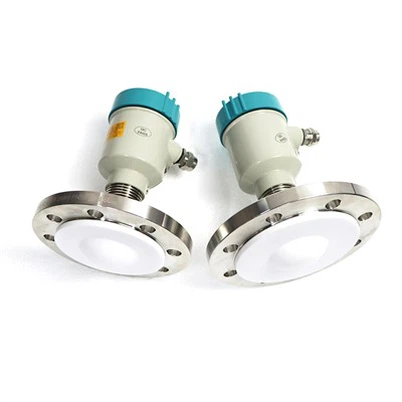
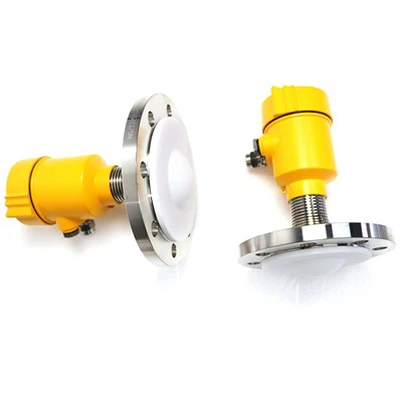
- Non Contact Radar Level Transmitter: A non-contact radar level transmitter uses radar waves to measure the level of a liquid or solid in a tank without making physical contact with the medium. This type of radar level meter is ideal for measuring the level of liquids or solids in tanks that are difficult to access or that contain corrosive or hazardous materials. You can learn more about non-contact radar level transmitters here.
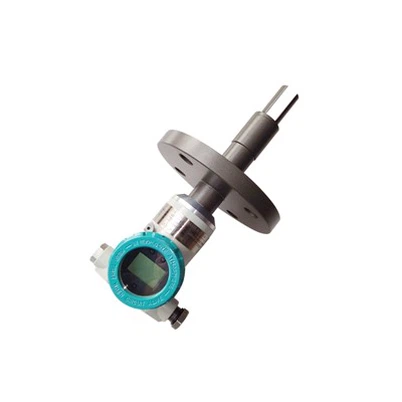
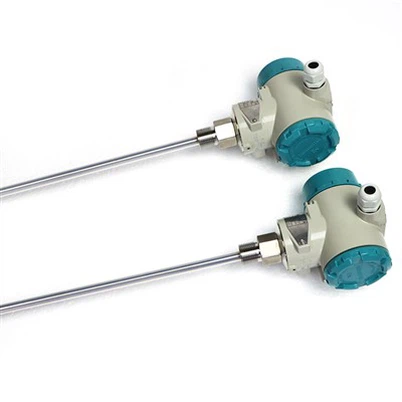
- Guided Wave Radar Level Transmitter: A guided wave radar level transmitter uses a probe or a cable to guide the radar waves to the surface of the liquid or solid in the tank. This type of radar level meter is ideal for measuring the level of liquids or solids in tanks that have a lot of turbulence or that contain foam or other surface disturbances.
High Precision and Other Features
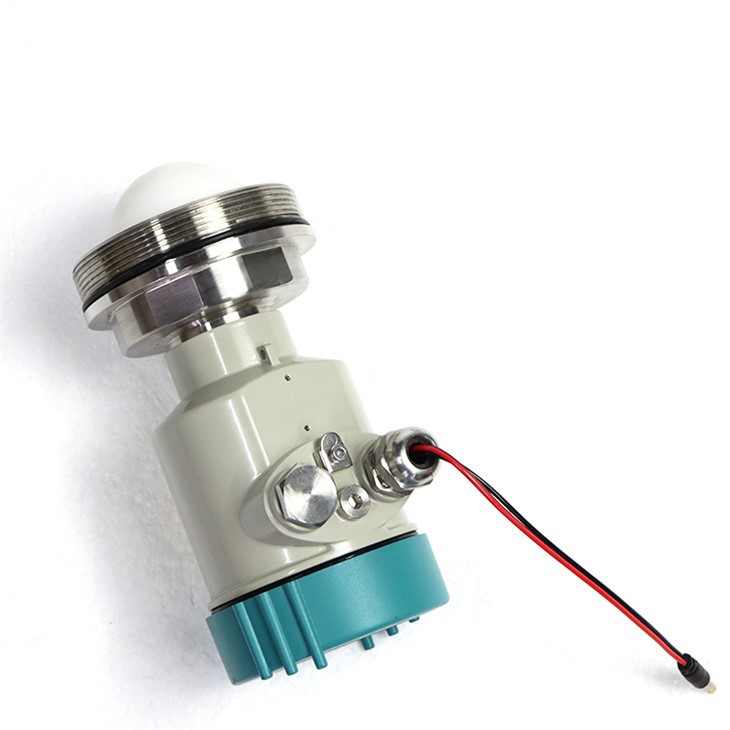
Our 80G Radar Level Meters are known for their high precision. The High precision 80GHZ high-frequency radar level transmitter offers accurate measurements even in challenging conditions. It has advanced signal processing algorithms that can filter out noise and interference, ensuring reliable and precise readings.
In addition to high precision, our 80G Radar Level Meters also come with other great features. They are easy to install and operate, with user-friendly interfaces that allow for quick setup and configuration. They also have a high level of reliability and durability, with a long service life and low maintenance requirements.
Specific Applications: Oil Level Gauges
One of the popular applications of our 80G Radar Level Meters is as Oil Level Gauges. In the oil industry, accurate measurement of oil levels is crucial for inventory management, production control, and safety. Our 80G Radar Level Meters can provide real-time and accurate measurements of oil levels in storage tanks, which helps in optimizing the storage and distribution of oil.
Why Choose Our 80G Radar Level Meters
As a supplier, we take pride in offering high-quality 80G Radar Level Meters. Our products are designed and manufactured to meet the highest standards of quality and performance. We use the latest technology and materials to ensure that our radar level meters are reliable, accurate, and easy to use.
We also provide excellent customer service. Our team of experts is always ready to help you with any questions or concerns you may have about our products. We can assist you with installation, calibration, and maintenance of our 80G Radar Level Meters.

Conclusion
So, there you have it - the measurement principle of an 80G Radar Level Meter. These devices are truly amazing, offering high precision, reliability, and a wide range of applications. Whether you're in the oil and gas industry, the chemical industry, the food and beverage industry, or any other industry that requires accurate level measurement, our 80G Radar Level Meters are the perfect choice.
If you're interested in learning more about our 80G Radar Level Meters or if you're looking to make a purchase, don't hesitate to get in touch with us. We're here to help you find the right solution for your level measurement needs. Let's start a conversation and see how we can work together to improve your operations.
References
- Radar Level Measurement Handbook, Emerson Automation Solutions
- Principles of Radar Level Measurement, Siemens AG