

What is the principle behind a Tuning Fork Hydrometer?
Leave a message

Hey there! I'm a supplier of Tuning Fork Hydrometers, and today I'm gonna dive deep into the principle behind these nifty devices. So, let's get started!
First off, what the heck is a Tuning Fork Hydrometer? Well, it's a type of instrument used to measure the density or specific gravity of liquids. You might be thinking, "Why do we even need to measure the density of liquids?" Good question! Knowing the density can tell us a whole lot about the liquid, like its composition, purity, and even its quality. For example, in the food and beverage industry, density measurements can help ensure that products like beer and juice have the right consistency and flavor. In the oil and gas industry, density is crucial for determining the quality of crude oil and other petroleum products.
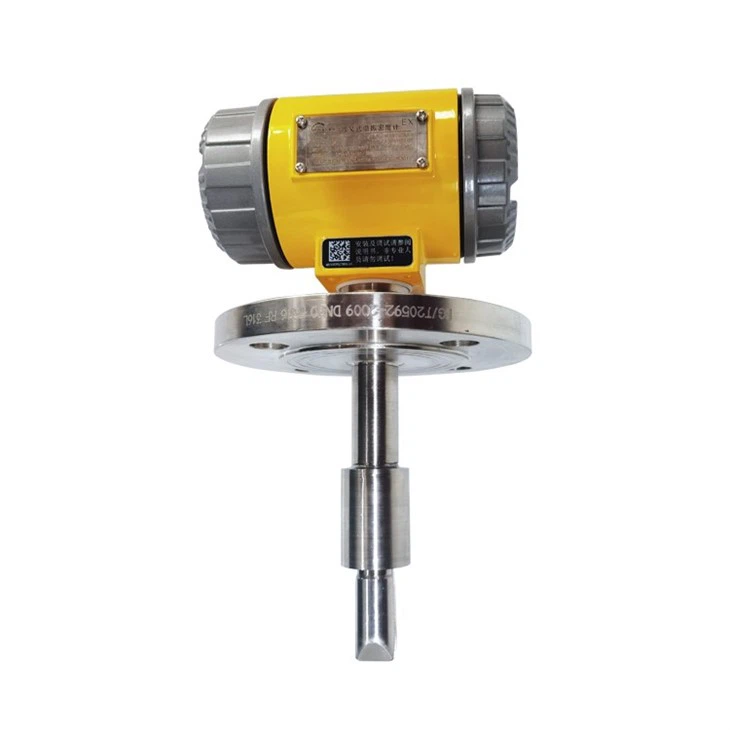
So, how does a Tuning Fork Hydrometer work? At its core, it's based on the principle of resonance. You're probably familiar with the concept of resonance if you've ever seen a singer shatter a glass with their voice. When an object vibrates at its natural frequency, it can produce a large amplitude of vibration. In the case of a Tuning Fork Hydrometer, the tuning fork is made to vibrate at its natural frequency, and the frequency of vibration changes depending on the density of the liquid it's immersed in.
Here's a more detailed breakdown of the process:
1. Initial Vibration
The tuning fork is excited by an electrical signal, which causes it to vibrate at its natural frequency. This natural frequency is determined by the physical properties of the tuning fork, such as its shape, size, and material.
2. Interaction with the Liquid
When the tuning fork is immersed in a liquid, the liquid exerts a damping force on the vibrating fork. This damping force depends on the density and viscosity of the liquid. The denser and more viscous the liquid, the greater the damping force.

3. Frequency Shift
As the damping force changes, the natural frequency of the tuning fork also changes. This change in frequency is measured by a sensor, which converts the mechanical vibration into an electrical signal. The frequency shift is then used to calculate the density of the liquid.
4. Calibration
To ensure accurate measurements, the Tuning Fork Hydrometer needs to be calibrated. Calibration involves measuring the frequency shift of the tuning fork in liquids of known density. A calibration curve is then created, which relates the frequency shift to the density of the liquid. This calibration curve is used to convert the measured frequency shift into an accurate density measurement.
One of the key advantages of Tuning Fork Hydrometers is their high accuracy and reliability. They can provide continuous, real-time measurements, which is essential for many industrial applications. They're also relatively easy to install and maintain, making them a popular choice for a wide range of industries.
Now, let's talk about some of the different types of Tuning Fork Hydrometers available. There are several variations, each designed for specific applications.
Slurry Hydrometer
A Slurry Hydrometer is specifically designed to measure the density of slurries, which are mixtures of solids and liquids. Slurries are commonly found in industries such as mining, construction, and wastewater treatment. Measuring the density of slurries is important for process control and quality assurance. For example, in the mining industry, the density of a slurry can affect the efficiency of the separation process.
Salinity Hydrometer
A Salinity hydrometer is used to measure the salt content or salinity of a liquid. Salinity is an important parameter in many applications, including marine biology, water treatment, and the food industry. In the marine environment, salinity affects the behavior and distribution of marine organisms. In water treatment, measuring salinity can help ensure that the water is safe for drinking and other uses.
Specific Gravity Hydrometer
A Specific gravity hydrometer is used to measure the specific gravity of a liquid, which is the ratio of the density of the liquid to the density of water. Specific gravity is a commonly used parameter in the chemical, pharmaceutical, and brewing industries. For example, in the brewing industry, the specific gravity of the wort (the liquid extracted from the malt) is measured at different stages of the brewing process to monitor the fermentation progress.
So, there you have it! That's the principle behind a Tuning Fork Hydrometer. These devices are incredibly useful in a wide range of industries, thanks to their high accuracy, reliability, and ease of use.
If you're in the market for a Tuning Fork Hydrometer, whether it's a Slurry Hydrometer, Salinity hydrometer, or Specific gravity hydrometer, I'd love to chat with you. We offer a variety of high-quality Tuning Fork Hydrometers that are designed to meet your specific needs. Contact us to start a conversation about your requirements, and let's find the perfect solution for you.
References
- "Measurement of Fluid Density Using Tuning Fork Sensors" - Journal of Sensors and Actuators
- "Industrial Density Measurement Techniques" - Handbook of Industrial Instrumentation





