

What is the protection level of an RF Admittance Switch?
Leave a message

When you're working in industrial process control, there's one question I get asked at least once a week from plant operators, maintenance techs, and even other suppliers: "What's the protection level of an RF admittance switch?" It's not a trivial question-if your level switch doesn't have the right protection rating, you're looking at false readings, downtime, and even safety risks, especially in harsh environments where dust, moisture, or explosive materials are around every corner. As someone who's been supplying RF admittance level sensors and switches for over a decade, I've seen firsthand how the wrong protection level can turn a simple level monitoring task into a huge headache. Today, I'm breaking down exactly what those protection levels mean for RF admittance switches, why they matter, and how to make sure you're picking the right one for your application.
First, let's get back to basics for anyone who's new to RF admittance technology. An RF admittance switch works by emitting a tiny radio frequency signal through a probe; when that probe comes into contact with a material (liquid, bulk solid, dust, whatever), the admittance (or electrical conductivity) changes, and the switch triggers a level alert. What makes these switches so popular is that they work with almost any material-even ones that are sticky, corrosive, or have low conductivity-unlike older float switches or ultrasonic sensors. But that versatility only goes so far if the switch itself can't hold up to the environment it's mounted in. That's where protection levels, most notably the Ingress Protection (IP) rating system, come in. IP ratings are the global standard for classifying how well electrical enclosures resist dust, water, and other external elements, and they're non-negotiable for industrial use.
Let's start with the two digits in an IP rating, because that's where most people get confused. The first digit is the solid particle protection level, ranging from 0 (no protection) to 6 (total dust tightness). The second is the liquid protection level, from 0 to 8, with higher numbers meaning better resistance to water immersion. When you're talking about RF admittance switches, the IP rating is the first line of defense against the gunk that builds up in process plants. For example, a lot of silo applications have fine, abrasive dust that can creep into tiny gaps in a switch's enclosure over time-if the solid protection isn't high enough, that dust will get in, clog the internal components, and cause the switch to fail. The same goes for liquid: if you're using a switch in a wastewater tank or a food processing line where there's splashing or high humidity, a low liquid protection rating will let water seep in and short out the electronics.
Now, I know a lot of folks out there just Google "RF admittance switch IP rating" and grab the first result, but that's a mistake. Different applications demand different levels, and what works for a chemical processing plant might be total overkill for a small water treatment system. Let's walk through some common scenarios, since those are the ones I deal with every day when helping customers pick the right product.
Take, for example, silo dust monitoring. Silos are nasty places-think fine, powdery materials like cement, grain, or plastic resin that hang in the air, get everywhere, and can be explosive if they build up. A lot of customers come to me looking for a switch for their silo and end up wasting money on a unit with too low a protection level because they didn't know what to look for. The right switch for silo dust needs not just a high IP rating, but also a probe designed to prevent material from sticking (that's called anti-hanging material, by the way). When I recommend a solution for these applications, I often point them to our RF admittance level switch for measuring silo dust-this unit has an IP67 rating, which means it's completely dust tight (first digit 6) and can handle immersion in up to 1 meter of water for 30 minutes (second digit 7). That's critical because silos are often cleaned with high-pressure water, and you don't want that water getting into the switch while also keeping dust out. Plus, the anti-hanging probe design stops fine dust from building up on the sensor tip, which would cause false level readings. I've had a customer tell me they tried a cheap, unrated switch for their grain silo, and within a month, the dust had clogged the internal switch mechanism and they had to shut down production to replace it-cost them thousands in downtime. Investing in a switch with the right protection level saves way more in the long run.
Another common application is industrial liquid level monitoring, and that's where things get a little trickier, especially if you're dealing with hazardous locations like oil and gas processing or chemical plants. Here, it's not just IP ratings you have to worry about-there's also intrinsic safety (IS) and explosion protection ratings, which are separate from IP but work hand-in-hand. A lot of people mix these up, so let me clear that up: IP ratings are about external protection (dust, water, impact), while explosion protection is about whether the switch can ignite surrounding flammable gases or dust. If you're working in a Class I, Division 1 or Zone 1 location (places where flammable gases are present regularly), you can't just have a high IP rating-you need an explosion-proof unit. For these applications, I always point customers to our industrial liquid level switch, which is certified for hazardous locations and has an IP66 rating. IP66 is actually a step up from IP67 for some liquid applications-it's designed to withstand powerful water jets (like from a pressure washer) which is perfect for plants that do regular equipment cleaning. The explosion protection here means that even if there's a fault in the switch, it won't spark and ignite any surrounding gases, which is non-negotiable for oil and gas, pharmaceutical, and chemical industries. I once had a customer in a refinery skip the explosion-rated switch because it cost a little more, and they got shut down by OSHA for using a non-certified unit that didn't meet protection standards for hazardous areas. That's not just a financial hit-it's a safety risk for their whole team.
Now, let's talk about bulk material handling, which is another big use case for RF admittance switches. Bulk materials like coal, plastic pellets, or food grains are often stored in hoppers, bins, or conveyors, and they can be corrosive, abrasive, or sticky. If you're monitoring the level of a sticky bulk material like wet grain or clay, you need a switch that not only has high IP protection to keep out dust and moisture, but also a probe that's designed to resist material buildup. Our RF admittance level measurement switch for measuring bulk materials is perfect for this-it has an IP68 rating, which means it's completely dust tight and can handle immersion in water up to 1.5 meters for extended periods. That's way higher than IP67, and it's ideal for bulk material applications where the switch might be exposed to rain, washdown, or being accidentally submerged during material transfers. I've worked with a food processing plant that handles wet cornmeal-they were using a standard RF admittance switch with IP65, and within a few weeks, the cornmeal would stick to the probe and trigger false high-level alerts. Swapping in the bulk material-specific switch with the anti-hanging probe and IP68 rating solved that problem entirely. They haven't had a false level reading in two years, which has cut their production downtime by 15%-that's the kind of ROI that comes from getting the protection level right.
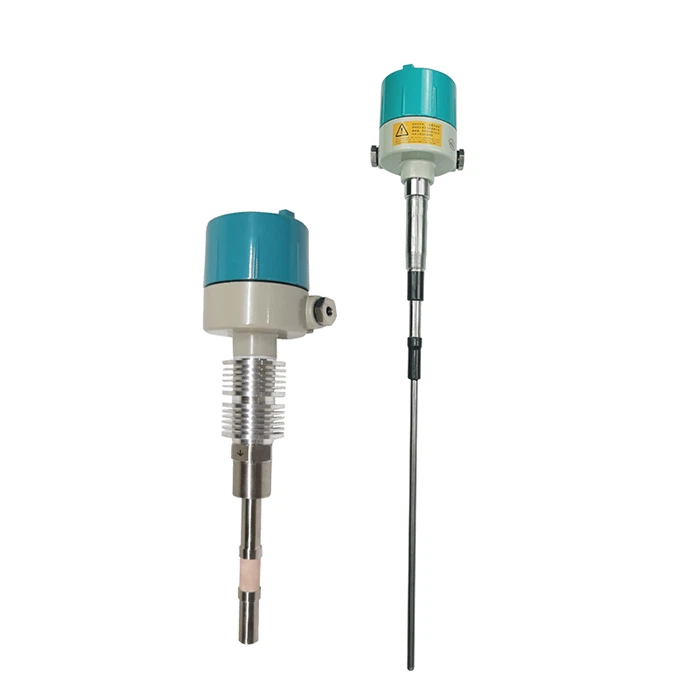

Wait, let's circle back to the basics for a second-what if you're working in a less harsh environment? Maybe a small water tank in a municipal treatment plant, or a food and beverage line where there's no explosive dust or high-pressure washdown. You don't need IP68 for that, obviously. In these cases, a switch with IP65 is usually more than enough. IP65 means dust protected (not totally dust tight, but enough to keep out most fine particles) and protected against low-pressure water jets from any direction. That's perfect for applications like monitoring the level of water in a storage tank or the amount of sugar syrup in a mixing tank. If you're just starting out with RF admittance switches and aren't sure what protection level you need, our admittance level switch is a great place to start-it has an IP65 rating, works with most common liquids and bulk materials, and is flexible enough for a wide range of non-hazardous applications. I always tell new customers to assess their specific environment first: what kind of particles are present? Is there water or moisture? Are there flammable materials? Answering those three questions will tell you exactly what IP rating you need, and then you can narrow down the switch features from there.
I want to be clear here-protection levels aren't just a box to check on a spec sheet. They're directly tied to reliability, safety, and cost. Let's break down the cost side of this because it's something a lot of operators overlook. A switch with a higher IP rating might cost 20-30% more upfront than a lower-rated one, but the downtime you avoid when that lower-rated switch fails is way more expensive. I've had a customer in the mining industry tell me that every hour of unplanned downtime on their conveyors costs them $50,000 in lost production. They were using a $100 switch with IP55, and it failed every 3 months because of dust getting in. Swapping to a $200 switch with IP67 cut their replacement frequency to every 2 years, saving them over $120,000 a year in switch costs and downtime. That's a no-brainer, right?
Another thing I see a lot is that people assume all RF admittance switches have the same protection level. That's not true. Cheaper, off-brand units often cut corners on the enclosure design-they use thinner plastics, have gaps around the cable glands, or skip the rubber seals that keep dust and water out. Those units might have an IP65 rating on paper, but in reality, they'll let dust in within a month. A quality switch from a reputable supplier (like ours) will have IP ratings that are actually tested and certified, not just labeled. We put every one of our switches through rigorous testing for dust and water resistance before they leave the facility, so you know that when it says IP67, it really is dust tight and can handle being submerged.
Let's also talk about some common myths I hear around RF admittance switch protection levels. One myth is that "a higher IP rating is always better." No, that's not true-if you're mounting a switch in a dry, climate-controlled control room, an IP67 switch is overkill, and you're just wasting money. You should match the protection level to your application, not go for the highest number possible. Another myth is that RF admittance switches don't need explosion protection because they don't have moving parts. That's wrong-even though they don't have float mechanisms that can spark, the electronics inside can still generate a spark if they're faulty, so if you're working in a hazardous location, explosion certification is non-negotiable, even with the best IP rating.
Now, if you're still unsure what protection level you need for your specific application, that's totally normal. Every site is different-some plants have more dust than others, some have more water exposure, some are in hazardous areas. That's why we're here. I've worked with customers across every industry, from food and beverage to oil and gas to mining, and I can help you assess your environment and pick the right RF admittance switch with the correct protection level. Whether you're monitoring silo dust, liquid levels in a hazardous location, bulk materials, or just general industrial liquid levels, we have a solution that fits.
If you're ready to talk through your needs and pick the right switch for your application, we're here to help. Don't waste money on a switch that's underprotected and will fail prematurely, or overpay for a rating you don't need. Reach out to us to discuss your project, and we'll make sure you get the right protection level for your RF admittance switch.
References
- International Electrotechnical Commission (IEC). (2017). IEC 60529: Degrees of protection provided by enclosures (IP Code). Geneva, Switzerland: IEC.
- National Fire Protection Association (NFPA). (2021). NFPA 70: National Electrical Code. Quincy, MA: NFPA.
- processindustryinsider.com. (2023). "RF Admittance Technology: A Guide to Level Measurement for Harsh Environments." Available at: https://www.processindustryinsider.com/topics/measurement-control/articles/14561080/rf-admittance-technology-a-guide-to-level-measurement-for-harsh-environments.
- Occupational Safety and Health Administration (OSHA). (2022). "Hazardous Location Standards for Electrical Equipment." Washington, DC: OSHA.





