

How do Tuning Fork Level Sensors handle changes in liquid conductivity?
Leave a message

Hey folks, if you've ever worked with liquid level monitoring in industrial settings, you know how frustrating it is when a system suddenly goes haywire because of a tiny change in how conductive the liquid is. I get it-this is the exact kind of issue that makes you question every part of your setup, right? As someone who's been in the tuning fork level sensor game for over a decade, I've fielded this question a hundred times: how do these sensors actually hold up when a liquid's conductivity shifts? Today I'm breaking it down, no overly technical jargon, just real talk from someone who's seen these sensors work (and sometimes struggle) in all kinds of environments.
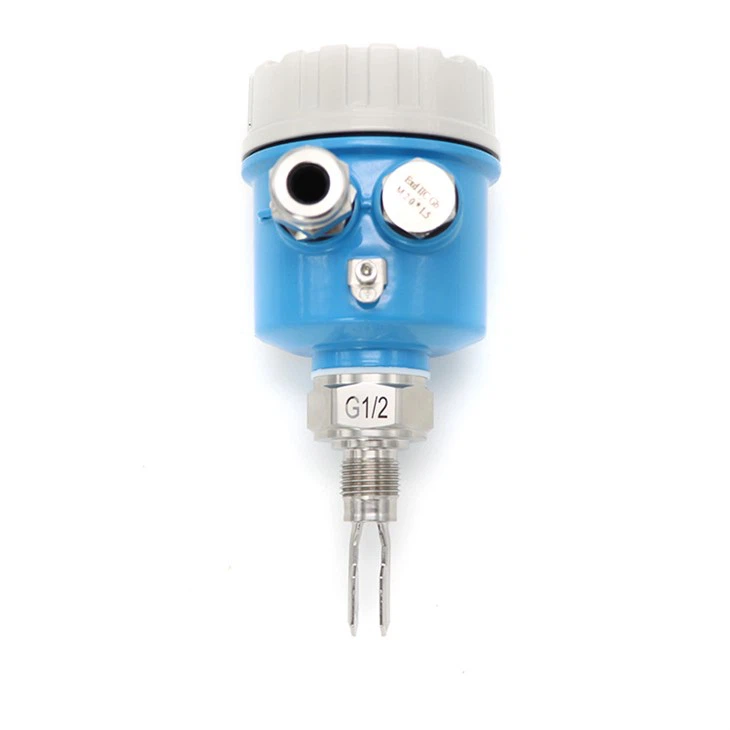

First, let's start with what a tuning fork level sensor even is, because if you're here, you probably need a quick refresh. Unlike other level sensors that rely on pressure, capacitance, or radio waves, a vibrating fork level sensor works on a super simple (but clever) principle: two tiny prongs vibrate at a natural frequency when they're exposed to air. The second those prongs get covered in liquid, the frequency drops-way enough that the sensor picks it up and triggers a signal. You can check out the basic mechanics if you want, right here: Vibrating Fork Level. Now, here's the key point most people miss: conductivity is about how well a liquid carries electric current, and it's different from density or viscosity, which are the factors people usually associate with tuning fork sensors. So why do people even ask about conductivity? Because a lot of other level sensor types crash and burn when conductivity changes, so it's fair to wonder if tuning forks have the same issue.
Let's get into the core question: how do tuning fork level sensors handle changes in liquid conductivity? Short answer? Way better than most, but there are a few nuances that matter. Let's break this down step by step, because it's not a one-size-fits-all answer.
First, let's clear up a common mix-up. Conductivity has basically zero effect on the vibrating prongs' vibration. Wait, why? Because the vibration is mechanical, not electrical. The prongs are driven by a small piezoelectric element-think of it like a tiny speaker's coil, but super precise-that's designed to oscillate at its natural frequency. When liquid hits the prongs, the mass of the liquid adds to the system, lowering that frequency, regardless of whether the liquid can conduct electricity or not. That's a huge contrast to capacitive level sensors, which actually use the liquid's conductivity to create a capacitance change-so if that conductivity drops, their signal goes wonky. Ultrasonic sensors? They bounce sound waves, which can be absorbed or refracted by different liquid chemistries, including conductivity changes. But tuning forks? They don't care about that.
But wait-hold on, before you get too excited. There is a scenario where conductivity can cause issues, and it's not with the sensor's core function-it's with the sensor's electronics, or how you install it. Let's talk about what I've seen in the field over the years. A while back, a client came to me panicking because their tuning fork was triggering false alarms in a wastewater tank. The tank had a mix of regular water and industrial runoff, so conductivity was swinging from low (pure rainwater) to super high (salty brine from the manufacturing line). At first, we thought it was the sensor, but after testing, we realized it was the wiring. The client had used unshielded copper wiring to run the sensor's signal back to the control panel, and the high conductivity liquid was causing tiny electrical leaks along the wire, which confused the sensor's receiver. Once we swapped to shielded cable and grounded it properly, the problem was gone. That's not the sensor failing because of conductivity-that's a user error with installation.
Another common scenario: when people use tuning fork sensors in applications where the liquid is, say, oil or fuel, which have super low conductivity. Wait, what happens there? Nothing-really. I've had clients run tests with deionized water (almost no conductivity) and saltwater (super conductive) on the same sensor, and the frequency shift was identical. Because the vibration is driven by mass, not how well the liquid conducts electricity. The only time conductivity even comes up in these low-conductivity liquids is if someone is mistakenly comparing tuning forks to capacitive sensors-tuning forks don't need the liquid to conduct at all, actually. That's one of their biggest advantages.
Now, let's talk about the one case where conductivity might be a problem, and it's specific to explosion-proof settings. A lot of industries-chemical plants, oil refineries, grain facilities-need explosion proof switches, and when you're dealing with flammable liquids, even tiny electrical leaks from the sensor can be a hazard. Here's the thing: our tuning fork level sensors are designed with intrinsically safe (IS) circuits that limit the amount of electricity the sensor uses, so even if there's a fault, there's not enough power to ignite flammable gases. But if you use a cheap, unrated sensor that doesn't have proper isolation, a high-conductivity liquid could create a path for stray current, which is a risk. That's why it's non-negotiable to get sensors that are certified for your environment. You can check our explosion proof switches here: Explosion proof switches.
Let's also address a myth I hear all the time: "If a liquid is too conductive, the tuning fork will short out." No, that's not how it works. The prongs are made of materials like 316 stainless steel, Hastelloy, or PTFE-all non-conductive (or if they're metal, insulated in critical areas) so even if the liquid is super salty or has other conductive additives, it can't short the prongs. The only way a short happens is if the sensor is damaged-like if the PTFE coating chips off from physical impact, exposing the metal and creating a path. That's wear and tear, not conductivity-related failure.
Now, let's get practical with real-world examples, because that's what matters most. Take oil tank level measurement and overflow protection-this is a huge use case for tuning fork level sensors. Oil has extremely low conductivity, right? But even when people are mixing oil with other additives that slightly change conductivity, the tuning fork doesn't flinch. I had a client in the automotive industry that uses our sensors to monitor oil and coolant levels in large bulk tanks. Their coolant conductivity would shift a bit based on how much antifreeze they added, but the sensor never triggered a false high or low alarm. They switched from capacitive sensors a few years back because those would start acting up when conductivity dropped below a certain threshold, and they haven't looked back since. You can see our oil tank level measurement and overflow protection limit switch options here: Oil tank level measurement and overflow protection limit switch.
Another example: chemical processing plants, where liquids range from deionized water (0.055 µS/cm) to concentrated acid (100,000 µS/cm) and everything in between. Our tuning fork level sensors handle all of that without calibration changes. The only thing you have to adjust is the sensitivity setting-some thicker, more viscous liquids need a slightly higher sensitivity to make sure the sensor picks up the frequency shift. But conductivity doesn't affect that setting at all. That's a big relief for plant operators who have to run multiple processes with different liquids all on the same monitoring system.
Wait, but what about if the sensor is mounted incorrectly? Let's say you have a fork type level switch that's mounted too close to the wall of the tank. If you have a liquid with high conductivity, could the wall's metal conduct electricity and interfere? Unlikely, unless the tank itself is part of the electrical circuit. But if you ground the tank and the sensor properly, that's not an issue. I always tell customers to follow our installation guidelines-mount at least 2 inches away from tank walls, fittings, or other sensors-and that eliminates any chance of that kind of interference. Our fork type level switch page has more installation tips if you want to check it out: Fork type level switch.
Let's also talk about calibration, because that's another area where people get confused. Do you need to re-calibrate a tuning fork level sensor when the liquid's conductivity changes? Absolutely not. Because calibration is based on detecting the frequency shift between air and liquid, and that shift is driven by mass, not conductivity. I've had clients test this: they ran water through the tank while adding salt to increase conductivity, and the sensor's readings stayed dead on. No recalibration, no adjustments. Contrast that with, say, a capacitive sensor, which would need re-calibration every time conductivity changes, because its capacitance reading is directly tied to that property. That's a huge time-saver for plant teams that are juggling multiple liquid recipes or changing process conditions.
Now, let's address when conductivity might indirectly cause a problem, just to be thorough. If you have a liquid that's both highly conductive and corrosive, that can eat away at the sensor's prongs over time. For example, concentrated sulfuric acid is super conductive and corrosive, so if you use a sensor with 316 stainless steel prongs in it, the metal might corrode, which could alter the prong's mass and throw off the frequency. But that's not a conductivity issue-that's a compatibility issue with the liquid's chemical properties. The fix here is simple: pick a sensor with prongs made of a material that resists that specific corrosion, like Hastelloy or PTFE-coated metal. Our level switch sensor page has options for different material constructions, so you can match them to your liquid: Level switch sensor.
Let's wrap this up with the key takeaways, because I know you're here for actionable info. First: tuning fork level sensors don't care about liquid conductivity. Their core function is based on mechanical vibration and mass, not electrical properties like conductivity. That makes them way more reliable than sensors that do rely on conductivity, like capacitive or conductance switches, when liquid properties change. Second: the only conductivity-related issues I've seen in the field are installation mistakes, uncertified sensors, or wrong material selection for corrosive conductive liquids. None of those are flaws in the tuning fork technology itself. Third: if you're dealing with explosion-proof environments, make sure you get certified explosion proof switches that have proper intrinsic safety circuits, because that's where electrical risks come into play, not the sensor's ability to detect liquid levels.
If you're currently dealing with level sensor problems where conductivity changes are throwing your setup off, or if you're just looking to upgrade to a more reliable system, we've got you covered. Our team has worked with hundreds of clients across every industry, from food and beverage to chemical processing, to find the right tuning fork level sensor for their specific application. We can walk you through installation tips, help you pick the right material and certification, and make sure your level monitoring works no matter how your liquid's properties shift. Don't let frustrating level sensor errors slow down your operations-reach out to our team to talk through your needs and find the perfect solution.
References:
- "Vibrating Fork Level Sensors: Principles of Operation and Application Notes", ISA Transactions, 2019.
- "Industrial Level Measurement: A Guide to Tuning Fork Technology", Process Control Journal, Vol. 12, No. 3, 2021.
- "Intrinsic Safety Considerations for Industrial Level Switches", National Fire Protection Association (NFPA) 70, 2022.
- "Material Compatibility for Industrial Sensors in Corrosive Fluids", Chemical Processing Magazine, 2020.





