

What is the working principle of a Tank Radar Level Gauge?
Leave a message

What is the working principle of a Tank Radar Level Gauge?
As a dedicated supplier of Tank Radar Level Gauges, I am excited to delve into the fascinating world of these precision instruments. In this blog, we'll explore the working principle of a Tank Radar Level Gauge, its applications, and why it's a top choice for various industries.
The Basics of Radar Technology
Radar technology has been around for decades, initially developed for military and aviation purposes. It works on the principle of sending out electromagnetic waves and measuring the time it takes for these waves to bounce back after hitting an object. This concept forms the foundation of how a Tank Radar Level Gauge operates.
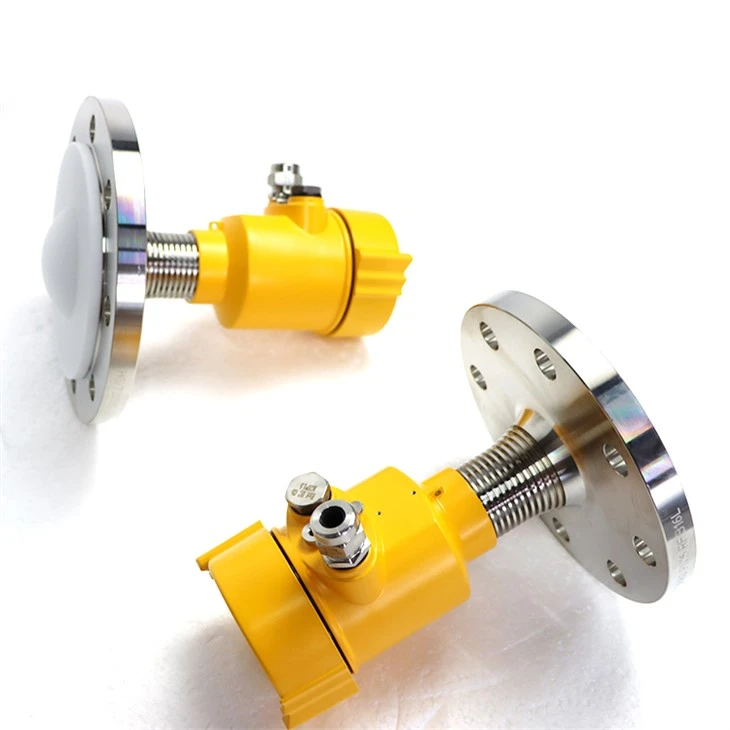
A Tank Radar Level Gauge uses microwave radar signals to measure the level of liquid or solid materials in a tank. These microwave signals are sent from an antenna located at the top of the tank towards the surface of the material inside. When the microwave signals hit the surface of the material, they are reflected back to the antenna. The gauge then measures the time it takes for the signals to travel to the surface and back, and uses this information to calculate the distance between the antenna and the material surface.
How the Tank Radar Level Gauge Calculates the Level
The calculation of the level in the tank is based on the simple formula: distance = speed of light × time / 2. The speed of light is a constant value, and the time it takes for the microwave signals to travel to the surface and back is measured by the gauge. By dividing the total distance traveled by the signals by 2, we get the distance from the antenna to the material surface.
Once the distance is calculated, the gauge subtracts this value from the known height of the tank to determine the level of the material inside. For example, if the height of the tank is 10 meters and the distance from the antenna to the material surface is 3 meters, then the level of the material in the tank is 7 meters.
Types of Tank Radar Level Gauges
There are two main types of Tank Radar Level Gauges: non-contact and contact.
Non-contact Tank Radar Level Gauges are the most common type. They use an antenna to send and receive microwave signals without physically touching the material in the tank. This makes them suitable for a wide range of applications, including those involving corrosive, viscous, or high-temperature materials. Non-contact gauges are also easy to install and maintain, as there is no need to open the tank or insert any probes.
Contact Tank Radar Level Gauges, on the other hand, use a probe that is inserted into the material in the tank. The probe sends and receives microwave signals, and the gauge calculates the level based on the time it takes for the signals to travel through the material. Contact gauges are typically used in applications where high accuracy is required, or where the material in the tank has a low dielectric constant, which can make it difficult for non-contact gauges to detect the surface accurately.

Applications of Tank Radar Level Gauges
Tank Radar Level Gauges are widely used in various industries, including oil and gas, chemical, food and beverage, and water treatment.
In the oil and gas industry, Tank Radar Level Gauges are used to measure the level of crude oil, refined products, and other liquids in storage tanks. They provide accurate and reliable measurements, which are essential for inventory management, custody transfer, and safety purposes.
In the chemical industry, these gauges are used to monitor the level of corrosive and hazardous chemicals in tanks. Their non-contact design ensures that there is no risk of contamination or damage to the gauge, making them a safe and reliable choice for these applications.
The food and beverage industry also benefits from the use of Tank Radar Level Gauges. They are used to measure the level of liquids such as milk, juice, and beer in storage tanks, ensuring accurate inventory control and preventing overfilling or underfilling.
In the water treatment industry, Tank Radar Level Gauges are used to monitor the level of water in reservoirs, tanks, and treatment plants. They help to ensure that the water supply is maintained at the appropriate level, and that the treatment processes are operating efficiently.
Advantages of Using a Tank Radar Level Gauge
There are several advantages to using a Tank Radar Level Gauge. Firstly, they provide highly accurate measurements, with an accuracy of up to ± 1 mm in some cases. This makes them suitable for applications where precise level control is required.
Secondly, Tank Radar Level Gauges are non-contact devices, which means that they do not come into direct contact with the material in the tank. This eliminates the risk of contamination, corrosion, and wear and tear, and reduces the need for maintenance.
Thirdly, these gauges are not affected by the physical properties of the material in the tank, such as density, viscosity, or temperature. They can accurately measure the level of a wide range of materials, including liquids, solids, and slurries.
Finally, Tank Radar Level Gauges are easy to install and operate. They can be mounted on the top of the tank using a simple flange or bracket, and can be connected to a control system using a standard communication protocol.
Related Products and Their Applications
If you're interested in other related products, we also offer Grain bin level sensors. These sensors are specifically designed to measure the level of grain in silos. They use the same radar technology as Tank Radar Level Gauges, but are optimized for the unique properties of grain, such as its low dielectric constant and tendency to form uneven surfaces.
Another related product is our Hydrology Instruments. These instruments are used for hydrological monitoring, such as measuring the water level in rivers, lakes, and reservoirs. They provide accurate and real-time data, which is essential for flood forecasting, water resource management, and environmental monitoring.
We also have Radar level transmitter that can be used in a variety of applications, including water treatment, chemical processing, and oil and gas production. These transmitters convert the measured level into an electrical signal, which can be sent to a control system for further processing and analysis.
Conclusion and Call to Action
In conclusion, the Tank Radar Level Gauge is a highly accurate, reliable, and versatile instrument that offers many advantages over traditional level measurement methods. Whether you're in the oil and gas, chemical, food and beverage, or water treatment industry, a Tank Radar Level Gauge can help you improve your process efficiency, reduce costs, and enhance safety.
If you're interested in learning more about our Tank Radar Level Gauges or any of our other products, please feel free to contact us for a consultation. Our team of experts is ready to assist you in selecting the right product for your specific application and to provide you with the support and service you need.
References
- [1] Radar Level Measurement Handbook, Emerson Process Management
- [2] Principles of Radar Level Gauging, Vega Grieshaber KG
- [3] Industrial Radar Level Sensors: A Review, Journal of Sensors and Actuators





