

Can an 80G Radar Level Meter be used in a water treatment plant's tank?
Leave a message

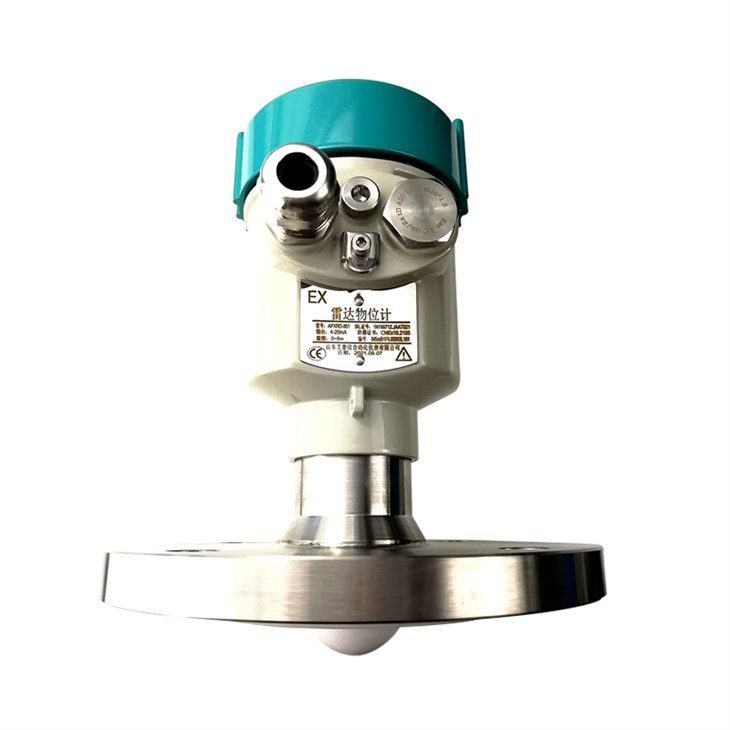
Hey there! I'm a supplier of 80G Radar Level Meters, and I often get asked if these meters can be used in a water treatment plant's tank. Well, let's dive right into it and find out.
How 80G Radar Level Meters Work
First off, it's important to understand how these 80G Radar Level Meters operate. These meters use radar technology, which sends out electromagnetic waves at a frequency of 80GHz. These waves bounce off the surface of the liquid or solid in the tank and then return to the sensor. The meter then calculates the distance based on the time it takes for the waves to travel back and forth. It's a pretty nifty and accurate way to measure the level of whatever's in the tank.
One of the great things about 80G Radar Level Meters is their high - frequency operation. The higher frequency allows for a smaller antenna and a more focused beam. This means it can provide more accurate measurements, even in tanks with complex shapes or internal structures.
Suitability for Water Treatment Plants
Now, let's talk about why 80G Radar Level Meters are a good fit for water treatment plant tanks.
Accuracy
Water treatment processes need precise level measurements. Whether it's a raw water storage tank, a sedimentation tank, or a clarifier, knowing the exact water level is crucial. 80G Radar Level Meters can offer high - accuracy measurements. They can detect even small changes in the water level, which is important for maintaining the correct flow rates and chemical dosing in the treatment process.
Non - contact Measurement
These meters work on a non - contact principle. This is a huge advantage in water treatment plants. The water in these tanks can be dirty, contain chemicals, or have high temperatures. A non - contact radar level meter doesn't get in direct contact with the water, so it won't be affected by corrosion, fouling, or damage from the water's properties. This leads to a longer service life and less maintenance compared to some other level measurement methods.
Resistance to Environmental Factors
Water treatment plants can have a harsh environment. There might be steam, vibrations, or electrical interference. 80G Radar Level Meters are designed to handle these challenges. They can resist the interference from steam because the high - frequency radar waves can penetrate it easily. And they're built to be stable against vibrations and electrical noise, ensuring reliable level measurement all the time.
Applications in Different Tanks
Let's take a closer look at how 80G Radar Level Meters can be used in various types of tanks in a water treatment plant.
Raw Water Storage Tanks
These tanks store large amounts of water before the treatment process begins. 80G Radar Level Meters can accurately monitor the water level, helping operators to manage the intake of raw water. If the level is getting low, additional water can be sourced in a timely manner to keep the treatment process running smoothly.

Sedimentation Tanks
In sedimentation tanks, the water slows down, allowing solid particles to settle at the bottom. Here, the 80G Radar Level Meter can continuously monitor the water level and also detect any changes in the surface due to the settling process. This helps in determining when it's time to remove the settled sludge.
Chlorine Contact Tanks
Chlorine is used to disinfect the water in these tanks. The 80G Radar Level Meter's non - contact nature is especially useful here as chlorine can be corrosive. It can accurately measure the water level without being affected by the chlorine gas or the chemical properties of the chlorinated water.
Comparison with Other Level Measurement Methods
There are other ways to measure the level in water treatment plant tanks, like ultrasonic level sensors and float switches. But 80G Radar Level Meters have some distinct advantages.
Ultrasonic sensors work by sending out sound waves. However, they can be affected by factors like temperature changes, humidity, and the presence of foam on the water surface. On the other hand, 80G Radar Level Meters are not as sensitive to these environmental factors.
Float switches are simple and inexpensive, but they are mechanical devices that can get stuck or damaged over time. They also only provide a basic on - off level indication, while 80G Radar Level Meters can give continuous and precise level measurements.
Our Product Range
As a supplier of 80G Radar Level Meters, we offer a wide range of products. We have Solids Radar Level Sensor which can be used not only in water treatment plants but also in industries where the level of solids needs to be measured accurately. Our Industrial radar sensor is designed to handle tough industrial environments, including the harsh conditions in water treatment plants. And our Radar type level indicator can withstand high temperatures if there are processes in the water treatment plant that involve heated water.
Conclusion
In conclusion, 80G Radar Level Meters are definitely a great choice for water treatment plant tanks. Their accuracy, non - contact measurement, and resistance to environmental factors make them suitable for various applications in these plants. They can help improve the efficiency of the water treatment process, reduce maintenance costs, and ensure the overall smooth operation of the plant.
If you're in charge of a water treatment plant or involved in the decision - making process for level measurement equipment, I highly recommend considering our 80G Radar Level Meters. We're always here to answer your questions and discuss how our products can meet your specific needs. Reach out to us for a detailed consultation and let's start a conversation about how we can help you with your level measurement requirements.
References
- "Radar Level Measurement Techniques" by Industrial Measurement Journal
- "Water Treatment Plant Operations: A Guide to Level Monitoring" by Water Industry Press.





