

How accurate is a Guided Wave Radar Level Meter?
Leave a message

How accurate is a Guided Wave Radar Level Meter?
Hey there! As a supplier of guided wave radar level meters, I've gotten tons of questions about their accuracy. So, I thought I'd break it down for you in this blog post.
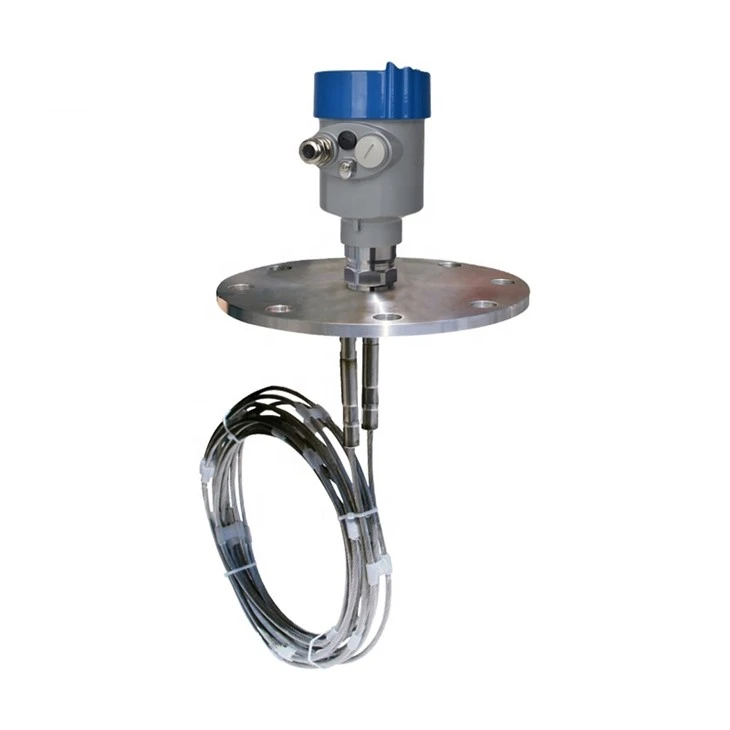
Let's start with the basics. A guided wave radar level meter is a nifty device that uses radar waves to measure the level of liquids or solids in a tank. Unlike some other level measurement methods, it sends these waves along a probe, which can be a cable or a rod. This guided approach has some real advantages, but how accurate is it, really?

Factors Affecting Accuracy
1. Medium Properties
The properties of the medium you're measuring play a huge role. For instance, if you're measuring a clean liquid like water, you're in luck. Guided wave radar level meters are super accurate in these situations. Water has a relatively stable dielectric constant, which means the radar waves interact with it in a predictable way.
On the other hand, if you're dealing with a viscous or sticky substance, things can get a bit tricky. These substances can coat the probe, which affects the way the radar waves travel. The coating can cause reflection or absorption of the waves at unexpected points, leading to inaccurate readings.
2. Tank Conditions
The environment inside the tank matters too. If there's a lot of turbulence, foam, or condensation, it can interfere with the radar waves. Turbulence can cause the level to fluctuate rapidly, making it hard for the meter to get a stable reading. Foam is another problem because it can scatter the radar waves, reducing the accuracy of the measurement. Condensation on the probe can also create false reflections, throwing off the data.
But don't worry too much! Modern guided wave radar level meters are designed to handle some of these challenges. They often come with special features like advanced signal processing algorithms that can filter out interference from foam and turbulence.
3. Installation Quality
How you install the guided wave radar level meter is crucial. If it's not installed correctly, you're going to have accuracy issues right off the bat. For example, if the probe isn't centered in the tank, the radar waves might bounce off the walls of the tank instead of just the surface of the medium. This can lead to inaccurate level readings.
Also, the length of the probe needs to be right for the tank. If it's too short, it won't reach the bottom of the tank, and you won't get an accurate measurement of the full level. If it's too long, it might touch the bottom or get damaged, which can also affect accuracy.
Typical Accuracy Ranges
In ideal conditions, a guided wave radar level meter can be incredibly accurate. Most high - quality meters can achieve an accuracy of ± 1 mm to ± 3 mm. That's pretty impressive when you think about it! This level of accuracy makes them suitable for a wide range of applications, from small laboratory tanks to large industrial storage vessels.
However, in less than ideal conditions, the accuracy might drop to ± 5 mm or even more. But again, this depends on how bad the interference is. If you're facing a lot of foam or extreme temperature variations, you might see a bigger deviation from the actual level.
Real - World Applications and Accuracy
Let's look at some real - world applications to see how accuracy plays out.
1. Chemical Industry
In the chemical industry, accurate level measurement is crucial for safety and efficiency. Guided wave radar level meters are often used to measure the levels of various chemicals in storage tanks. Since many chemicals have different dielectric constants and properties, the accuracy of the meter needs to be reliable.
For example, in a tank storing a corrosive acid, the meter needs to accurately measure the level to prevent over - filling or running out of the chemical. Thanks to their ability to handle different mediums and the high - level accuracy in ideal conditions, guided wave radar level meters are a popular choice in this industry.
2. Food and Beverage Industry
In the food and beverage industry, hygiene and accuracy are key. Guided wave radar level meters are used to measure the levels of liquids like milk, juice, and beer in tanks. These meters can provide accurate readings even in the presence of some foam, which is common during the filling or agitation processes.
The accuracy ensures that the right amount of product is in each tank, which is important for quality control and production planning.
Our Products and Accuracy
As a supplier, we take accuracy very seriously. Our guided wave radar level meters are designed with the latest technology to ensure the highest possible accuracy. We use advanced signal processing techniques to filter out interference and provide reliable readings.
Our Chinese supplier of guided wave radar liquid level transmitter is known for its precision and durability. It can handle a wide range of mediums and tank conditions, making it a great choice for many industries.
We also offer Radar type level transmitter which has a cable probe. This type of transmitter is flexible and can be used in tanks of different shapes and sizes. The cable probe allows for better measurement in tanks with complex geometries, while still maintaining high accuracy.
And if you're looking for a more general solution, our Guided wave radar is a great option. It's designed to work in various applications, from small - scale to large - scale industries, with an emphasis on accuracy and reliability.
So, How Accurate is it?
In conclusion, a guided wave radar level meter can be extremely accurate under the right conditions. But it's important to consider the medium properties, tank conditions, and installation quality to get the most accurate readings.
If you're in the market for a guided wave radar level meter and want to ensure the highest accuracy for your specific application, don't hesitate to reach out. We're here to help you choose the right product and answer any questions you might have. Whether it's for a small project or a large - scale industrial operation, we've got the experience and the products to meet your needs.
So, start thinking about how you can benefit from the accuracy of our guided wave radar level meters. Let's have a chat and discuss how we can make your level measurement tasks more accurate and efficient!
References
- ASME (American Society of Mechanical Engineers) standards on level measurement devices.
- Publications from manufacturers of guided wave radar level meters.





