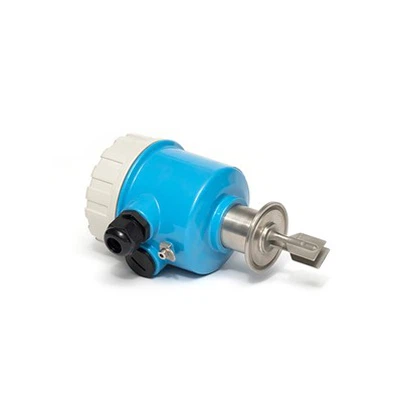

What is the sunlight resistance of a capacitive fuel level sensor?
Leave a message

As a supplier of Capacitive Fuel Level Sensors, I often receive inquiries from customers about various aspects of our products. One question that comes up quite frequently is about the sunlight resistance of these sensors. In this blog post, I'll delve into what sunlight resistance means for a capacitive fuel level sensor, why it's important, and how our products perform in this regard.
Understanding Capacitive Fuel Level Sensors
Before we talk about sunlight resistance, let's briefly understand how capacitive fuel level sensors work. These sensors operate based on the principle of capacitance, which is the ability of a system to store an electric charge. In a capacitive fuel level sensor, the capacitance changes as the level of fuel in the tank changes. This change in capacitance is then converted into an electrical signal that can be used to determine the fuel level.


Capacitive fuel level sensors are widely used in various industries, including automotive, aviation, and marine, due to their high accuracy, reliability, and non - intrusive nature. They offer several advantages over traditional fuel level sensors, such as float - type sensors, which can be prone to mechanical failures.
What is Sunlight Resistance?
Sunlight resistance refers to the ability of a sensor to maintain its performance and functionality when exposed to sunlight. Sunlight contains various components, including ultraviolet (UV) radiation, infrared (IR) radiation, and visible light. Each of these components can have different effects on the sensor.
- Ultraviolet (UV) Radiation: UV radiation is known to cause degradation of many materials. It can break down the chemical bonds in plastics, rubbers, and coatings, leading to discoloration, cracking, and loss of mechanical properties. In the case of capacitive fuel level sensors, UV radiation can affect the outer casing, the insulation materials, and even the electronic components.
- Infrared (IR) Radiation: IR radiation is mainly responsible for heating. When a sensor is exposed to sunlight, the IR radiation can cause the temperature of the sensor to rise. High temperatures can affect the electrical properties of the sensor, such as the capacitance value and the accuracy of the measurement.
- Visible Light: While visible light may not have as significant an impact as UV and IR radiation, it can still contribute to the overall heating of the sensor.
Why is Sunlight Resistance Important for Capacitive Fuel Level Sensors?
The importance of sunlight resistance for capacitive fuel level sensors cannot be overstated. Here are some reasons why:
- Accuracy: If a sensor is not sunlight - resistant, the changes in its physical and electrical properties due to sunlight exposure can lead to inaccurate fuel level measurements. This can be a serious issue, especially in applications where precise fuel level monitoring is crucial, such as in aviation and automotive industries.
- Reliability: A sensor that can withstand sunlight exposure is more reliable. It is less likely to fail prematurely, reducing the need for frequent replacements and maintenance. This can save both time and money for the end - users.
- Longevity: Sunlight resistance helps to extend the lifespan of the sensor. By protecting the sensor from the damaging effects of sunlight, it can continue to function properly for a longer period of time.
How Our Capacitive Fuel Level Sensors Are Designed for Sunlight Resistance
At our company, we take sunlight resistance very seriously. Our engineers have developed several strategies to ensure that our capacitive fuel level sensors can withstand the harsh conditions of sunlight exposure.
- Material Selection: We carefully choose the materials used in the construction of our sensors. For the outer casing, we use high - quality plastics and coatings that are resistant to UV radiation. These materials are specifically formulated to prevent discoloration, cracking, and degradation over time.
- Thermal Management: To deal with the heat generated by IR radiation, we have incorporated effective thermal management techniques into our sensor design. This includes using heat - dissipating materials and designing the sensor in a way that allows for efficient heat transfer.
- Electronic Component Protection: Our electronic components are protected from the effects of sunlight and heat. We use encapsulation techniques to shield the components from UV radiation and to prevent overheating.
Testing Our Sunlight Resistance
We subject our capacitive fuel level sensors to rigorous testing to ensure their sunlight resistance. Our testing procedures include:
- UV Exposure Testing: We expose the sensors to artificial UV radiation in a controlled environment for an extended period of time. This simulates the long - term effects of sunlight exposure and allows us to evaluate the performance of the sensors over time.
- Thermal Cycling Testing: We also conduct thermal cycling tests, where the sensors are exposed to alternating high and low temperatures. This tests the ability of the sensors to withstand the temperature fluctuations that can occur in real - world applications.
Related Products
In addition to our capacitive fuel level sensors, we also offer other related products that are designed to meet the diverse needs of our customers. For example, we have Capacitance point level switch, which are used to detect the presence or absence of a liquid or solid at a specific point. We also provide DC24V/AC220V RF admittance liquid level sensor for more complex liquid level measurement applications. And our Liquid Level Capacitive Sensor is another popular choice for accurate liquid level detection.
Contact Us for Procurement
If you are interested in our capacitive fuel level sensors or any of our other products, we encourage you to contact us for procurement. Our team of experts is ready to provide you with detailed information, technical support, and competitive pricing. Whether you are a small - scale user or a large - scale industrial customer, we can meet your requirements. Don't hesitate to reach out to us to start a discussion about your specific needs.
References
- [1] "Capacitive Sensors: Theory, Design, and Applications" by M. S. Petersen
- [2] "Sunlight Degradation of Polymers" by A. L. Andrady