

What is the interference resistance of RF Admittance Level Gauge?
Leave a message

Interference resistance is a crucial factor in the performance of RF Admittance Level Gauges. As a supplier of RF Admittance Level Gauges, we understand the significance of this characteristic and its impact on the reliable operation of these instruments in various industrial applications. In this blog, we will delve into what the interference resistance of RF Admittance Level Gauges entails, how it is achieved, and why it matters.
Understanding RF Admittance Level Gauges
Before we discuss interference resistance, let's briefly review what RF Admittance Level Gauges are. These gauges are used to measure the level of liquids, solids, or interfaces in tanks, silos, and other containers. They operate based on the principle of radio frequency admittance, which combines capacitance and conductance measurements. The gauge's probe is inserted into the container, and it measures the change in admittance between the probe and the container wall or a reference electrode. This change in admittance is directly related to the level of the material in the container.
RF Admittance Level Gauges offer several advantages over other level measurement technologies. They are highly accurate, reliable, and can be used in a wide range of applications, including those with high temperatures, pressures, and corrosive materials. Additionally, they are relatively easy to install and maintain.
What is Interference Resistance?
Interference resistance refers to the ability of an RF Admittance Level Gauge to operate accurately and reliably in the presence of various types of interference. Interference can come from a variety of sources, including electrical noise, electromagnetic fields, mechanical vibrations, and process variations. If a level gauge is not resistant to interference, it may produce inaccurate readings or even malfunction, leading to costly downtime and potential safety hazards.
Types of Interference
Electrical Noise
Electrical noise is one of the most common types of interference in industrial environments. It can be caused by electrical equipment, such as motors, generators, and transformers, as well as by power lines and lightning. Electrical noise can manifest as random fluctuations in voltage or current, which can interfere with the level gauge's signal and cause inaccurate readings.
Electromagnetic Fields
Electromagnetic fields (EMFs) are another source of interference. They can be generated by electrical equipment, radio transmitters, and other sources. EMFs can induce currents in the level gauge's probe and wiring, which can also interfere with the signal and cause inaccurate readings.
Mechanical Vibrations
Mechanical vibrations can occur in industrial environments due to the operation of machinery, pumps, and other equipment. These vibrations can cause the level gauge's probe to move or vibrate, which can affect the measurement and lead to inaccurate readings.
Process Variations
Process variations, such as changes in temperature, pressure, and density, can also interfere with the level gauge's operation. For example, a sudden change in temperature can cause the material in the container to expand or contract, which can affect the level measurement.
How RF Admittance Level Gauges Achieve Interference Resistance
To achieve interference resistance, RF Admittance Level Gauges incorporate several design features and technologies.
Shielding
One of the most effective ways to protect a level gauge from electrical noise and electromagnetic fields is to use shielding. Shielding involves enclosing the gauge's probe and wiring in a conductive material, such as metal, to block the interference. The shielding is connected to ground, which helps to dissipate the interference and prevent it from affecting the signal.
Filtering
Filtering is another important technique used to reduce interference. Filters are electronic circuits that are designed to remove unwanted frequencies from the level gauge's signal. By filtering out the interference frequencies, the filter can improve the signal-to-noise ratio and make the measurement more accurate.
Signal Processing
Advanced signal processing algorithms are also used in RF Admittance Level Gauges to improve interference resistance. These algorithms can analyze the signal and distinguish between the actual level measurement and the interference. By using these algorithms, the level gauge can compensate for the interference and provide more accurate readings.
Probe Design
The design of the level gauge's probe can also play a role in interference resistance. For example, some probes are designed with a special shape or coating to reduce the effects of mechanical vibrations and process variations. Additionally, the probe's length and diameter can be optimized to minimize the impact of interference.
Why Interference Resistance Matters
Interference resistance is essential for the reliable operation of RF Admittance Level Gauges in industrial applications. Here are some of the reasons why:
Accuracy
Accurate level measurement is crucial in many industrial processes. If a level gauge is affected by interference, it may produce inaccurate readings, which can lead to overfilling or underfilling of containers, improper dosing of chemicals, and other problems. By ensuring interference resistance, the level gauge can provide accurate and reliable measurements, which can help to improve process efficiency and product quality.
Reliability
Reliability is another important factor in industrial applications. Downtime due to level gauge malfunction can be costly and can disrupt the entire production process. By using a level gauge with high interference resistance, the risk of malfunction can be reduced, and the reliability of the system can be improved.
Safety
In some industrial applications, accurate level measurement is critical for safety reasons. For example, in the oil and gas industry, overfilling of tanks can lead to spills and environmental disasters. By using a level gauge with high interference resistance, the risk of overfilling can be minimized, and the safety of the system can be improved.
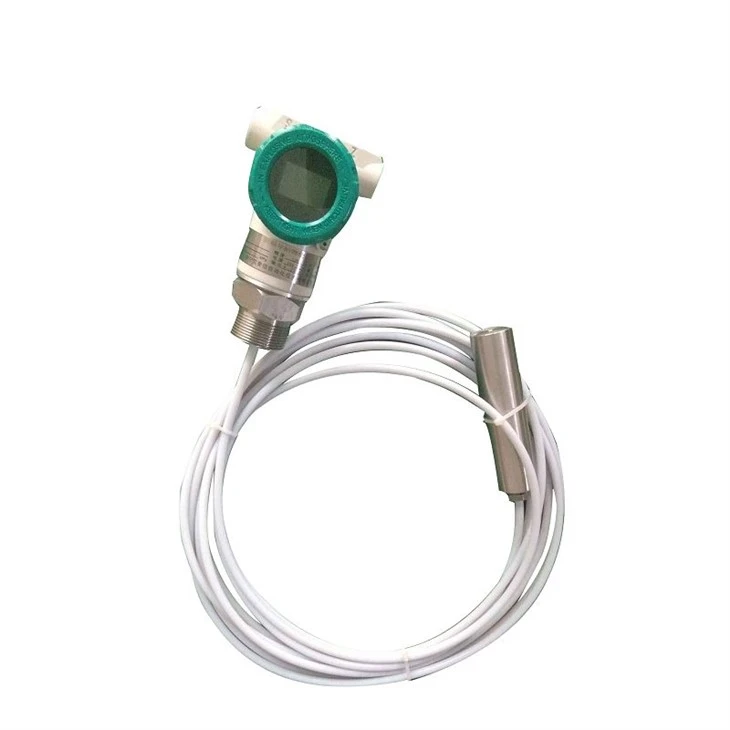

Applications of RF Admittance Level Gauges with High Interference Resistance
RF Admittance Level Gauges with high interference resistance are suitable for a wide range of applications, including:
Chemical Processing
In the chemical processing industry, RF Admittance Level Gauges are used to measure the level of various chemicals in tanks and reactors. These applications often involve high temperatures, pressures, and corrosive materials, as well as electrical noise and electromagnetic fields. By using a level gauge with high interference resistance, accurate and reliable level measurement can be achieved in these challenging environments.
Oil and Gas
In the oil and gas industry, RF Admittance Level Gauges are used to measure the level of oil, gas, and other fluids in tanks, pipelines, and wellheads. These applications often involve harsh environments, including high pressures, temperatures, and corrosive materials, as well as electrical noise and electromagnetic fields. By using a level gauge with high interference resistance, accurate and reliable level measurement can be achieved in these challenging environments.
Food and Beverage
In the food and beverage industry, RF Admittance Level Gauges are used to measure the level of liquids and solids in tanks and silos. These applications often involve strict hygiene requirements, as well as electrical noise and electromagnetic fields. By using a level gauge with high interference resistance, accurate and reliable level measurement can be achieved in these clean and controlled environments.
Conclusion
Interference resistance is a critical factor in the performance of RF Admittance Level Gauges. By understanding the types of interference and how RF Admittance Level Gauges achieve interference resistance, industrial users can make informed decisions when selecting a level gauge for their applications. As a supplier of RF Admittance Level Gauges, we are committed to providing our customers with high-quality products that offer excellent interference resistance and reliable performance.
If you are interested in learning more about our RF type level transmitter, RF level switch, or Oil-water Interface Meter, or if you have any questions about interference resistance or level measurement in general, please feel free to contact us. We would be glad to discuss your specific requirements and provide you with the best solution for your application.
References
- "Industrial Instrumentation and Control Handbook," Third Edition, by Bela Liptak.
- "Measurement, Instrumentation, and Sensors Handbook," Fourth Edition, by Jacob Fraden.
- Technical literature provided by manufacturers of RF Admittance Level Gauges.





