
How does an Admittance Level Switch detect the level?
Leave a message

Admittance level switches are crucial instruments in various industrial applications, used to detect the level of liquids, solids, and slurries in tanks, silos, and other containers. As a leading supplier of Admittance Level Switches, I am excited to share with you how these devices work and their significance in industrial level detection.
The Basics of Admittance Level Detection
Before delving into how an Admittance Level Switch detects the level, it's essential to understand the concept of admittance. Admittance is the measure of how easily an electrical circuit allows an alternating current (AC) to flow. It is the reciprocal of impedance and is composed of two components: conductance (the real part) and susceptance (the imaginary part). In the context of level detection, the admittance of a sensing probe changes as it comes into contact with different materials.
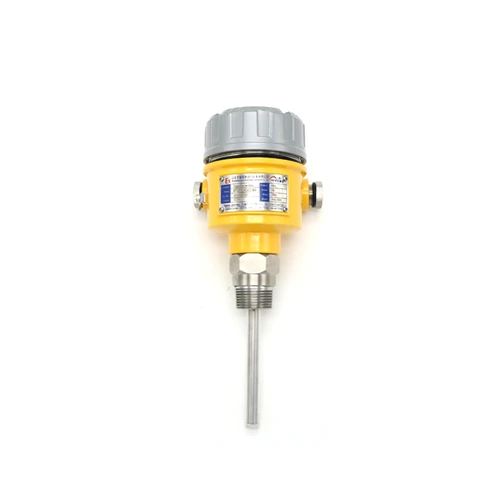
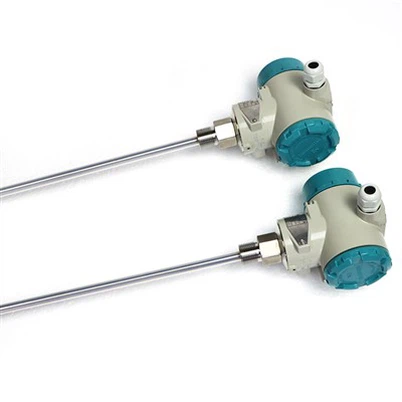
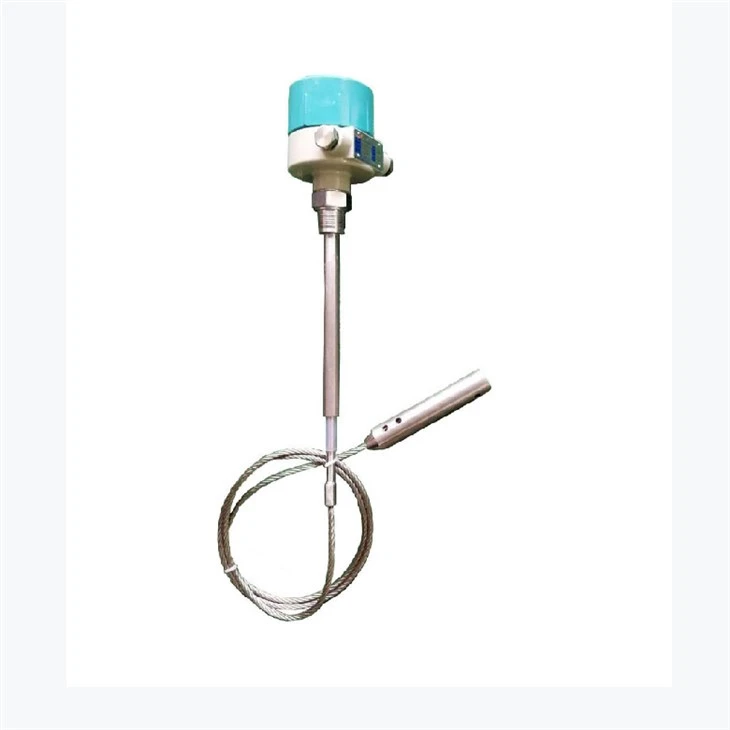
An Admittance Level Switch typically consists of a sensing probe, an electronic circuit, and an output relay. The sensing probe is inserted into the container where the level needs to be monitored. When the material in the container reaches the level of the probe, the electrical properties of the probe - material system change, which in turn changes the admittance measured by the electronic circuit.
The Working Principle of Admittance Level Switches
1. Capacitive Effect
The most common mechanism behind admittance level detection is the capacitive effect. The sensing probe and the container wall (or a reference electrode) form a capacitor. When the probe is in air, the capacitance is relatively low because air has a low dielectric constant. As the material rises and covers the probe, the dielectric constant between the probe and the container wall increases. This is because most materials (liquids, solids) have a higher dielectric constant than air.

The capacitance (C) of a capacitor is given by the formula (C=\frac{\epsilon A}{d}), where (\epsilon) is the permittivity of the medium between the plates, (A) is the area of the plates, and (d) is the distance between the plates. When the material with a higher (\epsilon) fills the space around the probe, the capacitance (C) increases.
The electronic circuit of the Admittance Level Switch measures this change in capacitance. It applies an AC voltage to the probe and measures the resulting current. Since admittance (Y = \frac{I}{V}) (where (I) is the current and (V) is the voltage), an increase in capacitance leads to an increase in admittance.
2. Conductive Effect
In addition to the capacitive effect, the conductive properties of the material can also affect the admittance measurement. Some materials, especially conductive liquids, can provide a direct electrical path between the probe and the container wall or a reference electrode. This increases the conductance component of the admittance.
The electronic circuit is designed to distinguish between the capacitive and conductive changes in admittance. It can be calibrated to respond to specific types of materials based on their electrical properties. For example, in a system where the material is a highly conductive liquid, the switch can be set to trigger when a certain increase in conductance is detected.
Factors Affecting Admittance Level Detection
1. Material Properties
The dielectric constant and conductivity of the material being measured are the most important factors. Different materials have different dielectric constants, which means that the change in admittance when the probe is covered by the material will vary. For example, water has a relatively high dielectric constant ((\epsilon_r\approx 80) at room temperature), while most plastics have a dielectric constant in the range of 2 - 4.
Conductive materials can also pose challenges. If the material is too conductive, it may cause false readings or short - circuit the sensing probe. In such cases, special probes and circuits are required to ensure accurate level detection.
2. Environmental Conditions
Temperature, pressure, and humidity can all affect the electrical properties of the material and the sensing probe. High temperatures can change the dielectric constant of the material and may also affect the performance of the electronic components in the switch. Humidity can cause corrosion of the probe and may introduce moisture - related electrical changes that need to be compensated for.
3. Installation and Mounting
The way the Admittance Level Switch is installed can also impact its performance. If the probe is not properly centered in the container or if it is too close to the wall, the electrical field distribution around the probe may be distorted, leading to inaccurate level detection. Additionally, the presence of agitators, pipes, or other objects in the container can interfere with the electrical field and affect the admittance measurement.

Applications of Admittance Level Switches
Admittance Level Switches are widely used in various industries, including chemical, food and beverage, pharmaceutical, and water treatment.
In the chemical industry, they are used to monitor the level of corrosive liquids in storage tanks. The ability to withstand harsh chemical environments and accurately detect the level is crucial for process safety and efficiency.
In the food and beverage industry, Admittance Level Switches are used to measure the level of liquids such as milk, juice, and beer. They need to be hygienic and comply with strict food safety regulations.
In the pharmaceutical industry, these switches are used to monitor the level of liquids and powders in production vessels. Precise level detection is essential for ensuring the quality and consistency of pharmaceutical products.
In the water treatment industry, Admittance Level Switches are used to control the level of water in tanks, clarifiers, and other treatment units. They help in maintaining the proper flow and treatment of water.
Advanced Features of Modern Admittance Level Switches
Modern Admittance Level Switches come with several advanced features to improve their performance and reliability.
1. Tunable Sensitivity
The sensitivity of the switch can be adjusted to suit different materials and applications. This allows for accurate level detection even in challenging environments where the material properties may vary.
2. Self - Compensation
Many switches are equipped with self - compensation mechanisms to account for changes in environmental conditions such as temperature and humidity. This ensures that the switch provides consistent and accurate level detection over a wide range of operating conditions.
3. Diagnostic Functions
Some Admittance Level Switches have diagnostic functions that can detect faults in the probe or the electronic circuit. This helps in early detection of problems and reduces downtime for maintenance.
Why Choose Our Admittance Level Switches
As a supplier of Admittance Level Switches, we offer high - quality products that are designed to meet the diverse needs of our customers. Our switches are built with the latest technology and are rigorously tested to ensure reliable performance.
We provide a wide range of Admittance Level Switches, including those suitable for different materials, temperatures, and pressures. Whether you need to measure the level of a liquid in a small tank or a bulk material in a large silo, we have the right solution for you.
Our technical support team is always available to assist you with installation, calibration, and troubleshooting. We also offer customization options to meet your specific requirements.
If you are interested in Admittance Level Switch, Rf admittance level measurement, or RF admittance level measurement switch for measuring bulk materials, please feel free to contact us for more information. We are looking forward to discussing your needs and providing you with the best level detection solutions.
References
- Beckwith, T. G., Buck, N. L., & Marangoni, R. D. (2006). Mechanical Measurements. Addison - Wesley.
- Dorf, R. C. (Ed.). (2008). The Electrical Engineering Handbook. CRC Press.
- Kroschwitz, J. I., & Howe - Grant, M. (Eds.). (1999). Kirk - Othmer Encyclopedia of Chemical Technology. Wiley.