

How does the presence of foam on the material surface affect the Silo Radar Level Meter?
Leave a message

As a supplier of Silo Radar Level Meters, I've witnessed firsthand the importance of understanding how various factors can influence the performance of these devices. One such factor that often poses challenges is the presence of foam on the material surface within the silo. In this blog post, I'll delve into how foam affects the Silo Radar Level Meter and explore ways to mitigate these issues.
Understanding the Basics of Silo Radar Level Meters
Before we discuss the impact of foam, let's briefly review how Silo Radar Level Meters work. These devices use radar technology to measure the distance between the sensor and the surface of the material in the silo. By emitting electromagnetic waves and analyzing the reflected signals, the meter can accurately determine the level of the material. This non-contact measurement method offers several advantages, including high accuracy, reliability, and the ability to operate in harsh environments.
How Foam Affects the Silo Radar Level Meter
Signal Reflection
One of the primary ways foam affects the Silo Radar Level Meter is by altering the way radar signals are reflected. Foam is a complex medium composed of gas bubbles surrounded by liquid films. When radar waves encounter foam, they can be scattered, absorbed, or reflected in multiple directions. This scattering and absorption of the radar signals can lead to inaccurate level measurements.
The presence of foam can create a false surface that reflects the radar waves, making it difficult for the meter to distinguish between the actual material surface and the foam layer. As a result, the meter may report a higher level than the actual material level, leading to overfilling or inaccurate inventory management.
Signal Attenuation
In addition to signal reflection, foam can also cause signal attenuation. Attenuation refers to the reduction in the strength of the radar signal as it passes through the foam layer. The gas bubbles and liquid films in the foam absorb and scatter the radar waves, reducing the intensity of the reflected signal. This can make it challenging for the meter to detect the reflected signal, especially if the foam layer is thick or dense.

When the signal is attenuated, the meter may struggle to accurately measure the level of the material. In some cases, the meter may not be able to detect the reflected signal at all, resulting in a loss of measurement. This can lead to downtime, production delays, and increased costs.
False Echoes
Another issue caused by foam is the generation of false echoes. False echoes occur when the radar waves are reflected off objects other than the material surface, such as the walls of the silo or the foam layer itself. These false echoes can interfere with the meter's ability to accurately measure the level of the material.
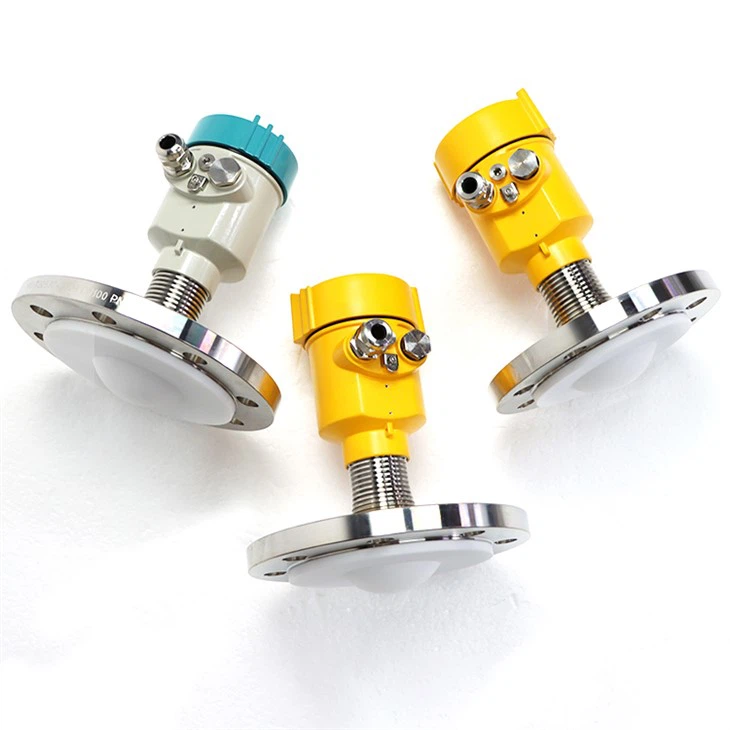
The meter may interpret the false echoes as the actual material surface, leading to inaccurate level readings. This can be particularly problematic in applications where precise level measurements are critical, such as in the chemical or food industries.
Mitigating the Effects of Foam on the Silo Radar Level Meter
Selecting the Right Radar Frequency
One way to mitigate the effects of foam on the Silo Radar Level Meter is to select the right radar frequency. Different radar frequencies have different penetration capabilities and are affected by foam to varying degrees. Generally, higher frequencies are more affected by foam than lower frequencies.

For applications where foam is present, it is often recommended to use a lower frequency radar level meter. Lower frequency radar waves have better penetration capabilities and are less likely to be scattered or absorbed by the foam. This can help improve the accuracy of the level measurements.
Using Antenna Design
Another way to mitigate the effects of foam is to use an appropriate antenna design. Antenna design plays a crucial role in determining the performance of the radar level meter, especially in the presence of foam. Some antenna designs are more resistant to foam interference than others.
For example, a parabolic antenna can be used to focus the radar waves and reduce the effects of foam scattering. The parabolic shape of the antenna helps to direct the radar waves towards the material surface, minimizing the impact of the foam layer. Additionally, some antennas are designed with special coatings or materials that can reduce the adhesion of foam to the antenna surface, further improving the performance of the meter.

Implementing Signal Processing Techniques
Signal processing techniques can also be used to mitigate the effects of foam on the Silo Radar Level Meter. These techniques involve analyzing the reflected radar signals to distinguish between the actual material surface and the foam layer.
One common signal processing technique is echo filtering. Echo filtering involves removing the false echoes from the reflected signals, allowing the meter to focus on the actual material surface. Another technique is signal averaging, which involves taking multiple measurements over a period of time and averaging them to reduce the impact of noise and interference.
Real-World Applications
To illustrate the importance of understanding the impact of foam on the Silo Radar Level Meter, let's consider a real-world application. Suppose you are a supplier of Silo Radar Level Meters to a chemical plant. The plant stores various chemicals in silos, and some of these chemicals tend to produce foam during the storage process.
If the Silo Radar Level Meter used in the plant is not properly configured to handle foam, it may provide inaccurate level measurements. This can lead to overfilling or underfilling of the silos, which can have serious consequences for the plant's operations. For example, overfilling can result in spills and environmental contamination, while underfilling can lead to production delays and lost revenue.
By understanding the impact of foam on the Silo Radar Level Meter and implementing the appropriate mitigation strategies, you can help the chemical plant ensure accurate level measurements and improve the efficiency of its operations.
Conclusion
In conclusion, the presence of foam on the material surface can have a significant impact on the performance of the Silo Radar Level Meter. Foam can cause signal reflection, attenuation, and false echoes, leading to inaccurate level measurements. However, by selecting the right radar frequency, using an appropriate antenna design, and implementing signal processing techniques, these effects can be mitigated.
As a supplier of Silo Radar Level Meters, it is our responsibility to educate our customers about the potential challenges posed by foam and provide them with the solutions they need to overcome these challenges. If you are experiencing issues with foam interference in your silo level measurements, we encourage you to contact us to discuss your specific requirements. We offer a range of Radar level switch, Radar level transmitter, and Radar type water level sensor that are designed to provide accurate and reliable level measurements in the presence of foam. Let's work together to ensure the success of your operations.
References
- "Radar Level Measurement Technology," Emerson Automation Solutions.
- "Foam and Its Impact on Radar Level Measurement," Siemens AG.
- "Level Measurement in Foamy Liquids," Endress+Hauser AG.





