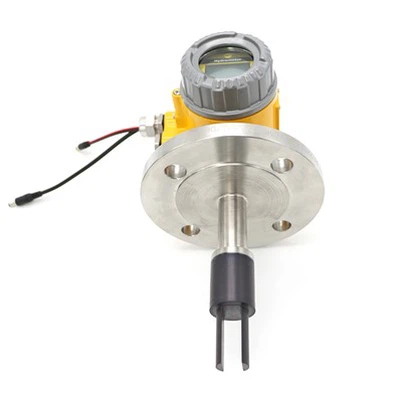


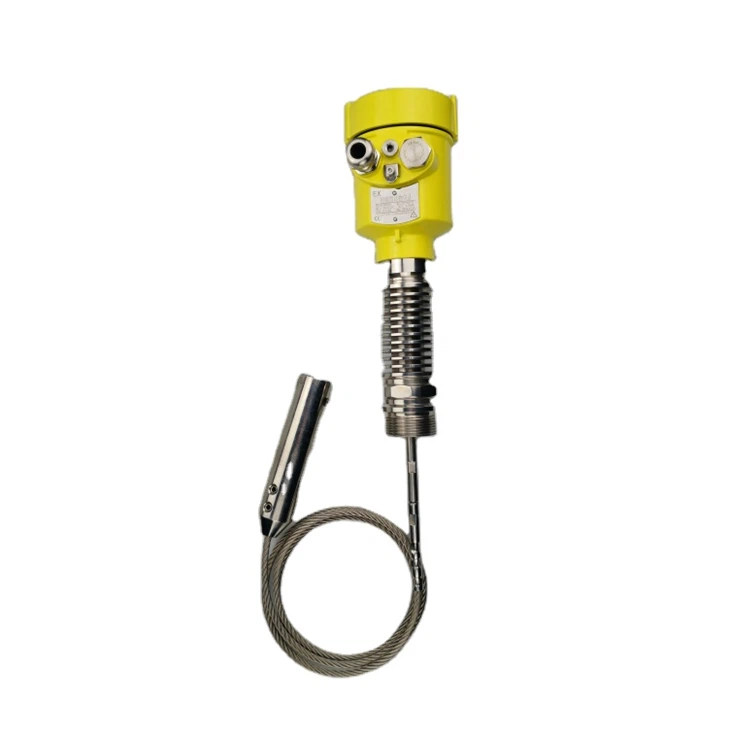


Guided wave radar
The guided wave radar is based on the principle of time-domain reflection (TDR). The radar liquid level gauge, based on a high-frequency oscillator, emits electromagnetic pulses that propagate downwards along the guided wave cable or rod. When the surface of the measured medium encounters it, some electromagnetic pulses from the contact radar transmitter of the guided wave liquid level sensor are reflected back to form an echo.
Description
Shandong Aipuxin Automation Instrument Co., Ltd. is one of leading manufacturers and suppliers of guided wave radar in China, also supports customized service with low price. Please rest assured to wholesale cheap guided wave radar in stock here from our factory.
Technical Parameter

Product Introduction:
Liquid level measurement is an important process in many industrial applications, including chemical processing plants, refineries, and wastewater treatment facilities. Accurate and reliable liquid level measurement is critical to ensuring the safety and efficiency of these operations. In recent years, guided wave radar measurement technology has become increasingly popular, providing an alternative to traditional measurement methods. This article will explore the advantages of guided wave radar non-contact level measurement and how it can be used in industrial applications.
What is guided wave radar non-contact liquid level measurement?
Guided wave radar is a technology that uses radio waves to measure the distance between a liquid or solid surface and a sensor. Typically, a radar level gauge is mounted above a liquid or solid, with radar waves sent downward to the surface. These waves have specific frequencies and wavelengths, and when they hit a surface, they bounce back to the sensor. The time it takes for the wave to reflect back to the sensor is used to calculate the distance between the surface and the sensor, which is then converted into a level measurement.
Guided wave radar is a versatile and accurate technology that offers many advantages over traditional measurement methods. It is widely used in industrial applications and is essential to ensure the safety and efficiency of processes. By providing highly accurate, non-intrusive and easy-to-install level measurement, it is becoming an increasingly popular choice in industries around the world.

Advantages
Advantages of Contactless Radar Level Measurement
1. Accuracy: Contactless radar level measurement provides high accuracy, with the ability to measure levels to within a few millimeters. This high accuracy is essential for industries where precise measurements are critical for safety and efficiency, such as the chemical and petrochemical industries.
2. Non-invasive: Contactless radar level measurement is non-invasive, meaning that the sensor does not come into contact with the liquid or solid being measured. This reduces the risk of contamination and avoids the drawbacks associated with invasive measurement methods, such as wear and tear and maintenance issues.
3. Versatile: Contactless radar level measurement is suitable for a wide range of applications, including liquids, slurries, and solids. It can also be used in challenging environments, such as those with high temperatures, high pressures, or corrosive chemicals.
4. Easy to install: Contactless radar level measurement is easy to install, with no need to shut down the process or product being measured. This reduces downtime and ensures that operations can continue uninterrupted.

Features


Product Application
Applications of Contactless Radar Level Measurement
Contactless radar level measurement is used in many industrial applications, including:
1. Chemical Processing: In chemical processing plants, accurate level measurement is crucial for ensuring safety and preventing spills, leaks, and overfilling. Contactless radar level measurement is ideal for measuring the levels of hazardous chemicals and corrosive substances.
2. Oil and Gas: In the oil and gas industry, accurate level measurement is essential for ensuring the safe and efficient storage and transportation of oil and gas products. Contactless radar level measurement is used in tank farms, refineries, and drilling operations.
3. Wastewater Treatment: In wastewater treatment facilities, accurate level measurement is critical for maintaining the correct levels of wastewater and preventing overflow. Contactless radar level measurement is used in primary settling tanks, activated sludge tanks, and final effluent tanks.


Installation instructions
Recommended distance (1) from the wall to the outer wall of the installed short pipe:
At a distance of 1/6 of the tank diameter from the tank wall, the minimum distance is 200mm.
Cannot be installed above the feed inlet (4).
Cannot be installed in the center position (3). If installed in the center, multiple false echoes will be generated, and interference echoes will cause signal loss.
certificate
12 month warranty period; Lifetime maintenance free

Hot Tags: guided wave radar, China guided wave radar manufacturers, factory, Guided Wave Radar Level Transmitter, High Temperature Guided Wave Radar Level Transmitter
Send Inquiry
You Might Also Like