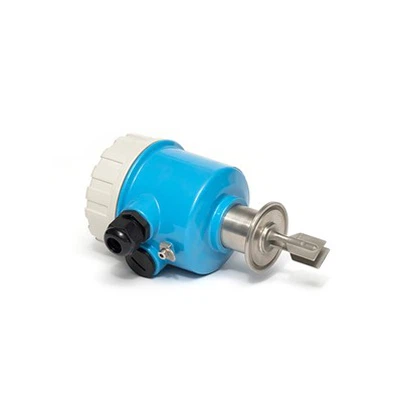

Can a capacitive water level gauge be used in saltwater?
Leave a message

Hey there! I'm a supplier of Capacitive Water Level Gauges, and today I wanna chat about whether a capacitive water level gauge can be used in saltwater. It's a question I get quite often from customers, so let's dive right in.
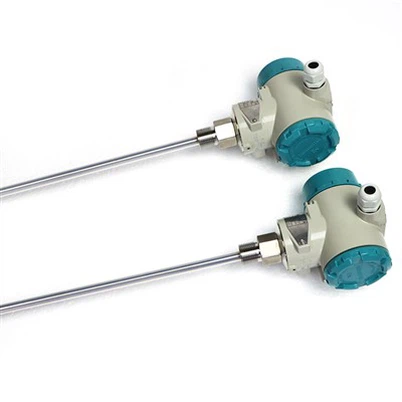
First off, let's understand how a capacitive water level gauge works. In simple terms, these gauges measure the water level by detecting changes in capacitance. Capacitance is basically the ability of a system to store an electric charge. The gauge has electrodes, and as the water level rises or falls, the dielectric constant between the electrodes changes. Since water has a different dielectric constant compared to air, the gauge can sense these changes and convert them into an accurate water - level reading.
Now, when it comes to saltwater, things get a bit more complicated. Saltwater is a good conductor of electricity because of the dissolved salts in it. These salts dissociate into ions, which can carry an electric current. This conductivity can have a significant impact on the performance of a capacitive water level gauge.
One of the main concerns is the electrical interference. The ions in saltwater can create a conductive path that may interfere with the electric field between the electrodes of the capacitive gauge. This interference can lead to inaccurate readings. The gauge might misinterpret the conductive properties of the saltwater as a change in the dielectric constant, causing it to give false water - level measurements.
Another issue is corrosion. Saltwater is highly corrosive. The electrodes of the capacitive water level gauge are usually made of metal, and prolonged exposure to saltwater can cause them to corrode. Corrosion can damage the electrodes, altering their electrical properties. As the electrodes corrode, the capacitance measurement becomes less reliable, and the gauge may eventually fail altogether.
However, that doesn't mean capacitive water level gauges can't be used in saltwater at all. With the right design and materials, they can be made suitable for saltwater applications.
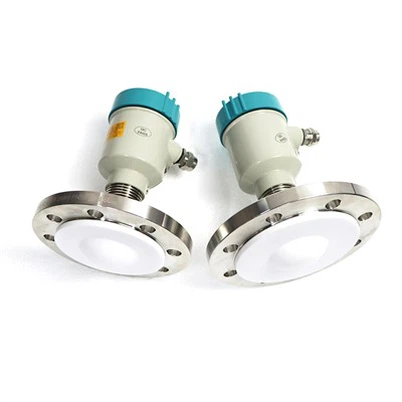
Some manufacturers use special coatings on the electrodes to protect them from corrosion. These coatings act as a barrier between the saltwater and the metal electrodes, preventing direct contact and thus reducing the risk of corrosion. For example, materials like PTFE (polytetrafluoroethylene) are often used as coatings because they are highly resistant to chemicals and have low friction.
In addition, advanced signal - processing techniques can be employed to filter out the electrical interference caused by the conductivity of saltwater. Modern capacitive water level gauges come with built - in microprocessors that can analyze the sensor data and correct for any interference, providing more accurate readings even in saltwater environments.
Now, let's talk about some alternatives and related products. If you're still concerned about using a capacitive water level gauge in saltwater, there are other options available. For instance, the Rf admittance type level switch is a great alternative. It works on the principle of RF admittance, which takes into account both the capacitance and the conductivity of the medium. This makes it more suitable for conductive liquids like saltwater.
Another option is the RF type level transmitter. It uses radio - frequency technology to measure the level of the liquid. It's less affected by the electrical conductivity of saltwater and can provide reliable level measurements.
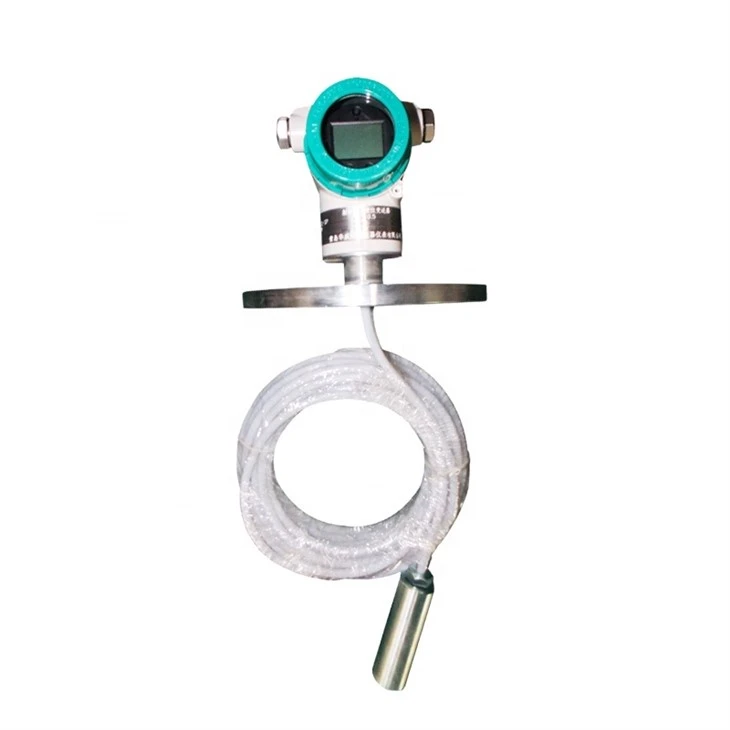

The RF level switch is also worth considering. It operates based on radio - frequency capacitance and can be used in saltwater applications with proper calibration and configuration.
If you're in the market for a water level gauge for your saltwater application, don't hesitate to reach out. We've got a wide range of capacitive water level gauges that can be customized to meet your specific needs. Whether it's a small - scale project or a large industrial application, we can provide you with the right solution. Our team of experts can help you choose the best gauge for your situation, taking into account factors like the salinity of the water, the depth of the measurement, and the environmental conditions.
We understand the challenges of using water level gauges in saltwater, and we're committed to providing high - quality products that can overcome these challenges. So, if you're interested in learning more or making a purchase, just get in touch. We're here to help you find the perfect water level gauge for your saltwater needs.
References
- "Principles of Capacitive Sensing in Liquid Level Measurement" - Journal of Instrumentation and Measurement
- "Corrosion Resistance of Materials in Saltwater Environments" - Materials Science Review