

Are capacitive level sensors affected by the color of the liquid?
Leave a message

As a supplier of capacitive level sensors, one question that often comes up in discussions with clients is whether these sensors are affected by the color of the liquid they are measuring. This is a valid concern, especially in industries where liquids come in a wide range of colors and appearances. In this blog post, we'll delve into the science behind capacitive level sensors and explore the relationship between liquid color and sensor performance.
How Capacitive Level Sensors Work
Before we can address the question of color influence, it's important to understand how capacitive level sensors operate. At their core, these sensors measure the change in capacitance caused by the presence or absence of a liquid. Capacitance is the ability of a system to store an electric charge, and it is determined by the physical properties of the materials involved, such as their dielectric constant.
A typical capacitive level sensor consists of two conductive plates separated by a dielectric material. When a liquid comes into contact with the sensor, it changes the dielectric constant between the plates, which in turn alters the capacitance. The sensor detects this change and converts it into an electrical signal that can be used to determine the level of the liquid.
The Role of Dielectric Constant
The dielectric constant is a key factor in the operation of capacitive level sensors. It is a measure of how easily a material can be polarized by an electric field. Different liquids have different dielectric constants, which means that they will affect the capacitance of the sensor in different ways. For example, water has a relatively high dielectric constant of around 80, while oils typically have much lower values, often in the range of 2 - 4.
The color of a liquid, on the other hand, is determined by the way it absorbs and reflects light. It is a property related to the liquid's optical characteristics, not its electrical properties. In most cases, the color of a liquid has no direct impact on its dielectric constant. Therefore, from a theoretical standpoint, capacitive level sensors should not be affected by the color of the liquid.
Real - World Considerations
While the color of a liquid does not directly affect the dielectric constant, there are some real - world factors that could potentially create an association between color and sensor performance.
Impurities and Additives
In many industrial applications, liquids may contain impurities or additives that can change both the color and the dielectric constant of the liquid. For example, a liquid may be dyed for identification purposes, and the dye itself could contain substances that alter the electrical properties of the liquid. In such cases, it is not the color that is affecting the sensor, but rather the chemical composition of the additives.
Suspended Particles
Liquids with suspended particles can also pose challenges for capacitive level sensors. These particles can change the apparent dielectric constant of the liquid and may cause the sensor to give inaccurate readings. In some cases, the color of the liquid may be related to the presence of these particles. For example, a cloudy or murky liquid may indicate a high concentration of suspended solids. However, it is the presence of the particles, not the color, that is the root cause of the problem.
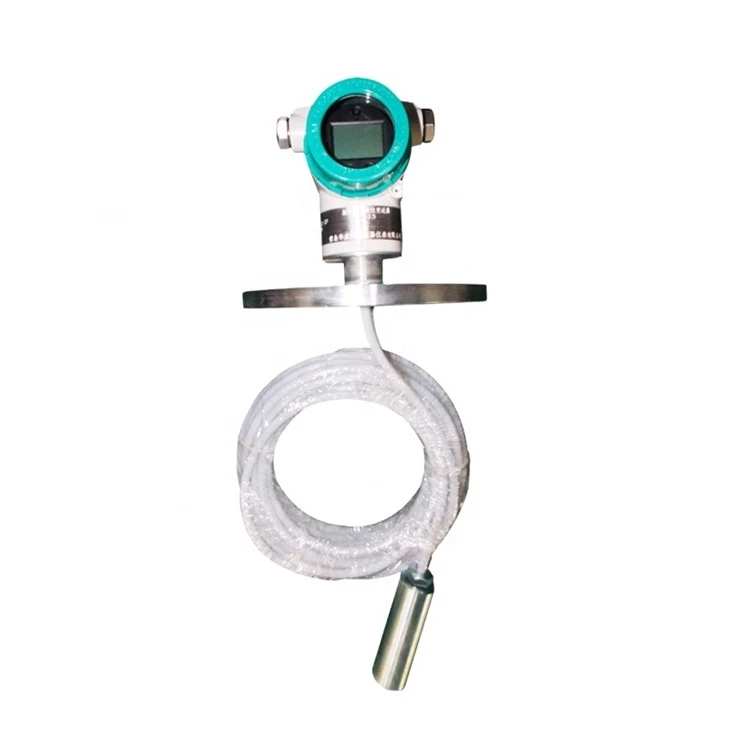

Testing and Validation
To ensure the accuracy of our capacitive level sensors, we conduct extensive testing under various conditions. We test our sensors with liquids of different colors, compositions, and levels of impurities. Our testing has shown that as long as the liquid's dielectric constant remains stable, the sensor will provide reliable and accurate level measurements, regardless of the liquid's color.
For example, we have tested our sensors with clear water, colored water (dyed with food - grade dyes), and various industrial oils of different colors. In all cases, the sensors were able to accurately detect the liquid level, demonstrating that color does not have a significant impact on their performance.
Our Product Range
As a leading supplier of capacitive level sensors, we offer a wide range of products to meet the diverse needs of our customers. Our product portfolio includes RF capacitance level switch, Level switch capacitance, and RF level switch.
These sensors are designed to be highly accurate, reliable, and easy to install. They can be used in a variety of applications, including chemical processing, food and beverage production, water treatment, and oil and gas industries. Our sensors are also customizable to meet specific requirements, such as high - temperature or high - pressure environments.
Contact Us for Procurement
If you are in the market for high - quality capacitive level sensors, we invite you to contact us for procurement discussions. Our team of experts is ready to assist you in selecting the right sensor for your application and answering any questions you may have. Whether you are dealing with clear liquids or those with complex colors and compositions, our capacitive level sensors are designed to provide accurate and reliable level measurements.
References
- "Capacitive Sensors: Principles, Designs, and Applications" by S. E. Lyshevski
- "Industrial Instrumentation and Control Handbook" by B. G. Liptak
- Technical reports from in - house testing of capacitive level sensors.





