
Are capacitive level sensors affected by suspended solids in the liquid?
Leave a message

Hey there! As a supplier of Capacitive Level Sensors, I often get asked a bunch of questions from customers. One question that pops up quite a bit is, "Are capacitive level sensors affected by suspended solids in the liquid?" Well, let's dig into this topic and find out.
First off, let's understand how capacitive level sensors work. These sensors operate based on the principle of capacitance. Capacitance is basically the ability of a system to store an electric charge. In a capacitive level sensor, there are usually two electrodes. When the sensor is in contact with a liquid, the liquid acts as a dielectric between these electrodes, which changes the capacitance value. The sensor then measures this change in capacitance and converts it into a level measurement.
Now, let's talk about suspended solids in the liquid. Suspended solids are particles that are floating around in the liquid rather than being dissolved in it. They can come from all sorts of sources, like dirt, debris, or even some kind of sediment in industrial processes.
So, do these suspended solids mess with the performance of capacitive level sensors? The answer is, it depends.
In some cases, a small amount of suspended solids might not have a significant impact on the sensor's readings. Capacitive level sensors are designed to be sensitive to changes in the dielectric constant of the medium they're in. If the suspended solids are present in low concentrations and have a dielectric constant similar to that of the liquid, the sensor might still be able to accurately measure the liquid level.
However, when the concentration of suspended solids gets too high, things can get a bit tricky. High concentrations of suspended solids can cause the dielectric constant of the mixture (liquid + suspended solids) to deviate from that of the pure liquid. This deviation can lead to inaccurate level measurements. For example, if the suspended solids have a much higher dielectric constant than the liquid, the sensor might interpret the mixture as having a higher level than it actually does.
Another issue that can arise with high concentrations of suspended solids is coating. Over time, the suspended solids can coat the electrodes of the capacitive level sensor. This coating can act as an additional dielectric layer, altering the capacitance measurement and causing errors in the level reading. Coating can also cause problems with the sensor's response time. It might take longer for the sensor to detect changes in the liquid level because the coating is interfering with the electrical field between the electrodes.
Now, let's look at some of the solutions to deal with these issues.
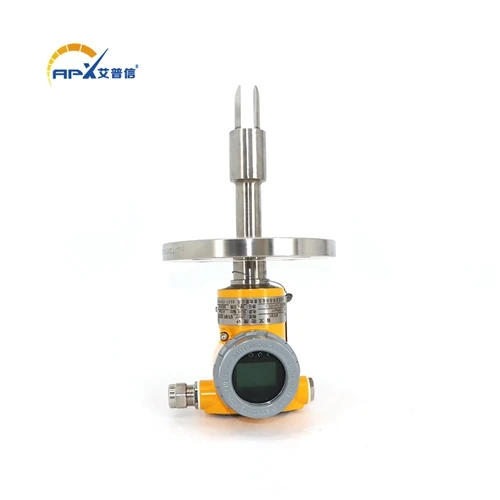
One option is to use a Rf admittance type level switch. This type of switch is designed to be more resistant to the effects of suspended solids and coating. It uses a different measurement technique that takes into account both the capacitance and the conductance of the medium. By measuring both parameters, it can better distinguish between the liquid and any coating or suspended solids on the electrodes.
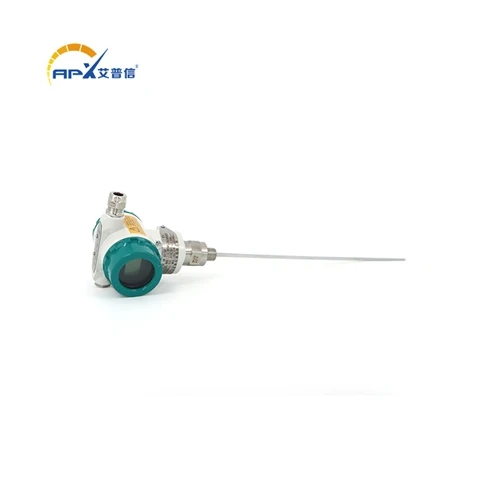
Another solution is to use a RF type level transmitter. These transmitters are also quite effective in dealing with challenging environments that have suspended solids. They use radio frequency technology to measure the level, which can provide more accurate and reliable readings even in the presence of some coating or suspended particles.
If you're looking for a simple and cost - effective solution for applications where the suspended solids are not too severe, a Level switch capacitance might be a good choice. These switches are easy to install and can still provide reasonably accurate level measurements in many situations.

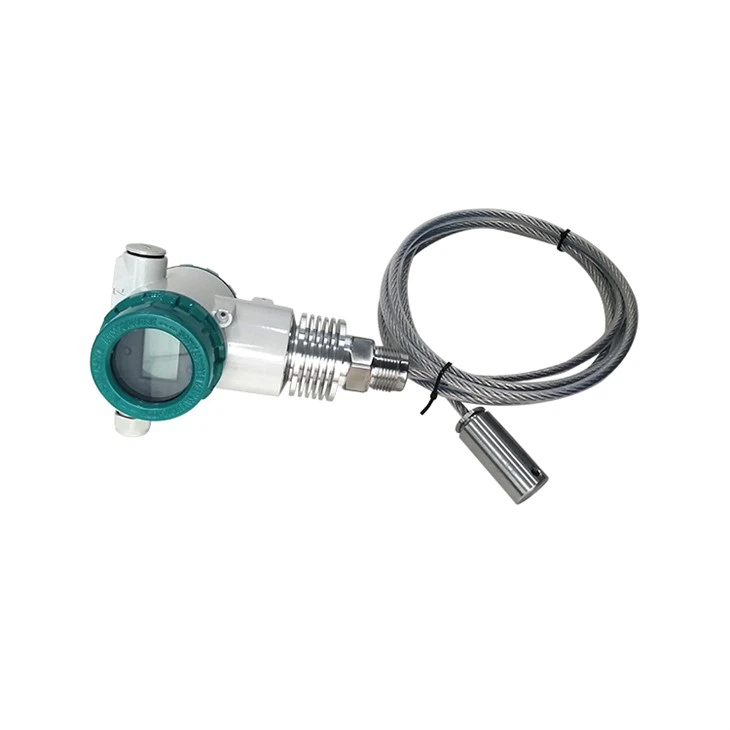
In industrial applications, it's also important to consider the maintenance of the sensors. Regular cleaning of the sensor electrodes can help prevent excessive coating from building up. This can be done manually or by using automated cleaning systems, depending on the specific requirements of the application.
In some cases, you might also want to consider the location of the sensor. Placing the sensor in an area where the flow of the liquid is more turbulent can help prevent the settling of suspended solids on the electrodes. This can improve the accuracy of the level measurements over time.
So, to sum it all up, capacitive level sensors can be affected by suspended solids in the liquid, but there are ways to mitigate these effects. Whether you choose a standard capacitive level sensor or one of the more advanced options like the Rf admittance type level switch or RF type level transmitter, it's important to understand the specific conditions of your application and make an informed decision.
If you're in the market for a capacitive level sensor and have questions about how it will perform in a liquid with suspended solids, don't hesitate to reach out. We're here to help you find the best solution for your needs. Whether it's for a small - scale laboratory setup or a large - scale industrial process, we've got the expertise and the products to meet your requirements.
Let's start a conversation and see how we can work together to solve your level measurement challenges. Whether it's discussing the technical details, getting a quote, or just getting more information, we're ready to assist you. So, if you're interested in our capacitive level sensors, feel free to get in touch and let's talk about your project.
References
- "Capacitive Level Sensors: Principles and Applications" - A technical handbook on capacitive sensing technology
- "Industrial Level Measurement: Dealing with Challenging Media" - A whitepaper discussing the challenges of level measurement in industrial settings with various media types
- "The Effects of Suspended Solids on Sensor Performance" - A research paper on how suspended solids can impact different types of sensors.