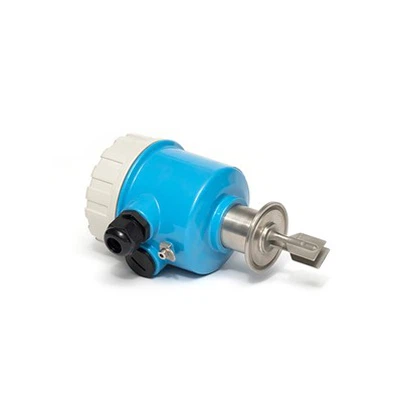

How does an 80G Radar Level Meter perform in a marine environment?
Leave a message

Hey there! I'm working as a supplier of 80G Radar Level Meters, and I often get asked about how our products perform in a marine environment. So, I thought I'd share some insights on this topic.
Understanding the Marine Environment Challenges
The marine environment is a tough place for any equipment. First off, there's the saltwater. Saltwater is highly corrosive, and it can eat away at the outer casing of many devices over time. This corrosion can not only damage the physical appearance of the equipment but also compromise its internal components, leading to malfunctions.
Then, there are the waves and the constant motion. Ships are always moving, and the water surface is never still. This means that the measuring conditions are highly dynamic. Unlike a stable industrial tank on land, the target surface (like the liquid level in a ship's tank) is constantly changing its position and shape.
Another challenge is the humidity. The air in the marine environment is often saturated with moisture. High humidity can cause condensation inside the equipment, which might short - circuit the electronic parts and reduce the lifespan of the device.


How 80G Radar Level Meters Are Built to Handle These Challenges
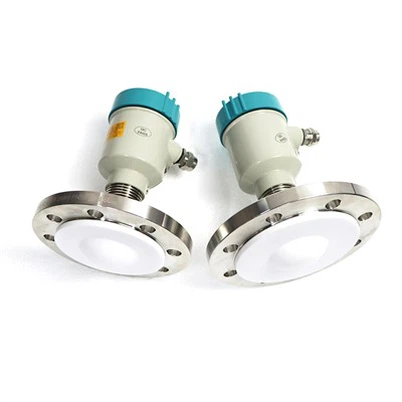
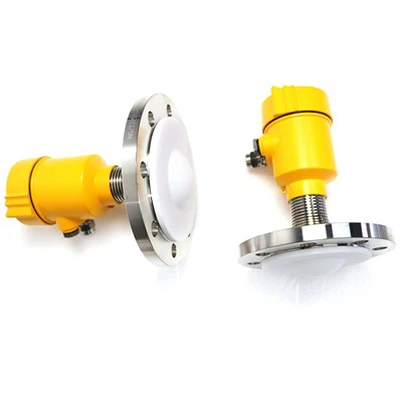
Let's talk about the technology behind our 80G Radar Level Meters. These meters use a high - frequency radar signal at 80GHz. This high frequency gives them a narrow Radar beam type level gauge. A narrow beam is super useful in a marine environment because it can focus precisely on the target, even when there are waves and disturbances on the surface. It can easily distinguish between the actual liquid level and the waves, providing more accurate measurements.
In terms of the corrosion issue, our 80G Radar Level Meters are made with high - quality, corrosion - resistant materials. The outer casing is designed to withstand the harsh effects of saltwater. We use special coatings and alloys that form a protective barrier against the corrosive elements. This ensures that the meter can operate in the marine environment for a long time without significant damage.
To deal with the high humidity, the meters are well - sealed. The electronic components are housed in a hermetically sealed enclosure, preventing moisture from getting inside. This not only protects the electronics from short - circuits but also maintains the stability of the internal temperature, which is crucial for the proper functioning of the radar system.
Performance in Real - World Marine Applications
I've heard from many of our customers who use our [80GHZ high frequency radar level meter](/radar-level-meter/80g-radar-level-meter/explosion - proof - radar - level - gauge.html) in their marine operations. For example, in oil tankers, these meters are used to measure the level of oil in the tanks. The narrow radar beam can accurately measure the oil level, even when the tanker is in motion and the oil surface is wavy. This helps the crew to monitor the oil quantity precisely, which is important for safety and logistics.
In fishing vessels, the 80G Radar Level Meters are used to measure the level of water in the ballast tanks. Ballast tanks are essential for maintaining the stability of the vessel. With accurate level measurements, the crew can adjust the ballast water as needed, ensuring the safety of the ship and its crew.
Advantages over Other Level Measurement Methods in the Marine Environment
Compared to other level measurement methods, like float - type gauges or ultrasonic sensors, 80G Radar Level Meters have several advantages. Float - type gauges can be affected by the motion of the ship. The floats might get stuck or move erratically due to the waves, leading to inaccurate measurements. Ultrasonic sensors, on the other hand, can be affected by the high humidity and the presence of steam or fog in the marine environment. The ultrasonic waves can be absorbed or scattered by the moisture, reducing the accuracy of the measurement.
In contrast, our [Non contact radar sensor](/radar-level-meter/80g-radar-level-meter/cement - silo - material - radar - level - gauge.html) has no moving parts, so it's not affected by the motion of the ship. And since it uses radar waves, which are less affected by humidity and steam, it can provide more reliable and accurate measurements in the marine environment.
Maintenance and Long - Term Performance
One of the great things about our 80G Radar Level Meters is that they require relatively low maintenance. Thanks to the high - quality materials and the sealed design, there's less wear and tear. However, it's still important to perform regular inspections. Check the outer casing for any signs of damage or corrosion, and make sure the seals are intact.
Over the long term, these meters are built to last. They can provide accurate measurements for years, even in the harsh marine environment. This reliability means that our customers can save on replacement costs and avoid the downtime associated with equipment failures.
Wrapping It Up and Reaching Out
So, to sum it up, our 80G Radar Level Meters are a great choice for the marine environment. They can handle the challenges of saltwater corrosion, wave motion, and high humidity with ease. They offer accurate and reliable level measurements, which are crucial for the safety and efficiency of marine operations.
If you're in the marine industry and looking for a high - performance level measurement solution, I'd love to talk to you. Whether you're operating an oil tanker, a fishing vessel, or any other type of marine craft, our 80G Radar Level Meters can meet your needs. Don't hesitate to reach out to start a conversation about how we can help you with your level measurement requirements.
References
- "Radar Level Measurement Technology" - A technical guide on radar - based level measurement.
- "Marine Equipment Handbook" - A comprehensive resource on equipment used in the marine environment.