

What is the principle of measuring sugar concentration with a concentration meter?
Leave a message

As a provider of concentration meters, I often receive inquiries from customers about the principles behind measuring sugar concentration using these devices. In this blog post, I'll delve into the science and technology that enable accurate sugar concentration measurements and how our concentration meters play a crucial role in various industries.
The Basics of Sugar Concentration Measurement
Sugar concentration is a critical parameter in many industries, including food and beverage, pharmaceuticals, and biofuels. Knowing the exact sugar concentration helps in quality control, process optimization, and ensuring product consistency. There are several methods to measure sugar concentration, but the most common ones rely on the physical properties of sugar solutions.
One of the fundamental properties used for sugar concentration measurement is density. As the concentration of sugar in a solution increases, the density of the solution also increases. This relationship is not linear but can be accurately calibrated for different types of sugars and solutions. By measuring the density of a sugar solution, we can infer its sugar concentration.
Another important property is refractive index. When light passes through a sugar solution, its direction changes based on the concentration of sugar. The refractive index is a measure of how much the light is bent. Similar to density, the refractive index of a sugar solution has a well - defined relationship with its sugar concentration.
Measuring Sugar Concentration with Density - Based Concentration Meters
Density - based concentration meters work on the principle of measuring the mass per unit volume of a sugar solution. There are different types of density - based meters, and one of the most reliable is the vibrating tuning fork concentration meter.
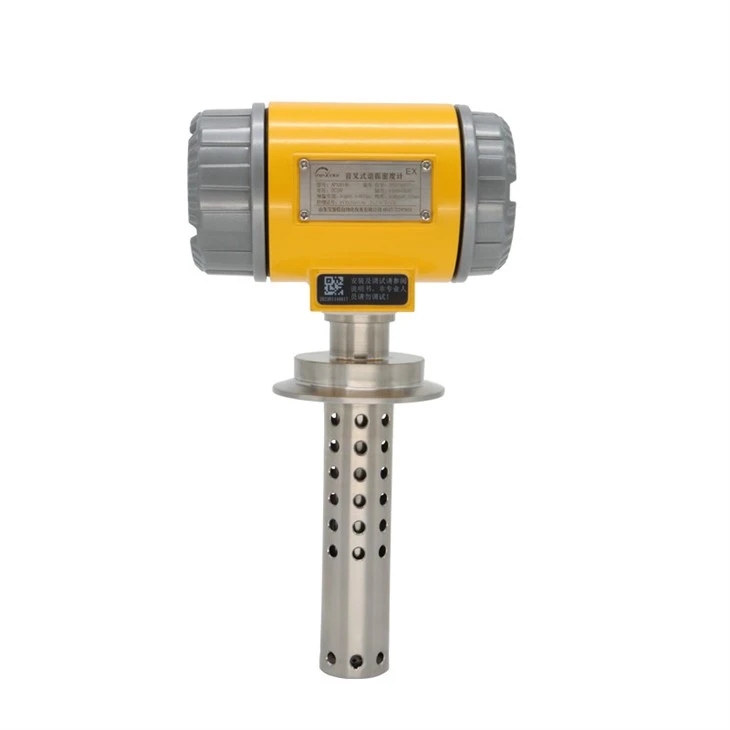
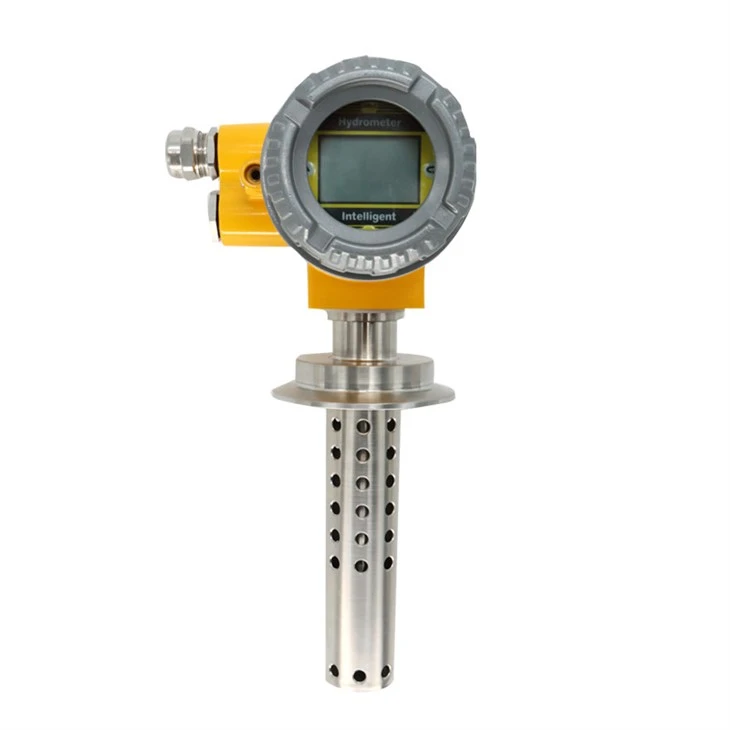
The Vibrating Tuning Fork Concentration Meter operates by vibrating a tuning fork in the sugar solution. The frequency of vibration of the tuning fork is affected by the density of the surrounding medium. As the sugar concentration increases, the density of the solution goes up, and the vibration frequency of the tuning fork changes. This change in frequency is measured and converted into a density value. Once the density is known, using pre - calibrated tables or equations, the sugar concentration can be determined.
These meters are highly accurate and can be used in a wide range of applications. In the food and beverage industry, for example, they are used to measure the sugar content in fruit juices, soft drinks, and syrups. In the pharmaceutical industry, they can be used to monitor the sugar concentration in oral medications and syrups.
Measuring Sugar Concentration with Refractive Index - Based Concentration Meters
Refractive index - based concentration meters measure the refractive index of a sugar solution to determine its sugar concentration. When light enters a sugar solution, it slows down and changes direction. The refractive index is defined as the ratio of the speed of light in a vacuum to the speed of light in the solution.
These meters typically use a light source and a detector. The light passes through the sugar solution, and the detector measures the angle of refraction. Based on the measured angle, the refractive index is calculated. Since the refractive index has a known relationship with sugar concentration, the sugar concentration can be determined.
Refractive index - based meters are very sensitive and can provide real - time measurements. They are commonly used in the wine and beer industry to measure the sugar content during the fermentation process. By monitoring the sugar concentration, brewers can control the fermentation process and ensure the desired alcohol content in the final product.
Applications in Different Industries
Food and Beverage Industry
In the food and beverage industry, accurate sugar concentration measurement is essential for product quality and taste. For example, in the production of jams and jellies, the sugar concentration affects the texture and shelf - life of the product. Too little sugar can lead to spoilage, while too much sugar can make the product overly sweet. Our concentration meters can be used at various stages of the production process, from raw material inspection to final product quality control.
Pharmaceutical Industry
In pharmaceuticals, sugar is often used as an excipient in oral medications. The sugar concentration can affect the solubility, stability, and palatability of the medication. Our concentration meters can help pharmaceutical manufacturers ensure that the sugar concentration in their products meets the required specifications.
Biofuel Industry
In the biofuel industry, sugar is a key feedstock for the production of ethanol. Measuring the sugar concentration in the fermentation broth is crucial for optimizing the fermentation process and maximizing ethanol production. Our Online alcohol concentration meter for automated brewing production control can be used in conjunction with sugar concentration measurement to monitor the entire fermentation process and ensure efficient ethanol production.
Acid Density Measurement in Related Processes
In some processes related to sugar concentration measurement, acid density measurement can also be important. For example, in the hydrolysis of starch to produce sugar, acids are often used as catalysts. Monitoring the acid density can help in controlling the hydrolysis reaction and ensuring the quality of the final sugar product. Our Acid density meter can be used to accurately measure the acid density in such processes.
Why Choose Our Concentration Meters
Our concentration meters are designed with the latest technology and high - quality materials to ensure accurate and reliable measurements. They are easy to install, operate, and maintain. We offer a wide range of concentration meters to meet the specific needs of different industries. Whether you need a simple handheld meter for occasional measurements or an online meter for continuous process control, we have the right solution for you.
If you are interested in learning more about our concentration meters or have specific requirements for measuring sugar concentration in your industry, we invite you to contact us for a detailed discussion. Our team of experts is ready to provide you with the best solutions and support to help you optimize your processes and improve your product quality.
References
- ASTM International. Standard Test Methods for Density, Relative Density (Specific Gravity), or API Gravity of Crude Petroleum and Liquid Petroleum Products by Hydrometer Method. ASTM D1298 - 12.
- American Society of Brewing Chemists. Methods of Analysis. 9th ed. ASBC, 2019.
- European Pharmacopoeia. 10th ed. Council of Europe, 2020.





