
What is the measuring range of a typical capacitive level sensor?
Leave a message

Hey there! As a supplier of Capacitive Level Sensors, I often get asked about the measuring range of these nifty devices. So, I thought I'd sit down and write a blog post to share all the ins and outs of it.


First off, let's quickly go over what a capacitive level sensor is. It's a type of sensor that works based on the principle of capacitance. Capacitance is the ability of a system to store an electric charge. In the case of a capacitive level sensor, it measures the change in capacitance caused by the presence or absence of a material (like a liquid or a solid) in the sensor's vicinity.
Now, to the main question: what's the measuring range of a typical capacitive level sensor? Well, it can vary quite a bit depending on a few factors.
Factors Affecting the Measuring Range
Sensor Design
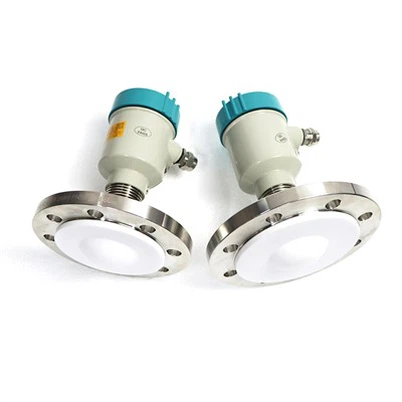
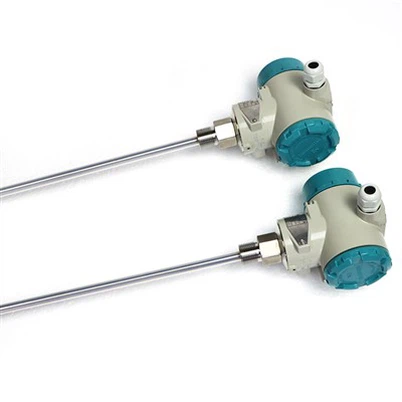
The design of the sensor plays a huge role. There are different types of capacitive level sensors, such as rod sensors, cable sensors, and fork sensors. Rod sensors are usually used for measuring the level in tanks or containers. They can have a measuring range from just a few centimeters to several meters. For example, some of our shorter rod sensors can measure levels in small laboratory beakers, with a range of maybe 5 - 10 cm. On the other hand, the longer rod sensors can be used in large industrial tanks and can measure levels up to 5 meters or more.
Cable sensors are more flexible and can be used in deeper tanks or in applications where you need to measure the level at different depths. These sensors can have a measuring range that goes up to 20 meters or even more. They're great for things like measuring the water level in a well or the level of a liquid in a deep storage silo.
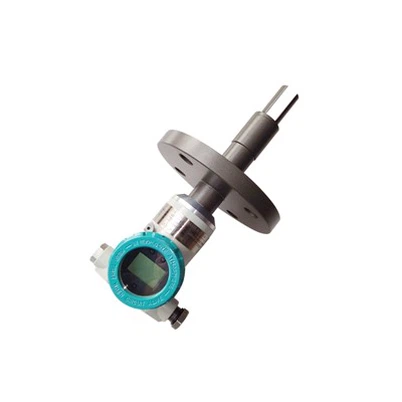
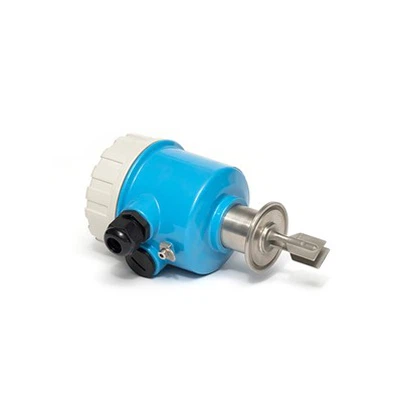
Fork sensors, on the other hand, are typically used for point level detection. They're not really meant for continuous level measurement like the rod and cable sensors. The measuring range of a fork sensor is usually just the distance between the two prongs of the fork, which can be anywhere from a few millimeters to a few centimeters.
Material Being Measured
The type of material you're measuring also affects the measuring range. Different materials have different dielectric constants. The dielectric constant is a measure of how well a material can store electrical energy in an electric field. Materials with a high dielectric constant, like water, are easier to detect and can often be measured over a larger range. For instance, our Capacitive water level sensor can accurately measure the water level in a tank with a range of up to 15 meters.
On the other hand, materials with a low dielectric constant, like some powders or granular materials, can be more challenging to measure. The measuring range for these materials might be shorter, usually up to a few meters.
Environmental Conditions
The environment in which the sensor is used can also impact the measuring range. Factors like temperature, humidity, and the presence of dust or other contaminants can affect the performance of the sensor. For example, in a very dusty environment, the dust can accumulate on the sensor and change its capacitance, which might reduce the accuracy and the measuring range. In high - temperature environments, the electrical properties of the sensor and the material being measured can change, also affecting the measuring range.
Typical Measuring Ranges
In general, for continuous level measurement of liquids, a typical capacitive level sensor can have a measuring range from 0.1 meters to 20 meters. This range covers a wide variety of applications, from small domestic water tanks to large industrial storage vessels.
For point level detection, the range is usually much smaller, typically from a few millimeters to a few centimeters. Point level sensors are used to detect when a liquid or solid reaches a certain level, like an overflow or a low - level alarm.
Specialized Applications and Their Ranges
In some specialized applications, the measuring range can be even more extreme. For example, in the oil and gas industry, where you need to measure the level of oil in deep - sea drilling platforms or large storage tanks, the measuring range can go up to 30 meters or more.
In the food and beverage industry, where hygiene is a major concern, the sensors are often designed to measure levels in relatively small tanks or containers. The measuring range in these applications might be from 0.2 meters to 5 meters.
Our Product Range
At our company, we offer a wide range of capacitive level sensors to meet different measuring range requirements. Our Capacitive liquid level sensor for continuous measurement of liquid level is a great choice for most general - purpose liquid level measurement applications. It has a measuring range of 0.5 meters to 15 meters and is highly accurate and reliable.
We also have the RF type level transmitter, which is suitable for measuring the level of both liquids and solids. This transmitter can handle measuring ranges from 1 meter to 20 meters and is very versatile in different industrial environments.
Why Choose Our Capacitive Level Sensors
One of the main reasons to choose our capacitive level sensors is the wide range of measuring ranges we offer. Whether you need to measure the level in a small container or a large industrial tank, we have a sensor that can do the job.
Our sensors are also very accurate and reliable. We use high - quality materials and advanced manufacturing techniques to ensure that our sensors can perform well in different environmental conditions. And we provide excellent customer support, so if you have any questions or issues with the measuring range or the performance of the sensor, our team is always ready to help.
Contact Us for Your Needs
If you're in the market for a capacitive level sensor and need to figure out the right measuring range for your application, don't hesitate to get in touch with us. We can help you choose the best sensor based on your specific requirements. Whether it's for a small - scale project or a large industrial installation, we've got the expertise and the products to meet your needs. Contact us today to start the procurement process and get the perfect capacitive level sensor for your business.
References
- "Industrial Sensors Handbook" - A comprehensive guide on different types of industrial sensors, including capacitive level sensors.
- "Level Measurement Technology" - A technical book that covers the principles and applications of level measurement, with a focus on capacitive sensors.