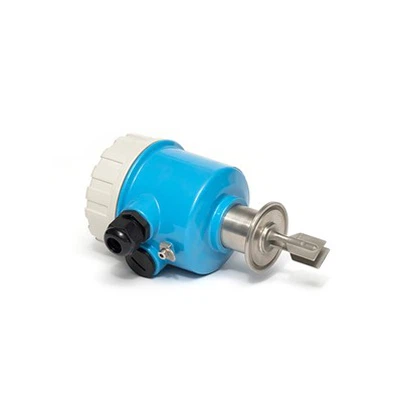

What are the technical specifications of a Silo Radar Level Meter?
Leave a message

What are the technical specifications of a Silo Radar Level Meter?
As a reputable supplier of Silo Radar Level Meters, I am often asked about the technical specifications of these essential devices. In this blog post, I will delve into the key technical aspects that define the performance and capabilities of a Silo Radar Level Meter.
Frequency and Wavelength
One of the fundamental technical specifications of a Silo Radar Level Meter is its operating frequency. Most modern Silo Radar Level Meters operate in the microwave frequency range, typically around 26 GHz. This high frequency offers several advantages, including a shorter wavelength. A shorter wavelength allows for a more focused radar beam, which results in better accuracy and resolution when measuring the level of materials in a silo.


The 26 GHz frequency is well - suited for silo applications because it can penetrate dust, vapor, and other obstacles that are commonly found in industrial silos. This makes it possible to obtain reliable level measurements even in challenging environments. For more information on non - contact high - temperature radar liquid level measurement, which also benefits from high - frequency radar technology, you can visit Non contact high - temperature radar liquid level measurement.
Measuring Range
The measuring range of a Silo Radar Level Meter is another crucial specification. It refers to the maximum and minimum distances that the meter can accurately measure the level of the material in the silo. Measuring ranges can vary widely depending on the model and application. Some Silo Radar Level Meters are designed for small - scale silos with a measuring range of a few meters, while others can handle large industrial silos with ranges of up to 70 meters or more.
When selecting a Silo Radar Level Meter, it is important to choose a model with a measuring range that is appropriate for the size of your silo. An insufficient measuring range may result in inaccurate readings, while an overly large range may lead to unnecessary costs.
Accuracy
Accuracy is a key performance indicator for any level measurement device, and Silo Radar Level Meters are no exception. The accuracy of a Silo Radar Level Meter is typically expressed as a percentage of the measuring range or in millimeters. High - quality Silo Radar Level Meters can achieve accuracies of ± 3 mm or better, depending on the operating conditions.
Factors that can affect the accuracy of a Silo Radar Level Meter include the type of material being measured, the presence of dust or vapor in the silo, and the installation location. For example, materials with a low dielectric constant may be more difficult to measure accurately than those with a high dielectric constant. To ensure the best possible accuracy, it is important to follow the manufacturer's installation and calibration guidelines.
Beam Angle
The beam angle of a Silo Radar Level Meter determines the width of the radar beam as it spreads out from the antenna. A narrow beam angle is desirable in many silo applications because it allows the radar to focus on the material surface and minimize interference from the silo walls or other internal structures.
Typical beam angles for Silo Radar Level Meters range from 4° to 12°. A smaller beam angle, such as 4°, provides a more focused beam and is better suited for applications where there are obstacles close to the measuring path. On the other hand, a larger beam angle, such as 12°, may be more appropriate for silos with a large diameter or where the material surface is uneven.
Signal Processing
Advanced signal processing techniques are used in modern Silo Radar Level Meters to improve the accuracy and reliability of the measurements. These techniques can filter out noise and interference, identify the true material surface, and compensate for factors such as temperature and pressure changes.
Some Silo Radar Level Meters use Frequency Modulated Continuous Wave (FMCW) technology, which continuously varies the frequency of the radar signal. This allows for more accurate distance measurements and better performance in challenging environments. Other signal processing features may include echo tracking algorithms, which can follow the movement of the material surface over time, and self - diagnosis functions, which can detect and report any faults or malfunctions in the meter.
Output Signals
Silo Radar Level Meters typically provide one or more output signals that can be used to transmit the level measurement data to a control system or other monitoring devices. Common output signals include 4 - 20 mA current loops, Modbus communication protocols, and wireless communication options such as Wi - Fi or Bluetooth.
The 4 - 20 mA current loop is a widely used standard for industrial level measurement because it is simple, reliable, and can transmit the measurement data over long distances. Modbus communication protocols allow for more advanced data exchange and control, enabling integration with other industrial automation systems. Wireless communication options provide flexibility and convenience, especially in applications where it is difficult to run cables.
Installation and Mounting
Proper installation and mounting of a Silo Radar Level Meter are essential for accurate and reliable operation. The meter should be installed in a location that provides a clear line of sight to the material surface and minimizes the influence of obstacles. It is also important to ensure that the antenna is properly aligned and that the meter is securely mounted to prevent vibration or movement.
Most Silo Radar Level Meters come with installation instructions and mounting accessories to facilitate the installation process. Some models are designed for easy retrofit into existing silos, while others may require more extensive modifications. If you are considering using a radar level switch, which is a related device for level control, you can find more information at Radar level switch.
Environmental Resistance
Silo Radar Level Meters are often used in harsh industrial environments, so they need to be able to withstand a wide range of environmental conditions. This includes resistance to temperature, humidity, dust, and chemical exposure.
Many Silo Radar Level Meters are designed to operate in temperatures ranging from - 40°C to + 80°C or more. They are also equipped with protective enclosures that are rated for ingress protection (IP) to prevent the entry of dust and water. Some models are made from corrosion - resistant materials to withstand exposure to chemicals and other aggressive substances.
Applications in Grain Silos
Silo Radar Level Meters are widely used in grain silos to monitor the level of grain. In this application, the ability to accurately measure the grain level is crucial for inventory management, production planning, and safety. Grain bin level sensors, such as the ones described in Grain bin level sensors, offer reliable and accurate level measurements in grain silos.
The unique properties of grain, such as its low dielectric constant and the presence of dust, require a Silo Radar Level Meter that is specifically designed for this application. These meters use advanced signal processing techniques to overcome the challenges associated with measuring grain levels and provide accurate and reliable data.
In conclusion, understanding the technical specifications of a Silo Radar Level Meter is essential for selecting the right device for your application. By considering factors such as frequency, measuring range, accuracy, beam angle, signal processing, output signals, installation, environmental resistance, and specific application requirements, you can ensure that you choose a Silo Radar Level Meter that meets your needs and provides reliable and accurate level measurements.
If you are interested in learning more about our Silo Radar Level Meters or have any questions about the technical specifications, please feel free to contact us for a detailed discussion and to explore the possibility of a purchase. We are committed to providing high - quality products and excellent customer service to help you optimize your level measurement processes.
References
- Industrial Radar Level Measurement Handbook, Various Industry Publications
- Technical Datasheets of Leading Silo Radar Level Meter Manufacturers