

What is the difference between Guided Wave Radar Level Meter and hydrostatic level meter?
Leave a message

In the industrial world, accurately measuring the level of liquids or solids in tanks or containers is a critical task. Two commonly used devices for this purpose are the Guided Wave Radar Level Meter and the Hydrostatic Level Meter. As a supplier specializing in [Guided Wave Radar Level Meter], I'd like to delve into the differences between these two types of level meters to help you make a more informed decision when choosing the appropriate level measurement solution for your industrial applications.
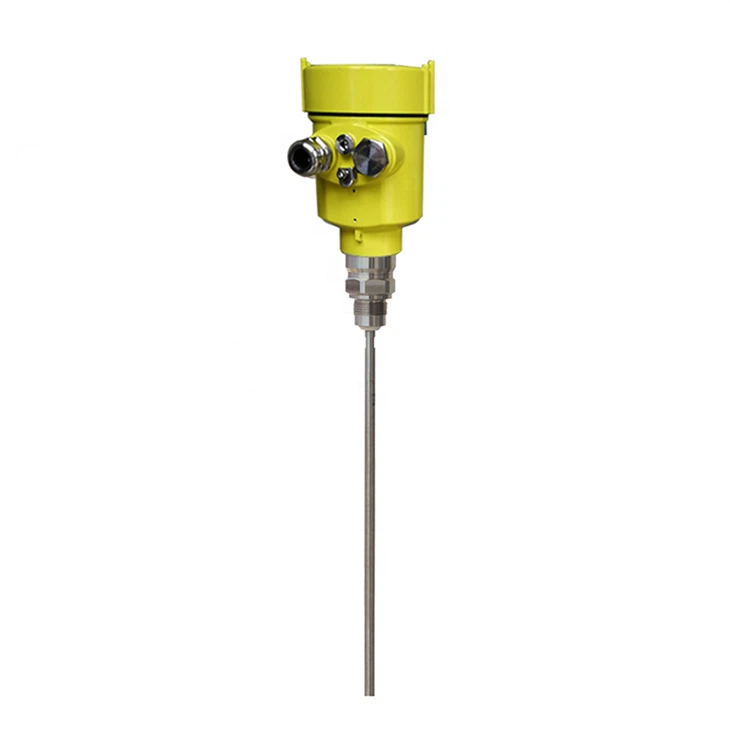

1. Working Principles
Guided Wave Radar Level Meter
The Guided Wave Radar Level Meter operates based on the time - of - flight principle. It emits electromagnetic pulses that travel along a probe (either a cable or a rod). When these pulses encounter the surface of the measured medium, a part of the energy is reflected back to the transmitter. The time taken for the pulse to travel to the medium surface and back is measured. Since the speed of electromagnetic waves in a given medium is known, the distance from the transmitter to the medium surface can be calculated using the formula (d = \frac{c\times t}{2}), where (d) is the distance, (c) is the speed of the electromagnetic wave, and (t) is the time - of - flight. This distance is then used to determine the level of the medium in the tank. Guided Wave Radar Level Transmitter are highly precise and can work in various conditions, such as with different densities of media, high - temperature, and high - pressure environments.
Hydrostatic Level Meter
The hydrostatic level meter, on the other hand, operates based on Pascal's law. It measures the hydrostatic pressure exerted by the liquid column above the sensor. The hydrostatic pressure (P) is given by the formula (P=\rho\times g\times h), where (\rho) is the density of the liquid, (g) is the acceleration due to gravity, and (h) is the height of the liquid column. By knowing the density of the liquid and the acceleration due to gravity, the height (level) of the liquid column can be calculated from the measured pressure. This method is relatively simple and is often used in applications where the density of the liquid is stable.
2. Measuring Accuracy
Guided Wave Radar Level Meter
Guided wave radar level meters offer high - level accuracy. They can achieve accuracies within ± 1mm or even higher in some cases. This high accuracy is due to the fact that the measurement is based on the well - defined behavior of electromagnetic waves, and factors such as temperature, pressure, and the presence of vapors have relatively little impact on the measurement. The accuracy also remains consistent even in complex tank geometries and with different types of media, making them suitable for applications where precise level measurement is crucial, such as in the chemical and pharmaceutical industries.
Hydrostatic Level Meter
The accuracy of hydrostatic level meters is generally lower compared to guided wave radar level meters. They typically have an accuracy in the range of ± 0.25% to ± 0.5% of the full - scale measurement. This is because the accuracy is highly dependent on the density of the liquid, which can change with temperature, pressure, and the composition of the liquid. Any variation in density will directly affect the calculated level, leading to potential measurement errors.
3. Installation and Maintenance
Guided Wave Radar Level Meter
Installation of a guided wave radar level meter is relatively straightforward but requires some attention. The probe needs to be installed vertically in the tank to ensure that the electromagnetic pulses travel accurately to the medium surface. The length of the probe should be chosen according to the maximum level of the tank to be measured. Maintenance requirements are relatively low. Since the meter operates based on non - contact (the probe is in contact with the medium, but the measurement principle is non - invasive), there is less wear and tear. Periodic checks of the probe for fouling or damage are usually sufficient to keep the meter operating properly. Chinese supplier of guided wave radar liquid level transmitter often provide detailed installation and maintenance instructions to ensure the best performance of their products.
Hydrostatic Level Meter
Hydrostatic level meters are also relatively easy to install. They are usually installed at the bottom of the tank or in a stilling well. However, the sensor needs to be properly calibrated to account for the specific density of the liquid. Maintenance can be a bit more challenging as the sensor is in direct contact with the liquid. Over time, the sensor can be affected by corrosion, fouling, or the build - up of sediment, which can lead to inaccurate measurements. Regular cleaning and calibration are necessary to maintain the accuracy of the hydrostatic level meter.
4. Environmental Adaptability
Guided Wave Radar Level Meter
Guided wave radar level meters are highly adaptable to different environmental conditions. They can work in high - temperature environments (up to several hundred degrees Celsius in some models), high - pressure environments, and in the presence of vapors, dust, and foam. The electromagnetic waves used in the measurement are not significantly affected by these factors, allowing for reliable level measurement in harsh industrial settings. For example, in the oil and gas industry, where tanks may contain volatile substances and operate under high pressure and temperature, guided wave radar level meters are a popular choice.
Hydrostatic Level Meter
Hydrostatic level meters are more sensitive to environmental changes. High temperatures can cause changes in the density of the liquid, which can affect the accuracy of the measurement. In addition, the presence of vapors or foam on the liquid surface can also cause errors, as the pressure measured may be affected by these non - liquid components. They are generally more suitable for relatively stable and clean environments, such as water storage tanks in municipal water treatment plants.
5. Cost - effectiveness
Guided Wave Radar Level Meter
The initial cost of a guided wave radar level meter is usually higher compared to a hydrostatic level meter. However, considering its high accuracy, low maintenance requirements, and wide applicability in various environmental conditions, it can be a cost - effective solution in the long run. In industrial applications where inaccurate level measurement can lead to significant losses, such as over - filling or under - filling of tanks, the investment in a guided wave radar level meter is often justified.
Hydrostatic Level Meter
Hydrostatic level meters have a lower initial cost, which makes them an attractive option for applications where cost is a major concern and the accuracy requirements are not extremely high. However, the ongoing costs associated with maintenance, calibration, and potential replacement due to corrosion or fouling can add up over time.
6. Applications
Guided Wave Radar Level Meter
Guided wave radar level meters are widely used in industries such as chemical, petrochemical, food and beverage, and pharmaceutical. In the chemical industry, they can be used to measure the level of corrosive chemicals in storage tanks. In the food and beverage industry, they are suitable for measuring the level of liquids such as milk, juice, and beer, where hygiene and accuracy are important. Radar type level transmitter are also commonly used in applications where the tank has a complex shape or where there is a high level of agitation.
Hydrostatic Level Meter
Hydrostatic level meters are commonly used in applications such as water treatment plants, sewage systems, and agricultural irrigation. In water treatment plants, they can be used to measure the level of water in storage tanks, sedimentation basins, and clarifiers. In agricultural irrigation, they can be used to monitor the water level in reservoirs.
In conclusion, both Guided Wave Radar Level Meters and Hydrostatic Level Meters have their own unique features and advantages. When choosing a level measurement device, you need to consider factors such as the accuracy requirements, installation environment, cost - effectiveness, and the nature of the measured medium. As a supplier of Guided Wave Radar Level Meters, we are committed to providing high - quality products and professional technical support to meet your specific needs. If you are interested in our products or need further information for a purchasing decision, please feel free to contact us for in - depth discussions and consultations.
References
- Johnson, R. (2018). Industrial Level Measurement Principles. Elsevier.
- Smith, A. (2020). Advances in Radar - Based Level Sensing Technology. Journal of Industrial Instrumentation, 12(3), 45 - 56.
- Brown, C. (2019). Hydrostatic Pressure Measurement in Liquid Level Monitoring. Applied Engineering Journal, 8(2), 78 - 89.


