What are the requirements for capacitive level sensors in water treatment applications?
Leave a message

Hey there! As a supplier of capacitive level sensors, I've had my fair share of experience dealing with the ins and outs of these nifty devices, especially in water treatment applications. So, let's dive right in and chat about what it takes for capacitive level sensors to really shine in this field.
First off, let's understand the basics. Capacitive level sensors work on the principle of changes in capacitance. Capacitance is affected by the dielectric constant of the material surrounding the sensor. In water treatment, the goal is to accurately measure the level of different liquids, like water, chemicals, or even the interface between oil and water.
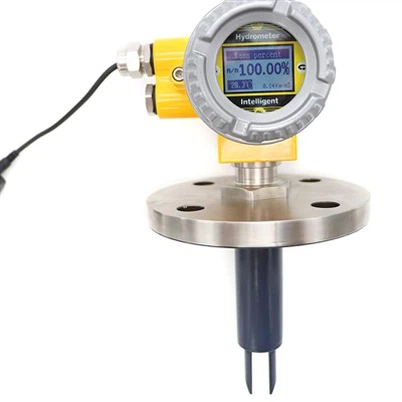
One of the most crucial requirements is accuracy. In water treatment plants, even a small error in level measurement can lead to big problems. For example, if the level of a chemical storage tank is misjudged, it could result in over - or under - dosing of chemicals into the water treatment process. This can affect the quality of the treated water and might even damage the equipment. A high - quality capacitive level sensor should be able to provide accurate measurements within a very tight margin of error. Our Capacitive liquid level detection instrument is designed with advanced technology to ensure precise readings, no matter the conditions.
Another important factor is reliability. Water treatment facilities operate 24/7, and any downtime can be extremely costly. The sensors need to be able to withstand continuous use without failing. They should be built with high - quality materials that can resist corrosion, wear, and tear. In a water treatment environment, the sensors are often exposed to harsh chemicals, high humidity, and varying temperatures. For instance, if a sensor is used in a tank that stores acidic chemicals, it needs to be made of materials that won't react with the acid. Our Industrial Capacitive anti - corrosion liquid level transmitter is constructed with anti - corrosion materials, making it a reliable choice for such demanding applications.
Adaptability is also key. Water treatment plants deal with a variety of liquids and substances. The sensors should be able to work effectively with different types of water, such as raw water, treated water, and wastewater. They also need to be able to handle the measurement of other substances like sludge, which has different properties compared to clear water. Additionally, the sensors should be able to function in different tank sizes and shapes. Some tanks might be small and narrow, while others could be large and wide. A good capacitive level sensor should be able to adapt to these different geometries without losing accuracy.
Ease of installation and maintenance is something that shouldn't be overlooked. Installing a sensor should be a straightforward process, even for non - technical staff. Complex installation procedures can lead to delays and increased costs. Similarly, maintenance should be simple. Regular cleaning and calibration should be easy to perform. If a sensor requires frequent and complicated maintenance, it can disrupt the normal operation of the water treatment plant. Our sensors are designed with user - friendly features to make installation and maintenance a breeze.
In water treatment, safety is of utmost importance. The sensors should be designed to meet all the relevant safety standards. They should be able to operate without posing any risks, such as electrical hazards or the release of harmful substances. For example, if a sensor is used in an area where there is a risk of explosion, it should be intrinsically safe. This means that it won't generate enough energy to cause an explosion.
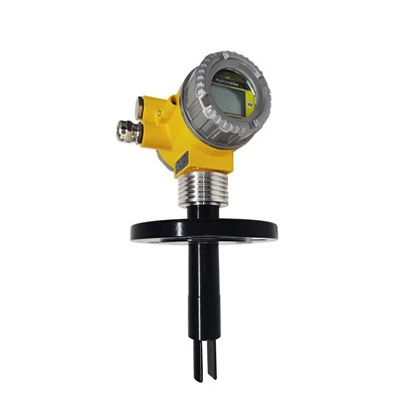
Let's talk about the measurement of the oil - water interface. In some water treatment processes, separating oil from water is a crucial step. A Oil - water Interface Meter is needed to accurately detect the boundary between the oil and water layers. The sensor should be able to distinguish between the two substances based on their different dielectric constants. It should provide clear and reliable readings of the interface level, which is essential for efficient oil - water separation.
The ability to communicate with other systems is also important. In modern water treatment plants, there is a lot of automation and integration. The sensors should be able to send data to other control systems, such as programmable logic controllers (PLCs) or supervisory control and data acquisition (SCADA) systems. This allows for real - time monitoring and control of the water treatment process. For example, if the level in a tank reaches a certain point, the sensor can send a signal to the control system, which can then trigger an appropriate action, like starting a pump or opening a valve.
Cost - effectiveness is always a consideration. While high - quality sensors might come with a higher upfront cost, they can save money in the long run. A reliable sensor that requires less maintenance and provides accurate readings can prevent costly mistakes and downtime. It's important to look at the total cost of ownership, which includes the purchase price, installation cost, maintenance cost, and the cost of any potential downtime.
In conclusion, the requirements for capacitive level sensors in water treatment applications are quite demanding. Accuracy, reliability, adaptability, ease of installation and maintenance, safety, the ability to measure the oil - water interface, communication capabilities, and cost - effectiveness are all important factors. As a supplier, we're committed to providing sensors that meet all these requirements. If you're in the market for capacitive level sensors for your water treatment plant, we'd love to have a chat with you. Reach out to us to discuss your specific needs and let's work together to find the best solution for your water treatment application.
References


- Various industry reports on water treatment technology and sensor requirements.
- Technical specifications of capacitive level sensors used in water treatment.