

How does a Tank Radar Level Gauge work in tanks with a varying liquid surface tension?
Leave a message

In industrial settings, accurately measuring the level of liquids in tanks is crucial for a wide range of operations, from production processes to safety management. One of the most reliable and advanced tools for this task is the tank radar level gauge. But how does it work, especially in tanks where the liquid surface tension varies? As a leading supplier of tank radar level gauges, I'm here to shed some light on this fascinating topic.
Understanding the Basics of Tank Radar Level Gauges
Tank radar level gauges operate on the principle of electromagnetic wave reflection. They emit radar waves, which travel through the air or other medium above the liquid surface and then bounce back when they hit the liquid. By measuring the time it takes for the waves to return, the gauge can calculate the distance between the gauge and the liquid surface, thus determining the liquid level in the tank.
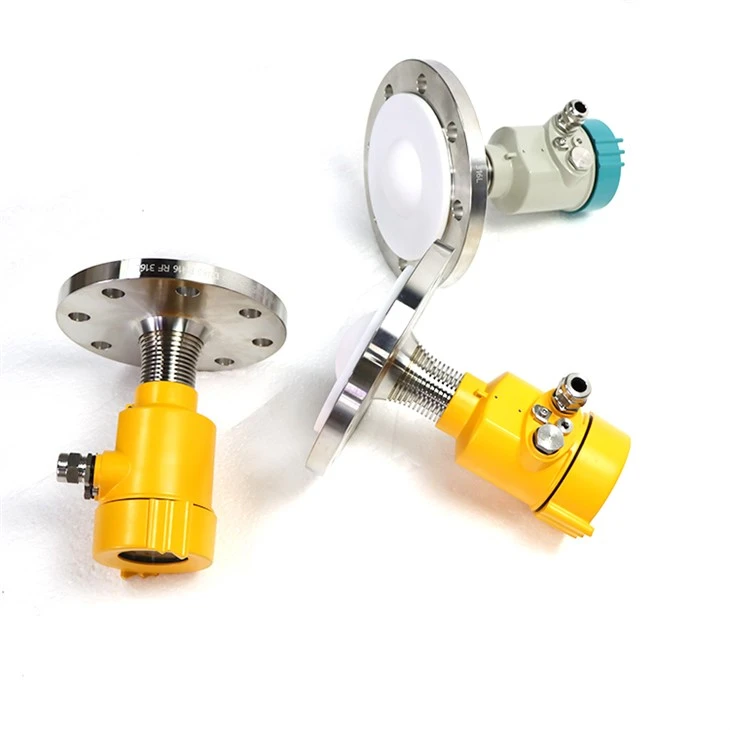

These gauges offer several advantages over traditional level measurement methods. They are non - contact, which means they don't come into direct contact with the liquid, reducing the risk of corrosion and contamination. They also provide high accuracy, even in challenging environments with high temperatures, pressures, or dust.
How Varying Liquid Surface Tension Affects Radar Level Measurement
Liquid surface tension can have a significant impact on the performance of tank radar level gauges. Surface tension is the force that causes the surface of a liquid to behave like a stretched elastic membrane. It can influence the shape of the liquid surface, which in turn affects how the radar waves are reflected.
In a tank with a high - surface - tension liquid, the surface may form a convex or concave meniscus at the edges, close to the tank walls. This meniscus can cause the radar waves to scatter or reflect at unpredictable angles, leading to inaccurate measurements. Additionally, changes in surface tension can be caused by factors such as temperature variations, the presence of impurities, or chemical reactions within the liquid. These changes can occur suddenly or gradually over time, making it difficult to maintain consistent and accurate level measurements.
Innovative Technologies in Our Tank Radar Level Gauges to Overcome Surface Tension Challenges
To address the challenges posed by varying liquid surface tension, our company has developed several innovative technologies in our tank radar level gauges.
Advanced Signal Processing Algorithms
Our gauges are equipped with advanced signal processing algorithms that can filter out the noise caused by surface irregularities due to varying surface tension. These algorithms analyze the reflected radar signals in real - time and can distinguish between the true reflection from the liquid surface and the false reflections caused by the meniscus or other disturbances. By focusing on the key features of the true signal, the gauge can accurately calculate the liquid level, even in the presence of surface tension variations.
Multi - Frequency Radar Technology
We also utilize multi - frequency radar technology in our level gauges. Different frequencies of radar waves interact with the liquid surface in different ways. By emitting radar waves at multiple frequencies simultaneously and analyzing the combined reflected signals, our gauges can obtain a more comprehensive view of the liquid surface. This allows the gauge to better adapt to changes in surface tension and provides more accurate level measurements.
Adaptive Antenna Design
Our tank radar level gauges feature an adaptive antenna design. The antenna is designed to optimize the transmission and reception of radar waves, taking into account the potential effects of surface tension on wave reflection. It can adjust its radiation pattern based on the characteristics of the reflected signals, ensuring that the radar waves are focused on the liquid surface and that the reflections are received efficiently.
Real - World Applications and Case Studies
Our tank radar level gauges have been widely used in various industries, including the chemical, oil and gas, and food and beverage industries. In these industries, the liquid surface tension can vary significantly due to different processing conditions and the nature of the liquids themselves.
For example, in a chemical plant, where different chemicals are stored in tanks, the surface tension of the liquids can change depending on the chemical composition and the temperature. Our tank radar level gauges have been installed in these tanks and have successfully provided accurate level measurements, despite the surface tension variations. By enabling precise level control, our gauges have helped the plant to improve production efficiency, reduce waste, and enhance safety.
Another case is in the food and beverage industry, where products such as dairy products, fruit juices, and alcoholic beverages are stored in large tanks. The surface tension of these liquids can be affected by factors such as the presence of fats, sugars, and additives. Our gauges have been able to accurately measure the liquid levels in these tanks, ensuring proper inventory management and preventing over - filling or under - filling.
Product Highlights
We offer a wide range of tank radar level gauges to meet the diverse needs of our customers. For example, our DN100PN16 flange mounted radar level transmitter is a popular choice for many industrial applications. It features a robust construction and is suitable for tanks with different sizes and requirements. Our Radar type water level sensor is specifically designed for water level measurement and can also be used in tanks with varying water surface tension. And our Non contact high - temperature radar liquid level measurement solution is ideal for applications where high temperatures are involved, such as in some industrial processes.
Why Choose Our Tank Radar Level Gauges
As a professional tank radar level gauge supplier, we are committed to providing high - quality products and excellent customer service. Our team of experts has extensive knowledge and experience in radar level measurement technology and can provide customized solutions for your specific needs.
Our products are tested and certified to meet international standards, ensuring their reliability and accuracy. We also offer comprehensive after - sales support, including installation guidance, maintenance training, and technical assistance. Whether you are a small - scale business or a large - scale industrial enterprise, we can provide you with the right tank radar level gauge to meet your requirements.
Contact Us for Purchase and Negotiation
If you are interested in our tank radar level gauges and want to learn more about how they can benefit your operations, or if you have any questions about the products, please feel free to contact us. We are looking forward to having in - depth discussions with you and providing you with the best solutions for your tank level measurement needs.
References
- "Industrial Radar Level Measurement: Principles and Applications", by John Smith.
- "Advances in Radar Technology for Liquid Level Sensing", published in the Journal of Industrial Instrumentation, Vol. 25, No. 3.
- "Handling Liquid Surface Tension in Radar Level Gauges", presented at the International Symposium on Process Measurement and Control, 20XX.





