
How does a Guided Wave Radar Level Meter work?
Leave a message

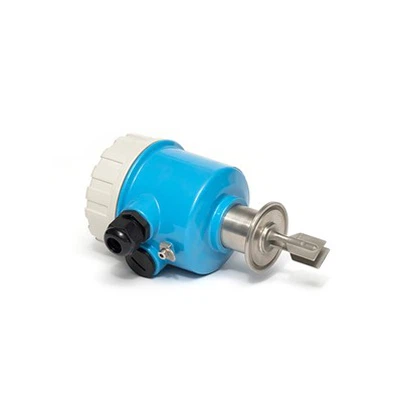
Guided Wave Radar (GWR) level meters are essential instruments used in various industries to measure the level of liquids, slurries, and solids in tanks and vessels. As a supplier of Guided Wave Radar Level Meters, I am excited to share with you how these sophisticated devices operate and why they are a reliable choice for level measurement applications.
Principle of Guided Wave Radar
Electromagnetic Waves and Propagation
GWR level meters work based on the principle of time-domain reflectometry (TDR). They emit electromagnetic waves, typically in the microwave frequency range, along a waveguide. The waveguide can be a rod, cable, or coaxial probe, depending on the specific application requirements. Electromagnetic waves travel at the speed of light in a vacuum and at a slightly lower speed in the waveguide material. When the wave encounters a change in the dielectric constant, such as the interface between the air (or gas) above the liquid and the liquid itself, a portion of the wave is reflected back to the transmitter.
Reflection and Time Measurement
The time taken for the electromagnetic wave to travel from the transmitter to the interface and back is measured precisely. The distance to the interface is then calculated using the formula (d=\frac{v\times t}{2}), where (d) is the distance from the sensor to the liquid surface, (v) is the velocity of the electromagnetic wave in the waveguide, and (t) is the time of flight. By knowing the total height of the tank, the level of the liquid can be determined accurately.
Components of a Guided Wave Radar Level Meter
Transmitter
The transmitter is the heart of the GWR level meter. It generates the electromagnetic waves and sends them along the waveguide. Modern transmitters are often equipped with advanced signal processing capabilities, which can filter out noise and interference, improving the accuracy and reliability of the measurement. The transmitter also converts the time-of -flight measurement into an analog or digital signal, which can be used for display, control, or communication purposes.
Waveguide
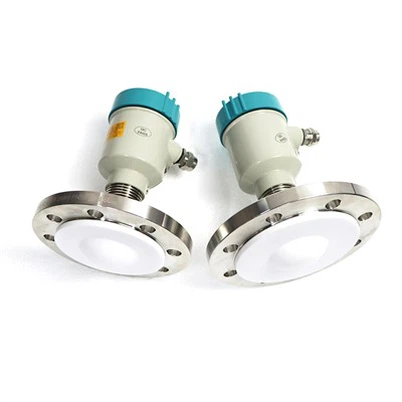
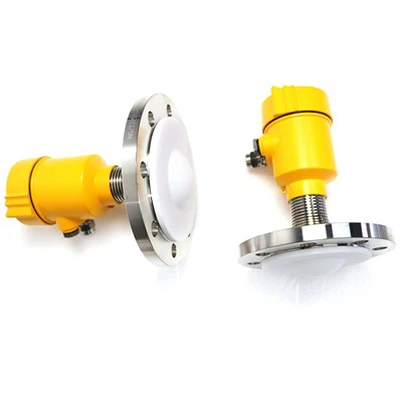
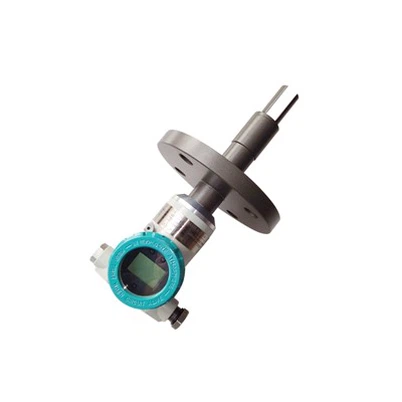
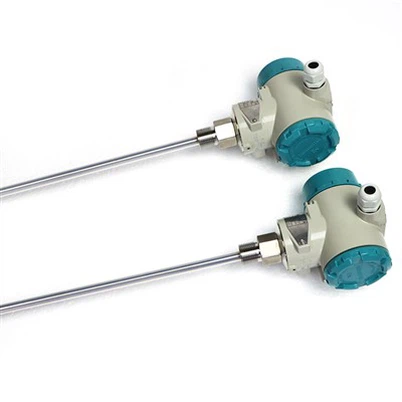
As mentioned earlier, the waveguide plays a crucial role in guiding the electromagnetic waves to the liquid surface. Different types of waveguides are suitable for different applications. Rod waveguides are ideal for measuring the level of liquids with low to medium dielectric constants in small to medium-sized tanks. Cable waveguides are more flexible and can be used in large tanks or in applications where the tank geometry is complex. Coaxial waveguides provide enhanced performance in applications with high - dielectric - constant liquids or in environments with a lot of vapor or foam.
Probe
The probe is the part of the waveguide that comes into contact with the measured medium. It needs to be made of materials that are compatible with the process fluid to ensure long - term reliability. The shape and design of the probe can also affect the performance of the level meter. For example, a properly designed probe can reduce the effect of buildup and improve the measurement accuracy in dirty or viscous fluids.


Advantages of Guided Wave Radar Level Meters
High Accuracy
One of the main advantages of GWR level meters is their high accuracy. They are capable of measuring liquid levels with an error of less than ± 1 mm in many applications. This high level of accuracy is achieved through the precise measurement of the time - of - flight of the electromagnetic waves and the advanced signal processing algorithms used in the transmitters.
Immunity to Process Conditions
GWR level meters are relatively immune to changes in process conditions such as temperature, pressure, density, and conductivity of the medium. Unlike some other level measurement technologies, such as capacitive or ultrasonic sensors, the performance of GWR level meters is not significantly affected by these factors. This makes them a reliable choice for a wide range of industrial applications, including those in harsh environments.
Resistance to Foam and Vapor
The use of a waveguide allows GWR level meters to be less affected by foam and vapor present in the tank. The electromagnetic waves are guided along the waveguide, and the reflections from the liquid surface can be distinguished from the reflections caused by the foam or vapor. This makes GWR level meters particularly suitable for applications where foam or vapor is a common issue, such as in the chemical and food industries.
Applications of Guided Wave Radar Level Meters
Oil and Gas Industry
In the oil and gas industry, GWR level meters are used to measure the level of crude oil, refined products, and chemicals in storage tanks. They provide accurate and reliable level measurements, which are essential for inventory management, custody transfer, and process control. For example, in a refinery, GWR level meters can be used to monitor the level of various products in storage tanks, ensuring that the tanks are neither overfilled nor run dry.
Chemical Industry
The chemical industry often deals with a wide range of aggressive and corrosive chemicals. GWR level meters, with their ability to use corrosion - resistant probes and to operate in harsh chemical environments, are an ideal choice for measuring the level of these chemicals in storage tanks and reactors. They can also be used for measuring the level of slurries and pastes in chemical processing applications.
Food and Beverage Industry
In the food and beverage industry, GWR level meters are used to measure the level of liquids such as milk, juice, and beer in storage tanks and processing vessels. They meet the strict hygiene requirements of the industry and can provide accurate level measurements in the presence of foam and other process disturbances.
Installation and Calibration
Installation
Proper installation of a GWR level meter is crucial for its optimal performance. The waveguide should be installed vertically in the tank to ensure that the electromagnetic waves are guided correctly to the liquid surface. The probe should be positioned away from any obstacles or agitators that could cause interference with the wave propagation. Additionally, the transmitter should be installed in a suitable location, protected from environmental factors such as moisture and dust.
Calibration
Calibration of a GWR level meter is usually a straightforward process. Most modern transmitters can be calibrated using a built - in menu or a handheld programming device. The calibration process typically involves setting the zero point (empty tank) and the span point (full tank) based on the actual dimensions of the tank. Once calibrated, the level meter can provide accurate measurements without the need for frequent recalibration.
Why Choose Our Guided Wave Radar Level Meters
High - Quality Components
As a supplier of Guided Wave Radar Level Meters, we use only high - quality components in our products. Our transmitters are designed with the latest technology to provide accurate and reliable signal processing. The waveguides and probes are made from materials that are resistant to corrosion and wear, ensuring long - term performance.
Customizable Solutions
We understand that different industries and applications have different requirements. That's why we offer customizable solutions for our Guided Wave Radar Level Meters. Whether you need a specific type of waveguide, a special probe material, or a customized communication protocol, we can provide a solution that meets your needs.
Excellent Customer Support
We provide excellent customer support to our clients. Our team of experts is available to assist you with installation, calibration, and troubleshooting. We also offer regular maintenance services to ensure that your level meters continue to operate at their best.
Conclusion
Guided Wave Radar Level Meters are a reliable and accurate solution for level measurement in a wide range of industries. Their operation based on the time - domain reflectometry principle allows for precise measurement of liquid levels, even in challenging process conditions. As a supplier of Guided Wave Radar Level Meters, we are committed to providing high - quality products and excellent customer support. If you are looking for a solution for your level measurement needs, we encourage you to contact us for a detailed consultation and procurement discussion. We are confident that our products can meet your requirements and help you improve your process efficiency.
References
- Kress, J. (2018). Industrial Level Measurement Technology. Wiley.
- Brown, D. (2019). Process Instrumentation and Control Handbook. McGraw - Hill.
- Guided wave radar
- Guided Wave Radar Level Transmitter
- Radar type level transmitter