

Can an 80G Radar Level Meter measure the level of liquids?
Leave a message

As a supplier of 80G Radar Level Meters, I am often asked whether these devices can accurately measure the level of liquids. In this blog post, I will delve into the capabilities of 80G Radar Level Meters in liquid level measurement, exploring their principles, advantages, limitations, and real - world applications.
How 80G Radar Level Meters Work
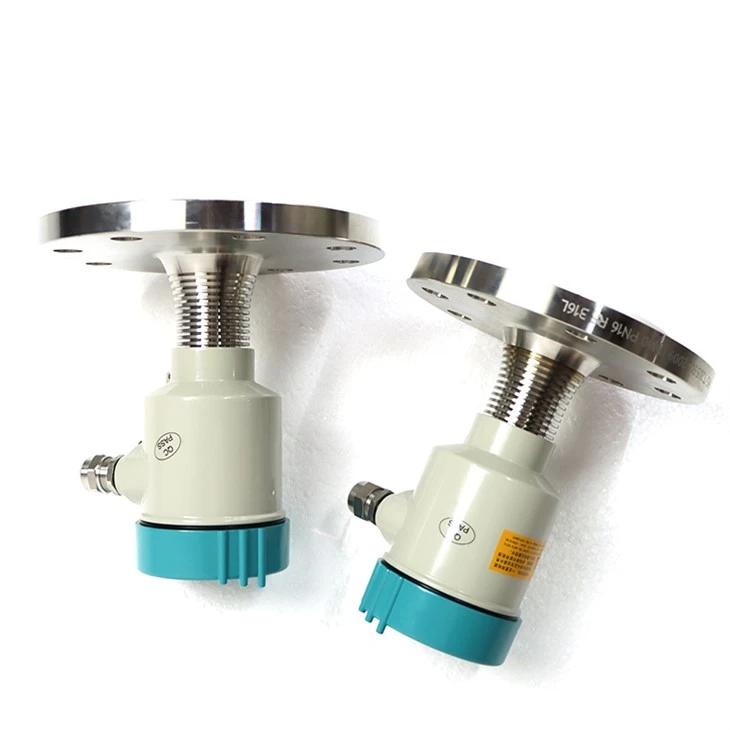
80G Radar Level Meters operate on the principle of radar technology. They emit high - frequency electromagnetic waves at a frequency of 80 GHz towards the surface of the liquid. When these waves hit the liquid surface, they are reflected back to the sensor. The meter then measures the time it takes for the waves to travel to the liquid surface and back. Using the known speed of light, the distance between the sensor and the liquid surface can be calculated, and from this, the liquid level can be determined.
The high - frequency 80 GHz waves offer several benefits. They have a narrow beam angle, which means they can be more precisely targeted at the liquid surface. This is particularly useful in applications where there are obstacles near the tank or vessel, as the narrow beam can avoid interference from these objects.
Advantages of Using 80G Radar Level Meters for Liquid Level Measurement
High Precision
One of the most significant advantages of 80G Radar Level Meters is their high precision. The high - frequency waves allow for very accurate distance measurements, which translates into highly accurate liquid level readings. This is crucial in industries where precise liquid level control is required, such as in chemical processing plants, where the exact amount of a liquid chemical in a tank can affect the quality of the final product.
Non - Contact Measurement
80G Radar Level Meters are non - contact devices. They do not need to come into direct contact with the liquid, which makes them suitable for measuring the level of corrosive, viscous, or high - temperature liquids. For example, in the oil and gas industry, where crude oil and various chemical substances are stored in tanks, non - contact measurement eliminates the risk of sensor damage due to corrosion or fouling.
Wide Range of Applications
These meters can be used in a variety of liquid - related applications. They can measure the level of liquids in open tanks, closed tanks, and even in underground storage tanks. Whether it is water in a municipal water treatment plant, fuel in a gas station storage tank, or chemicals in a pharmaceutical manufacturing facility, 80G Radar Level Meters can provide reliable level measurements.

Resistance to Environmental Conditions
80G Radar Level Meters are relatively immune to environmental factors such as dust, steam, and temperature variations. In a steam - filled environment, for example, other types of level sensors may be affected by the steam, leading to inaccurate readings. However, the radar waves of 80G Radar Level Meters can penetrate through steam and still accurately measure the liquid level.
Limitations and Considerations
Foam and Vapor Interference
Although 80G Radar Level Meters are resistant to many environmental factors, foam on the liquid surface and certain types of vapors can cause interference. Foam can scatter the radar waves, making it difficult for the meter to accurately detect the liquid surface. In such cases, additional signal processing or the use of a different type of sensor may be required.
Installation Requirements
Proper installation is crucial for the accurate operation of 80G Radar Level Meters. The sensor must be installed at the correct height and angle to ensure that the radar waves are directed towards the liquid surface. Any misalignment can lead to inaccurate readings or even complete failure of the measurement system.
Real - World Applications
Chemical Industry
In the chemical industry, 80G Radar Level Meters are widely used to measure the level of various chemicals in storage tanks. These chemicals can be highly corrosive, and the non - contact nature of the radar level meters ensures long - term reliability. For example, in a chlorine storage tank, the 80G Radar Level Meter can accurately measure the liquid level without being affected by the corrosive nature of chlorine.
Food and Beverage Industry
In the food and beverage industry, maintaining accurate liquid levels is essential for quality control and production efficiency. 80G Radar Level Meters can be used to measure the level of liquids such as milk, juice, and beer in storage tanks. Their high precision and non - contact measurement ensure that the liquid levels are accurately monitored without contaminating the product.
Water and Wastewater Treatment
In water and wastewater treatment plants, 80G Radar Level Meters are used to measure the level of water in various tanks, including raw water storage tanks, sedimentation tanks, and clarifiers. The ability of these meters to operate in harsh environments with high humidity and possible presence of debris makes them a suitable choice for this application.
Related Products
If you are interested in other types of radar level sensors, we also offer Solids Radar Level Sensor for measuring the level of solid materials. Our 200 ℃ high - temperature liquid radar level sensor is specifically designed for measuring high - temperature liquids. And our Radar gauge provides high - precision level measurement for silos and other storage containers.
Conclusion
In conclusion, 80G Radar Level Meters are highly capable of measuring the level of liquids. Their high precision, non - contact measurement, wide range of applications, and resistance to environmental conditions make them a popular choice in many industries. However, it is important to consider their limitations, such as foam and vapor interference and proper installation requirements.
If you are in need of a reliable liquid level measurement solution, our 80G Radar Level Meters can be an excellent choice. We are committed to providing high - quality products and professional technical support. If you have any questions or are interested in purchasing our products, please feel free to contact us for further discussion and negotiation.
References
- "Radar Level Measurement Technology" - A technical handbook on radar level measurement principles and applications.
- Industry reports on the use of radar level meters in chemical, food, and water treatment industries.





