
Can a capacitive fuel level sensor be used in fuel tanks with a conical shape?
Leave a message

As a supplier of Capacitive Fuel Level Sensors, I often encounter various questions from customers regarding the application scenarios of our products. One frequently asked question is whether a capacitive fuel level sensor can be used in fuel tanks with a conical shape. In this blog post, I will delve into this topic, exploring the feasibility, challenges, and considerations when using capacitive fuel level sensors in conical fuel tanks.
Understanding Capacitive Fuel Level Sensors
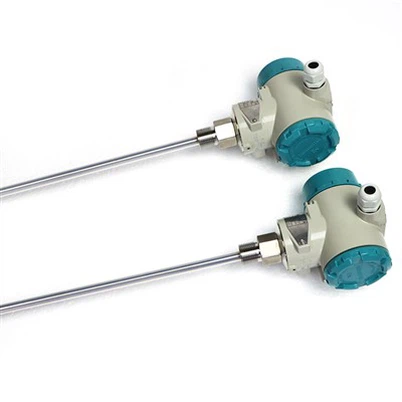
Before discussing their use in conical fuel tanks, it's essential to understand how capacitive fuel level sensors work. These sensors operate based on the principle of capacitance, which is the ability of a system to store an electric charge. In a capacitive fuel level sensor, the capacitance changes as the level of the fuel in the tank varies. The sensor consists of two conductive plates, and the fuel acts as a dielectric between them. As the fuel level rises or falls, the dielectric constant between the plates changes, resulting in a corresponding change in capacitance. This change is then measured and converted into a signal that indicates the fuel level.
Capacitive fuel level sensors offer several advantages, including high accuracy, reliability, and the ability to measure the fuel level continuously. They are also non - intrusive in many cases, which means they can be installed without significantly disrupting the fuel tank or its contents.
Feasibility of Using Capacitive Fuel Level Sensors in Conical Fuel Tanks
The short answer is yes, capacitive fuel level sensors can be used in conical fuel tanks. However, there are some unique challenges and considerations compared to using them in cylindrical or rectangular tanks.
In a conical fuel tank, the cross - sectional area of the tank changes along its height. This means that the relationship between the fuel level and the volume of fuel in the tank is non - linear. In a cylindrical tank, the volume of fuel is directly proportional to the height of the fuel column (V = A×h, where V is volume, A is the cross - sectional area, and h is the height). But in a conical tank, as the fuel level rises, the cross - sectional area increases, and the volume increases at a faster rate.
Capacitive fuel level sensors measure the fuel level based on the change in capacitance, which is related to the height of the fuel column. To accurately determine the volume of fuel in a conical tank, the non - linear relationship between the fuel level and volume must be taken into account. This can be achieved through calibration.
Calibration for Conical Fuel Tanks
Calibration is crucial when using capacitive fuel level sensors in conical fuel tanks. The sensor needs to be calibrated to account for the changing cross - sectional area of the tank. During the calibration process, the tank is filled with known volumes of fuel, and the corresponding capacitance values are recorded. A calibration curve or equation is then generated to relate the measured capacitance (which corresponds to the fuel level) to the actual volume of fuel in the tank.
Modern capacitive fuel level sensors often come with built - in microprocessors that can store the calibration data. These microprocessors can use the calibration curve to convert the measured capacitance into an accurate volume reading. However, the calibration process can be time - consuming and requires careful measurement of the fuel volumes and corresponding capacitance values.
Challenges in Conical Fuel Tank Applications
Non - Uniform Dielectric Properties
In a conical fuel tank, the fuel may not be distributed uniformly due to the shape of the tank. This can lead to non - uniform dielectric properties between the sensor plates, which can affect the accuracy of the capacitance measurement. For example, if there are air pockets or fuel stratification in the tank, the dielectric constant between the plates may vary, resulting in inaccurate fuel level readings.
Installation Considerations
The installation of the capacitive fuel level sensor in a conical tank is also more critical than in a regular - shaped tank. The sensor must be installed vertically and centered in the tank to ensure consistent capacitance measurements. Any misalignment can cause errors in the fuel level reading. Additionally, the sensor should be protected from mechanical vibrations and shocks, which are more likely to occur in conical tanks due to their shape and the movement of the fuel.
Advantages of Using Capacitive Fuel Level Sensors in Conical Tanks
Despite the challenges, there are several advantages to using capacitive fuel level sensors in conical fuel tanks.
High Accuracy
Once properly calibrated, capacitive fuel level sensors can provide highly accurate fuel level measurements in conical tanks. This is important for applications where precise fuel volume monitoring is required, such as in aviation or large - scale industrial fuel storage.
Durability
Capacitive sensors are generally durable and can withstand harsh environments. They are resistant to corrosion and can operate in a wide range of temperatures, making them suitable for use in conical fuel tanks in various industries.


Compatibility with Existing Systems
Capacitive fuel level sensors can be easily integrated with existing fuel management systems. They can provide digital or analog signals that can be used by other components in the system, such as fuel gauges or monitoring software.
Related Products and Their Applications
If you are interested in other types of capacitive level sensors, we also offer a range of related products. For example, the Capacitance Type Level Switch is a reliable device for detecting the presence or absence of a liquid at a specific level. It can be used in conjunction with a capacitive fuel level sensor to provide additional safety and control features.
The Intelligent Industry Radio Frequency RF Admittance Capacitance Level Switch level measurement is another advanced product that offers high - precision level measurement. It uses radio frequency technology to measure the capacitance and can be used in a variety of liquid and solid applications, including conical fuel tanks.
For applications where non - contact measurement is required, the Non contact capacitive liquid level sensor is an excellent choice. It can measure the liquid level without coming into direct contact with the fuel, which is beneficial in situations where contamination or corrosion is a concern.
Conclusion and Call to Action
In conclusion, capacitive fuel level sensors can be effectively used in conical fuel tanks, but proper calibration and installation are essential. These sensors offer high accuracy, durability, and compatibility with existing systems, making them a viable option for fuel level monitoring in conical tanks.
If you are considering using capacitive fuel level sensors for your conical fuel tank applications, I encourage you to contact us for more information. Our team of experts can provide detailed technical support, help with the calibration process, and ensure that you select the right sensor for your specific needs. We are committed to providing high - quality products and excellent customer service. Let's start a conversation about how our capacitive fuel level sensors can meet your requirements and improve your fuel management system.
References
- "Capacitive Sensors: Principles, Design, and Applications" by Max Schlecht.
- "Fuel Tank Design and Analysis" by various authors in the Journal of Automotive Engineering.
- Technical documentation from capacitive sensor manufacturers.