

Can a 26G Radar Level Meter measure the level of granular materials?
Leave a message

Hey there! As a supplier of 26G Radar Level Meters, I often get asked if our product can measure the level of granular materials. Well, let's dive right into it and find out!
First off, let's understand what a 26G Radar Level Meter is. It's a high - tech device that uses radar technology to measure the level of substances in a tank or container. The 26G refers to the frequency at which the radar operates. This higher frequency offers several advantages, such as better focusing of the radar beam, which can lead to more accurate measurements.
Now, when it comes to granular materials, things can get a bit tricky. Granular materials, like grains, sand, or plastic pellets, have unique characteristics that can affect the performance of a level measurement device. For example, they can form uneven surfaces in a container, with slopes and peaks. Also, dust can be generated when these materials are being handled, which might interfere with the measurement.
But here's the good news: a 26G Radar Level Meter is actually quite capable of measuring the level of granular materials. The high - frequency radar beam can penetrate through dust to a certain extent. Unlike some other measurement methods, the radar signal isn't affected by the physical properties of the granular materials, such as their density or conductivity.
Let's talk about how it works. The 26G Radar Level Meter emits a radar signal towards the surface of the granular materials. When the signal hits the surface, it gets reflected back to the sensor. The meter then calculates the distance between the sensor and the material surface based on the time it takes for the signal to travel back. This distance is then used to determine the level of the granular materials in the container.
One of the key features of our 26G Radar Level Meter that makes it suitable for granular materials is its narrow beam angle. This narrow beam can focus on the surface of the materials, even if there are some irregularities. It can also avoid hitting the walls of the container, which could cause false reflections and inaccurate measurements.
Another advantage is its advanced signal processing technology. Our meter can filter out noise and interference caused by dust or other factors. It can distinguish between the true reflection from the material surface and false echoes, ensuring a reliable and accurate measurement.
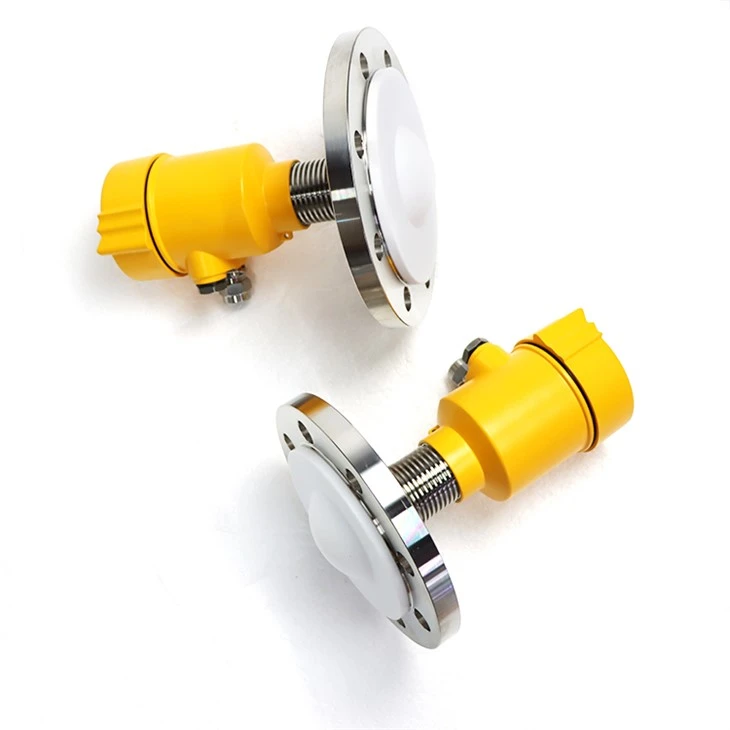

Now, I'd like to introduce some of our related products. If you're interested in a Radar level transmitter, we have a great option. It's designed to provide accurate level measurements in various applications, including those involving granular materials.
For those who are specifically dealing with grain storage, our Grain bin level sensors are a perfect fit. They are optimized to work in the environment of grain bins, where there might be a lot of dust and uneven surfaces.
And if you need a DN100PN16 flange mounted radar level transmitter, we've got you covered too. This type of transmitter is easy to install and can provide stable and accurate level measurements.
In real - world applications, many of our customers have successfully used our 26G Radar Level Meters to measure the level of granular materials. For example, a grain storage facility was having trouble with traditional level measurement methods due to the dust and uneven surfaces. After installing our meter, they were able to get accurate and reliable level readings, which helped them manage their inventory more effectively.
However, it's important to note that proper installation and calibration are crucial for getting the best results. When installing the meter, make sure it's mounted in a position where it can have a clear view of the material surface. Also, follow the calibration procedures carefully to ensure accurate measurements.
In conclusion, a 26G Radar Level Meter is a great choice for measuring the level of granular materials. Its high - frequency radar, narrow beam angle, and advanced signal processing technology make it capable of dealing with the challenges presented by these materials. Whether you're in the agriculture, mining, or plastics industry, our 26G Radar Level Meter can provide you with the accurate level measurements you need.
If you're interested in learning more about our 26G Radar Level Meters or have any questions about measuring the level of granular materials, feel free to reach out to us. We're here to help you find the best solution for your specific needs. Let's start a conversation and see how we can work together to improve your level measurement processes.
References
- Radar Level Measurement Principles and Applications, Industrial Instrumentation Handbook





