

What is the output signal of an RF Admittance Switch?
Leave a message

Hey there! As a supplier of RF Admittance Switches, I often get asked about the output signal of these nifty devices. So, I thought I'd sit down and write a blog post to break it all down for you.
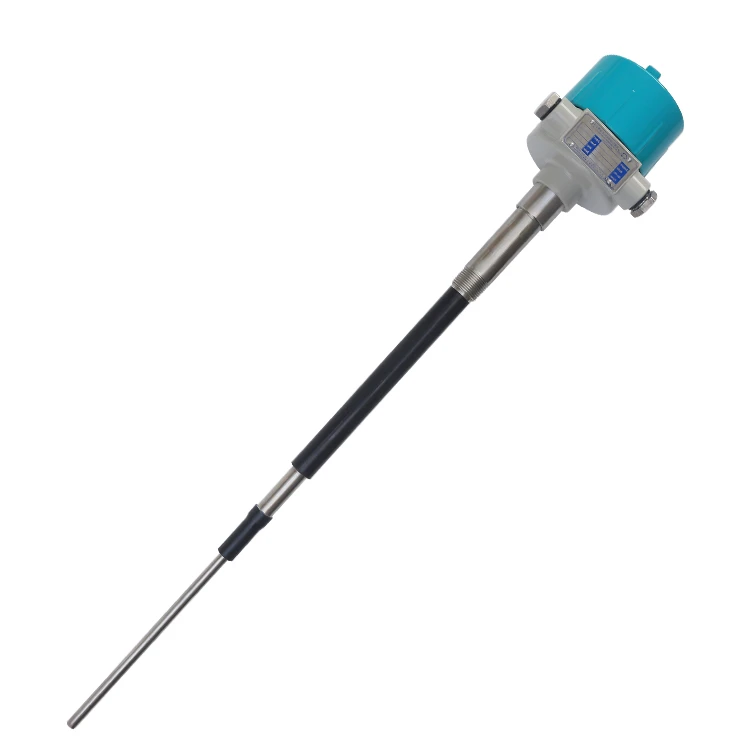
Let's start with the basics. An RF Admittance Switch is a type of level sensor that uses radio frequency admittance technology to detect the presence or absence of a material. It's commonly used in industries like food and beverage, pharmaceuticals, and chemical processing to monitor the level of liquids, solids, and slurries in tanks, silos, and hoppers.
Now, when it comes to the output signal of an RF Admittance Switch, there are a few different options. The most common types of output signals are relay contacts, current signals (4 - 20 mA), and voltage signals.
Relay Contacts
Relay contacts are probably the simplest and most straightforward type of output signal. When the RF Admittance Switch detects a change in the level of the material it's monitoring, it activates a relay. This relay can then be used to control other devices, like pumps, valves, or alarms.
For example, let's say you have a tank that needs to be filled to a certain level. You can set up the RF Admittance Switch to activate a relay when the level reaches the desired point. This relay can then be used to turn off the pump that's filling the tank, preventing it from overfilling.
One of the main advantages of using relay contacts is that they're easy to understand and integrate with other systems. You don't need any special equipment or programming knowledge to use them. However, they do have some limitations. For instance, they can only handle a certain amount of current, so they may not be suitable for high-power applications.

Current Signals (4 - 20 mA)
Current signals, specifically the 4 - 20 mA standard, are widely used in industrial applications. The advantage of using a 4 - 20 mA signal is that it's a continuous signal that can provide more detailed information about the level of the material being monitored.
The 4 mA value typically represents the lowest level of the material, while the 20 mA value represents the highest level. Any value between 4 and 20 mA corresponds to a specific level within the range of the sensor. This allows for more precise control and monitoring of the process.
For example, if you're using an RF Admittance Switch to monitor the level of a liquid in a tank, the 4 - 20 mA signal can be sent to a control system. The control system can then use this information to adjust the flow rate of the liquid, ensuring that the tank is always at the optimal level.
Another benefit of using a 4 - 20 mA signal is that it's relatively immune to electrical interference. This makes it a reliable choice for use in noisy industrial environments.
Voltage Signals
Voltage signals are another option for the output of an RF Admittance Switch. Similar to current signals, voltage signals can provide continuous information about the level of the material. However, they're not as commonly used as current signals in industrial applications.
One of the reasons for this is that voltage signals are more susceptible to electrical interference. They also require more complex signal conditioning to be used effectively.
Now, let's talk about how these output signals can be used in different applications.
Applications of RF Admittance Switch Output Signals
Bulk Materials Monitoring
If you're in the business of handling bulk materials, like grains, powders, or pellets, an RF Admittance Switch can be a great tool for monitoring the level in your silos or hoppers. The output signal from the switch can be used to control the filling and emptying processes.
For example, you can use the relay contacts to start or stop the conveyor belts that are transporting the bulk materials. Or, you can use the 4 - 20 mA signal to provide real-time level information to your inventory management system. Check out our RF admittance level measurement switch for measuring bulk materials for more details on how our switches can be used in this application.
Fly Ash Material Level Monitoring
In power plants, fly ash is a byproduct of coal combustion. Monitoring the level of fly ash in storage silos is crucial to ensure efficient operation. An RF Admittance Switch can be used to accurately measure the level of fly ash.
The output signal can be used to control the transfer of fly ash from the silos to other processing equipment. Our RF admittance level transmitter for measuring fly ash material level is specifically designed for this application and provides reliable output signals.
General Liquid Level Monitoring
Whether you're dealing with water, chemicals, or other liquids, an RF Admittance Switch can be used to monitor the level in tanks. The output signal can be used to control pumps, valves, and alarms.
For example, if the level of a liquid in a tank drops below a certain point, the switch can activate an alarm to alert operators. Or, it can start a pump to refill the tank. Our RF Admittance Level Sensor is a great choice for this type of application.
Why Choose Our RF Admittance Switches?
At our company, we pride ourselves on providing high-quality RF Admittance Switches with reliable output signals. Our switches are designed to be easy to install and maintain, and they offer a wide range of output signal options to suit your specific needs.
We also offer excellent customer support. If you have any questions about the output signals of our switches or how to integrate them into your system, our team of experts is here to help.
If you're interested in learning more about our RF Admittance Switches or would like to discuss your specific requirements, we'd love to hear from you. Whether you're looking to purchase a single switch or need a large quantity for your industrial facility, we can provide you with the right solution. Contact us today to start the procurement and negotiation process.
References
- Industrial Instrumentation Handbook, Third Edition, by Bela G. Liptak
- Principles of Measurement and Instrumentation, by A. K. Sawhney





