
What is the output signal of a vibrating tube in-line density meter?
Leave a message

What is the output signal of a vibrating tube in-line density meter? As an in-line density meter supplier, I've gotten this question a lot from folks in various industries. So, I thought I'd break it down in this blog post.


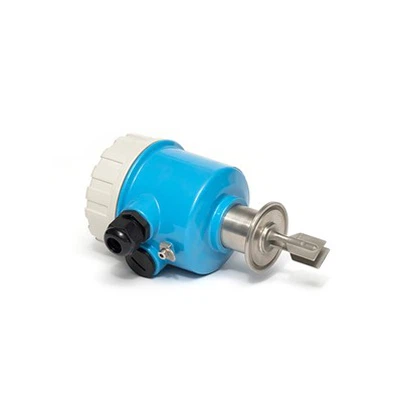
First off, let's talk about what a vibrating tube in-line density meter is. It's a super handy Density measurement instrument that measures the density of a fluid flowing through a pipe. The basic principle behind it is that the vibrating tube changes its frequency based on the density of the fluid inside it. When the density of the fluid goes up, the tube vibrates at a different frequency compared to when the density is lower.
Now, onto the output signals. The most common output signals you'll see from these meters are analog and digital.
Analog Output Signals
Analog signals are continuous electrical signals that represent the measured density value. The most popular analog output is the 4 - 20 mA signal. This is a standard in the industrial world. Why 4 - 20 mA? Well, the 4 mA represents the lower end of the measurement range, and 20 mA represents the upper end. For example, if your density meter is set to measure densities from 0.5 g/cm³ to 1.5 g/cm³, 4 mA might correspond to 0.5 g/cm³, and 20 mA would correspond to 1.5 g/cm³.
The great thing about the 4 - 20 mA signal is that it's resistant to electrical noise. In industrial settings, there's a lot of electrical interference, and a 4 - 20 mA signal can travel long distances without getting messed up too much. It's also easy to interface with other industrial control systems like PLCs (Programmable Logic Controllers).
Another analog output you might come across is the 0 - 10 VDC signal. Similar to the 4 - 20 mA, it represents the density measurement range. However, it's not as popular as the 4 - 20 mA because it's more susceptible to noise, especially over long cable runs.
Digital Output Signals
Digital signals are becoming more and more popular these days. They offer a lot of advantages over analog signals, especially when it comes to data accuracy and communication.
One of the most common digital communication protocols used in vibrating tube in-line density meters is Modbus. Modbus is an open standard, which means it's widely supported by different devices and software. With Modbus, you can easily connect your density meter to a computer or a control system and read the density values directly. You can also configure the meter settings, such as the measurement range, through Modbus.
Profibus is another digital communication protocol that's used in some industrial applications. It's a high-speed protocol that allows for fast data transfer between devices. If you're working in a large industrial plant where you need to quickly transfer density data to a central control system, Profibus might be a good choice.
Ethernet/IP is also emerging as a popular digital output option. It uses standard Ethernet technology, which means you can easily integrate your density meter into your existing network infrastructure. This is great for remote monitoring and control. You can access the density meter data from anywhere in the world as long as you have an internet connection.
Why the Output Signals Matter
The output signals of a vibrating tube in-line density meter are crucial for several reasons.
For one, they allow you to integrate the density meter into your existing control systems. Whether you're using a PLC to control a chemical process or a SCADA (Supervisory Control and Data Acquisition) system to monitor a production line, the output signals let you use the density data to make decisions. For example, if the density of a chemical solution is too high, the control system can adjust the flow rate of the raw materials to bring the density back to the desired level.
Secondly, the output signals enable remote monitoring. In today's connected world, it's important to be able to monitor your processes from anywhere. With digital output signals like Modbus or Ethernet/IP, you can set up a remote monitoring system that alerts you if there are any issues with the density measurement.
As an Advanced online density meter OEM ODM manufacturer, we understand the importance of having reliable output signals. That's why our vibrating tube in-line density meters are designed to provide accurate and stable analog and digital output signals. We also offer a range of options so that you can choose the output signal that best suits your application.
Applications of In-line Density Meters
In-line density meters are used in a wide variety of industries. In the food and beverage industry, they're used to measure the density of products like beer, milk, and fruit juices. This helps ensure product quality and consistency. For example, in beer brewing, the density of the wort (the liquid extracted from the mashing process) is an important parameter. By measuring the density at different stages of the brewing process, brewers can control the fermentation process and produce a consistent product.
In the chemical industry, in-line density meters are used to measure the density of various chemicals. This is important for process control and safety. For example, in a chemical reaction, the density of the reactants and products can change over time. By monitoring the density, operators can ensure that the reaction is proceeding as expected and take appropriate action if there are any deviations.
The oil and gas industry also uses in-line density meters extensively. They're used to measure the density of crude oil, refined products like gasoline and diesel, and even drilling fluids. In the case of Density meter for diesel, the density measurement is important for quality control and custody transfer. Diesel fuel with the wrong density can affect engine performance, so it's crucial to measure the density accurately.
Conclusion
So, there you have it. The output signals of a vibrating tube in-line density meter are either analog (like 4 - 20 mA or 0 - 10 VDC) or digital (like Modbus, Profibus, or Ethernet/IP). These signals are essential for integrating the density meter into your control systems, enabling remote monitoring, and ensuring accurate density measurement.
If you're in the market for an in-line density meter and have questions about the output signals or any other features, don't hesitate to reach out. We're here to help you find the right solution for your application. Whether you're in the food and beverage, chemical, or oil and gas industry, we have the expertise and the products to meet your needs. Let's start a conversation about how our in-line density meters can improve your processes and enhance your product quality.
References
- "Industrial Instrumentation and Control Handbook", Third Edition, edited by Bela G. Liptak
- "Process Instrumentation and Control Handbook", Fourth Edition, edited by Gregory K. McMillan and Douglas M. Considine