

What is the material of the probe in an RF Admittance Switch?
Leave a message

Hey there! As a supplier of RF Admittance Switches, I often get asked about the materials used in the probes of these switches. So, let's dive right in and explore what goes into making these crucial components.
First off, what exactly is an RF Admittance Switch? Well, it's a device used for level measurement in various industrial applications. Whether it's measuring the level of liquids in a tank or bulk materials in a silo, these switches are pretty handy. They work based on the principle of RF (Radio Frequency) admittance, which measures the electrical properties of the medium being monitored.
Now, let's talk about the probe, which is the heart of the RF Admittance Switch. The choice of probe material depends on several factors, such as the type of medium being measured, the environmental conditions, and the operating temperature.
Stainless Steel Probes
One of the most common materials used for probes in RF Admittance Switches is stainless steel. Stainless steel is a great choice for a lot of reasons. It's highly resistant to corrosion, which means it can withstand harsh chemicals and environments. For example, in industries where there are corrosive liquids like acids or alkalis, stainless steel probes are ideal. They won't rust or degrade easily, ensuring long - term reliability.
Stainless steel also has good mechanical strength. This is important because the probe might be exposed to physical forces, such as the movement of the medium or vibrations in the equipment. A strong probe can handle these forces without getting damaged.
Another advantage of stainless steel is its compatibility with a wide range of RF frequencies. The electrical properties of stainless steel allow it to work well with the RF signals used in the admittance measurement process.
Teflon - Coated Probes
In some cases, especially when dealing with sticky or viscous materials, Teflon - coated probes are used. Teflon, also known as polytetrafluoroethylene (PTFE), has a very low coefficient of friction. This means that materials are less likely to stick to the probe surface. For instance, when measuring the level of thick slurries or pastes, a Teflon - coated probe can prevent the build - up of material on the probe, which could otherwise affect the accuracy of the measurement.
Teflon is also chemically inert, which makes it resistant to a wide variety of chemicals. It can be used in applications where there are aggressive solvents or reactive substances. Additionally, Teflon can withstand high temperatures, so it's suitable for high - temperature processes.
Ceramic Probes
Ceramic probes are another option, especially for high - temperature and high - pressure applications. Ceramics have excellent thermal stability, which means they can maintain their properties even at very high temperatures. In industries like metal smelting or glass manufacturing, where the temperatures can be extremely high, ceramic probes are a great choice.
Ceramics are also electrically insulating, which can be beneficial in some RF Admittance Switch applications. They can help in isolating the electrical signals and reducing interference, leading to more accurate measurements.
PEEK Probes
PEEK (polyetheretherketone) is a high - performance thermoplastic that is increasingly being used in RF Admittance Switch probes. PEEK has a combination of good mechanical properties, chemical resistance, and high - temperature tolerance. It can be used in applications where there is a need for a lightweight yet strong probe. For example, in some aerospace or automotive applications where weight is a concern, PEEK probes can be a suitable option.
Choosing the Right Probe Material
When it comes to choosing the right probe material for an RF Admittance Switch, it's all about understanding the specific requirements of the application. If you're dealing with a corrosive liquid, stainless steel or Teflon - coated probes might be the way to go. For high - temperature processes, ceramic or PEEK probes could be more appropriate.
It's also important to consider the cost. Some materials, like ceramics and PEEK, can be more expensive than stainless steel. So, you need to balance the performance requirements with the budget.

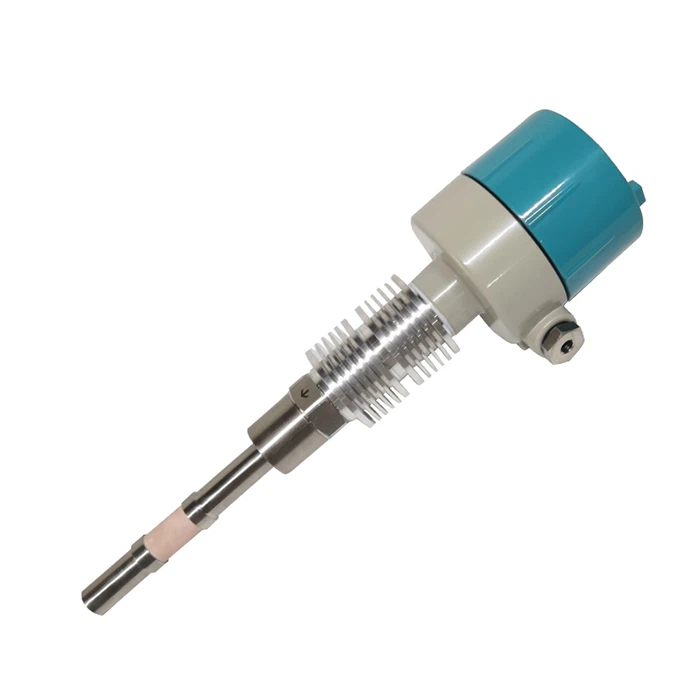
As a supplier of RF Admittance Switches, I've seen firsthand how the right probe material can make a huge difference in the performance and reliability of the switch. We offer a wide range of RF Admittance Switches with different probe materials to meet the diverse needs of our customers.
If you're in the market for an Industrial liquid level switch, or you're looking for Rf admittance level measurement solutions for your specific application, or even need an RF admittance level measurement switch for measuring bulk materials, we've got you covered.
We can help you select the best probe material based on your requirements and ensure that you get a high - quality RF Admittance Switch that will work flawlessly in your system. Whether you're in the chemical industry, food and beverage, or any other sector that requires accurate level measurement, we're here to assist you.
If you're interested in learning more about our RF Admittance Switches or have any questions about the probe materials, don't hesitate to reach out. We're always happy to have a chat and discuss your needs. Let's work together to find the perfect solution for your level measurement challenges.
References
- "Industrial Instrumentation and Control Handbook" by Bela Liptak
- "Electrical Engineering Handbook" by Richard Dorf





