
What is the difference between a Magnetostrictive Level Gauge and a radar level gauge?
Leave a message

Hey there! As a supplier of Magnetostrictive Level Gauges, I often get asked about the differences between Magnetostrictive Level Gauges and radar level gauges. So, I thought I'd write this blog to break it down for you in a simple and easy - to - understand way.
How They Work
Let's start with how these two types of level gauges operate.
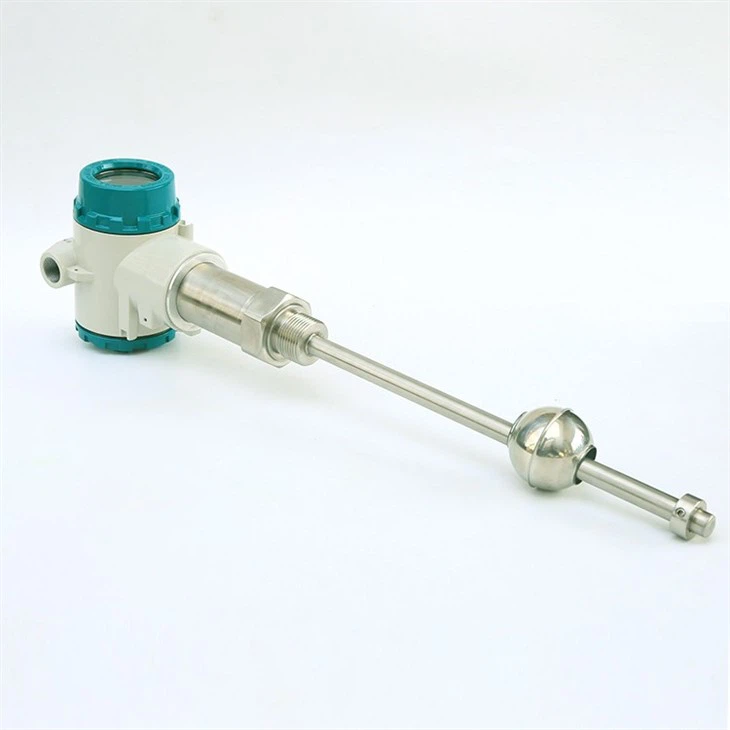
A Magnetostrictive Level Gauge works based on the principle of magnetostriction. In simple terms, there's a waveguide inside the gauge. A float with a permanent magnet is placed in the liquid whose level we want to measure. When an electric current pulse is sent through the waveguide, it creates a magnetic field. This magnetic field interacts with the magnetic field of the float's magnet, causing a torsional wave to travel along the waveguide. By measuring the time it takes for this wave to reach a sensor at the top of the gauge, we can accurately determine the liquid level. It's like sending a little signal down a wire and timing how long it takes to bounce back, but in a much more high - tech way.
On the other hand, a radar level gauge uses radar technology. It emits microwave pulses towards the surface of the liquid. These pulses bounce off the liquid surface and return to the gauge. The gauge then measures the time it takes for the pulses to return. Since the speed of the microwave pulses is known, the distance to the liquid surface (and thus the liquid level) can be calculated. It's similar to how bats use echolocation to find their way around, but instead of sound, we're using microwaves.
Accuracy
Accuracy is a big deal when it comes to level measurement.
Magnetostrictive Level Gauges are known for their high accuracy. They can typically achieve an accuracy of up to ± 1 mm. This is because the measurement is based on a very precise physical principle and the internal components are designed to minimize errors. For applications where you need to know the exact level of a liquid, like in a chemical processing plant where the right amount of chemicals is crucial for a reaction, a Magnetostrictive Level Gauge is a great choice.
Radar level gauges also offer good accuracy, usually in the range of ± 3 mm to ± 5 mm. However, their accuracy can be affected by factors such as the dielectric constant of the liquid, the presence of foam or vapor above the liquid, and the shape of the tank. For example, if there's a lot of foam on the liquid surface, the radar pulses might bounce off the foam instead of the actual liquid surface, leading to inaccurate readings.
Installation and Maintenance
Installation and maintenance are important considerations for any piece of equipment.
Installing a Magnetostrictive Level Gauge is relatively straightforward. You just need to mount the gauge vertically in the tank and make sure the float can move freely along the waveguide. There are no complex alignment requirements like in some other types of gauges. And when it comes to maintenance, there aren't many moving parts to wear out. The float is the main moving component, and as long as it's not damaged, it can last for a long time. You might need to clean the gauge occasionally to remove any debris that could affect the float's movement, but that's about it.
Radar level gauges, on the other hand, require more careful installation. You need to make sure the antenna is properly aligned with the liquid surface to get accurate readings. Also, the environment around the antenna needs to be clear of any obstructions that could interfere with the radar signals. Maintenance can be a bit more involved too. The antenna needs to be kept clean, and any build - up of dust or liquid on the antenna can affect the performance. In some cases, you might need to calibrate the gauge regularly to ensure accurate measurements.

Application Suitability
Different applications call for different types of level gauges.
Magnetostrictive Level Gauges are well - suited for applications where high accuracy is required in relatively small to medium - sized tanks. They're commonly used in industries such as oil and gas, chemical processing, and food and beverage. For example, in an oil storage tank, you need to know the exact amount of oil in the tank for inventory management and accounting purposes. A Magnetostrictive Level Gauge can provide the precise measurement you need. You can also check out our Magnetostrictive liquid level sensor for petroleum measurement for more details on this application.
Radar level gauges are better for large - scale applications and in situations where non - contact measurement is preferred. They can be used in large storage silos, open ponds, and even in harsh environments. For instance, in a mining operation where there are large ore storage piles, a radar level gauge can measure the level of the ore without having to be in direct contact with it. This is beneficial because it reduces the risk of damage to the gauge from the abrasive ore.
Cost
Cost is always a factor when making a purchasing decision.
Magnetostrictive Level Gauges generally have a higher upfront cost compared to some other types of level gauges. This is because of the advanced technology and high - precision components used in their construction. However, when you consider the long - term cost, they can be cost - effective. Their high accuracy means fewer errors in measurement, which can save money in the long run by preventing over - filling or under - filling of tanks. Also, their low maintenance requirements reduce the ongoing cost of ownership.
Radar level gauges can have a wide range of prices depending on their features and capabilities. Basic models can be relatively affordable, but high - end models with advanced features can be quite expensive. The cost of installation and calibration also needs to be factored in. In some cases, the overall cost of a radar level gauge system can be comparable to or even higher than a Magnetostrictive Level Gauge, especially when you consider the long - term maintenance and calibration costs.
Other Related Level Gauges
There are also other types of level gauges in the market that are worth mentioning. For example, the Magnetic Float Level Gauge works on a similar principle to the Magnetostrictive Level Gauge in that it uses a float with a magnet. But instead of measuring the time of a torsional wave, it uses a magnetic coupling to indicate the liquid level on an external scale. It's a simple and reliable option for some applications.
Another type is the Float level sensor. As the name suggests, it uses a float to detect the liquid level. It's often used in simple applications where a basic level indication is sufficient.
Conclusion
In conclusion, both Magnetostrictive Level Gauges and radar level gauges have their own advantages and disadvantages. If you need high accuracy, easy installation and maintenance, and are working in a relatively small - to - medium - sized tank environment, a Magnetostrictive Level Gauge might be the best choice for you. On the other hand, if you're dealing with large - scale applications, need non - contact measurement, and can tolerate a slightly lower accuracy, a radar level gauge could be more suitable.
If you're still not sure which type of level gauge is right for your application, or if you're interested in purchasing a Magnetostrictive Level Gauge, feel free to reach out. We're here to help you make the best decision for your needs.
References
- "Level Measurement Handbook" by Emerson Process Management
- "Industrial Instrumentation and Control Handbook" by B.C. Nakra and K.K. Chaudhry