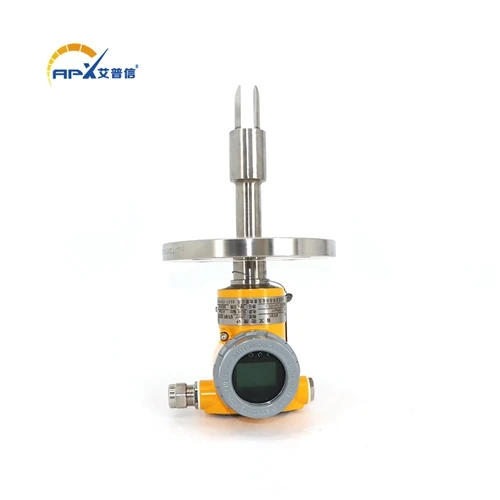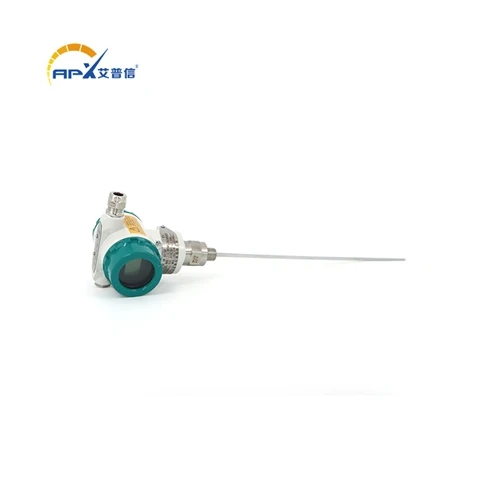

How to install a Silo Radar Level Meter in a silo with an irregular shape?
Leave a message

If you've ever tried to level a Silo Radar Level Meter in an irregularly shaped silo, you know it's not like mounting a device on a standard cylindrical tank. I've been supplying radar level measurement solutions for over 12 years, and I've lost count of the times a customer called panicking because their silo isn't a neat, round tube-say, a hopper that narrows unevenly, a rectangular concrete structure with sloped internal walls, or a silo with protruding beams or old liners that throw off readings. The truth is, irregular silos are some of the most common (and most frustrating) installations, but they're also totally manageable if you skip the one-size-fits-all approach and tailor every step to the unique quirks of your structure.
First, let's get one thing straight: not every radar level sensor is built to handle the noise and reflections that come with odd silo shapes. When I first started in this business, I'd advise customers to grab any Silo Radar Level Switch off the shelf, only to get a call a month later complaining about false readings from a lopsided hopper. Over time, I learned that for irregular silos, you need a meter that filters out "clutter" and focuses only on the material surface-something like a 26GHz radar, which has a narrower beam than older lower-frequency models, so it's less likely to bounce off a random internal wall instead of the product. If you're working with a water-related irregular silo, like a river-fed storage silo that's not a perfect rectangle, you might want to look at a Radar Type Water Level Sensor, designed to cut through surface turbulence and uneven structural edges to give consistent measurements.
Before you even pick up a drill, you need to do a silo audit that's way more detailed than the standard "measure height and diameter." Irregular shapes mean blind spots, unexpected protrusions, and areas where material piles unevenly-all of which can mess with your radar's signal. Last year, a customer in the mining industry had a silo that started as a rectangular top (12ft wide, 15ft long) and tapered unevenly to a round hopper at the bottom, with two steel support beams sticking out halfway up. They'd tried two different radar meters before reaching out to us, and both kept showing the level jumping 3ft up and down randomly. When I visited site, I spent two hours mapping every structural feature: I used a laser tape to mark the position of the beams (they were off-center by 8 inches), measured the slope of the tapered section (one side was steeper than the other), and noted where material tended to arch in the middle of the silo. That audit was the most important step-without it, we would have mounted the meter in the wrong spot.
Once you have your map, the next step is choosing the right installation point. For standard silos, you mount the meter in the center of the top lid, but for irregular silos, that's not always best. In the mining example I mentioned, the center was over the area where material arches, so mounting there would mean the radar was always picking up the arch instead of the true level. Instead, we mounted it 2ft off-center, over a section where the tapered hopper was the most consistent, and at least 1.5 times the width of the silo away from any protrusions (the rule of thumb is: if there's a beam or wall sticking out, stay at least twice the distance between the beam and the edge of the silo). Another pro tip: if your silo has a rectangular top, avoid mounting near the corners-signals bounce off the flat walls, creating ghost echoes. If your silo has multiple access ports on the top, test each port with a temporary radar before committing-we always tell customers to rent a portable unit for a day, place it in each potential port, and check readings during a full material cycle (loading, holding, emptying) to make sure the signal stays steady.

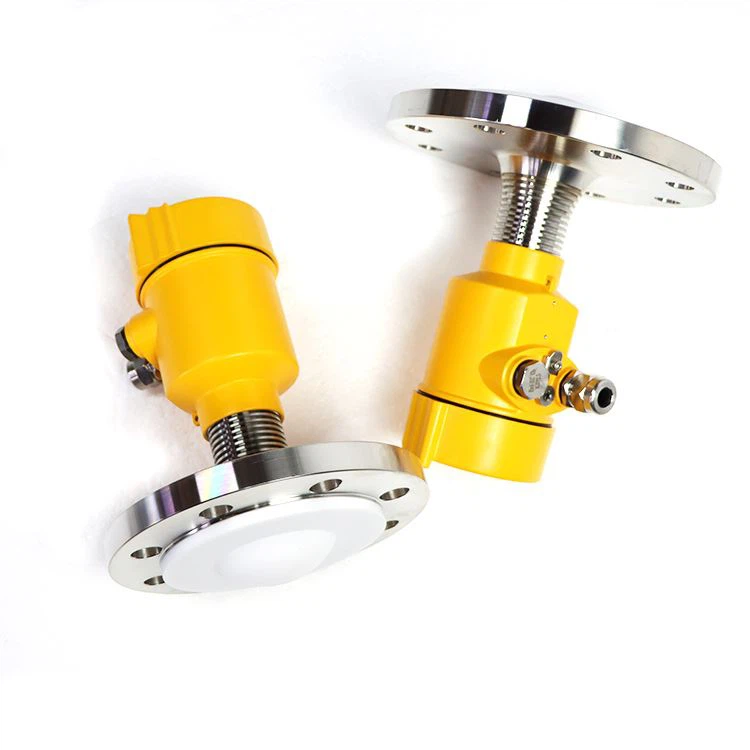
Now, the antenna selection matters more here than in standard silos. Irregular silos often have dust, fumes, or even sticky material that can build up on the antenna, and if your meter's antenna isn't built for that, it will get covered and stop working. A customer in the food processing industry had a silo that stored flour, which is fine and sticky-their first antenna was a standard plastic one, and flour caked on it within two weeks, causing readings to drop. We swapped it for an Anti Corrosion High-Temperature Antenna Water Level Radar Sensor, which has a polished, PTFE-coated surface that resists caking, and the narrow 26GHz beam cuts through dust without picking up static. For silos that store bulk solids with uneven surface levels (like grain that piles in a cone shape), a focused beam is better than a wide one-wide beams bounce off the sloped sides of the grain pile, while a narrow beam targets the exact center of the pile, giving an accurate average level. If your silo is used for liquid storage and irregularly shaped, a Radar Tank Level Measurement unit with a special signal processing algorithm for uneven surfaces will work best, as it filters out reflections from the tank's sloped walls.
Mounting the meter correctly is half the battle, but sealing it right is the other half-especially on irregular silos, where the top lid might not be perfectly flat. Most standard radar meters come with a gasket, but if your silo's lid has dents or uneven spots, the basic gasket won't create an airtight seal, leading to moisture or dust getting into the housing. We always use a custom silicone seal for these installations-we cut it to fit the exact shape of the port and the base of the meter, so there are no gaps. Also, never tighten the mounting bolts too much; it might seem like that would fix the seal, but it can warp the meter's housing or shift the antenna's angle, throwing off the beam alignment. Hand-tighten the bolts until the seal is snug, then give each a quarter-turn with a wrench-that's more than enough.
Once mounted, you need to configure the meter's settings to account for the silo's irregularities, which is a step many people skip. Every Silo Radar Level Meter has a "blanking zone" setting-this is the area at the bottom of the meter where it can't receive a signal, so you don't want that zone overlapping with the material surface. For example, if your meter's blanking zone is 1ft, and you have an irregular hopper that starts at 5ft below the top, you'll need to adjust the blanking zone to 0.5ft so it doesn't miss the material as it starts to fill the hopper. More importantly, you need to set up the echo threshold to ignore ghost signals from structural features. Most modern radar meters let you "teach" the device to recognize which echoes are real (the material surface) and which are fake (the beams, walls, or hopper edges). For the mining customer with the off-center beams, we walked them through the teaching process: we showed the meter each beam and structural feature, so it would mark those as "no-go" and only track the true material level. Without that, their readings would still jump, because the meter would think a reflection from a beam was a material surface.
I've seen too many installers skip the testing phase after configuration, which leads to problems down the line. For irregular silos, you need to test the meter during different operating conditions: when the silo is empty, when it's half-full, when it's full, and even during loading, when material is falling into the silo and creating a lot of surface noise. A good test is to use a measuring tape to manually check the level at the same time the radar is reading-if the two are within an inch, you're good. If not, you might need to adjust the beam angle slightly (you can tilt the meter a few degrees without messing up its performance) or tweak the echo settings. Last year, a customer had a silo that was lopsided so bad that the material surface was always sloped, and even after setting up the meter to ignore side echoes, the readings were off by 2 inches. We adjusted the meter's software to calculate the average level across the entire beam, instead of just a single point, and that fixed it-something you can't do on older radar meters, which is why investing in a newer unit with advanced signal processing is key for irregular silos.
Maintenance is also different for these installations. Irregular silos mean more points where material can build up on the antenna or interfere with the signal, so you can't just do a yearly check. We recommend a visual inspection every three months to make sure the antenna is clean and free of buildup, and a level check every six months with a measuring tape to confirm the radar's readings are accurate. If you see a sudden jump or drop in readings that doesn't match the actual material level, the first thing to check is the antenna-chances are it has caked on dust, and a quick wipe with a dry cloth will fix it. For silos in dusty or high-humidity environments, we suggest adding a protective cover over the antenna when the silo is not in use, which will extend its lifespan and reduce maintenance.
I can't stress enough how important it is to use the right equipment for your specific silo. Trying to adapt a standard radar meter to an irregular silo is like using a hammer to drive a screw-it might work once, but it will break eventually. When I first started, I'd recommend generic units and deal with the fallout, but now I always guide customers to the right product: a Silo Radar Level Switch for simple level detection in irregular silos, a Radar Type Water Level Sensor for liquid applications with uneven surfaces, a Radar Tank Level Measurement unit for bulk storage with variable surface levels, a Radar Level Transmitter for continuous, high-precision readings, and an Anti Corrosion High-Temperature Antenna Water Level Radar Sensor for harsh environments with sticky materials.
If you're working with an irregular silo and tired of inconsistent readings, don't waste time troubleshooting on your own. Our team has installed hundreds of radar meters on all types of non-standard silos, from rectangular concrete structures to tapered hoppers with protruding support beams, and we can help you audit your silo, choose the right equipment, and get accurate, reliable level readings that will last.
References
- Radar Level Measurement Handbook and Best Practices, International Society of Automation (ISA), 2022
- 26GHz Radar Technology for Industrial Level Sensing, Measurement Science and Technology Journal, Vol. 33, 2021
- Installation Guidelines for Level Sensors in Non-Standard Tanks and Silos, Industrial Measurement Magazine, Q2 2020
- Antenna Design for Harsh Environment Radar Level Sensors, IEEE Transactions on Industrial Electronics, Vol. 67, No. 8, 2020
- Echo Signal Processing for Irregular Industrial Containers, Journal of Sensors and Instrumentation, Vol. 10, No. 1, 2019