

How to calibrate a Grain Silo Radar Level Sensor?
Leave a message

Hey there! I'm from a company that supplies Grain Silo Radar Level Sensors. Calibrating these sensors is super important to make sure they work accurately, and I'm here to walk you through the process.
First off, let's understand why calibration matters. A well - calibrated Grain Silo Radar Level Sensor gives you the real - deal info about how much grain is in the silo. This helps with inventory management, so you know when to restock or when there's too much grain piling up. It also keeps the whole grain storage operation running smoothly.
Pre - calibration Checks
Before you start the calibration, you gotta do some checks. Make sure the sensor is installed right. It should be placed at the top of the silo, centered if possible, and at a proper height. Any misalignment can mess up the readings. Check the wiring too. Loose or damaged wires can cause all sorts of problems. Make sure there are no kinks or cuts in the cables, and that the connections are tight.
Another thing is to clear the area around the sensor. Remove any debris or dust that might be on the antenna. This can interfere with the radar signal. And take a look at the silo itself. Check for any signs of damage or deformation that could affect the way the sensor reads the grain level.
Tools You'll Need
You won't need a whole bunch of fancy tools for calibration. A basic set of tools like a screwdriver might come in handy if you need to make any adjustments to the sensor mounting. You'll also need a measuring tape. This is crucial for getting accurate reference measurements inside the silo. A notebook and a pen are good to jot down all the readings and observations you make during the process.
Initial Setup
Once you've done the pre - checks and gathered your tools, it's time to start the initial setup. Power on the Grain Silo Radar Level Sensor. Most sensors will have a display or an indicator light that shows it's up and running. If you're using a sensor with a digital interface, connect it to a computer or a control panel according to the manufacturer's instructions.
Now, you need to set the basic parameters. This includes things like the silo height and the minimum and maximum level limits. You can usually do this through the sensor's menu or software. For example, if your silo is 20 meters tall, you'll enter that value into the sensor settings. This gives the sensor a reference point for measuring the grain level.
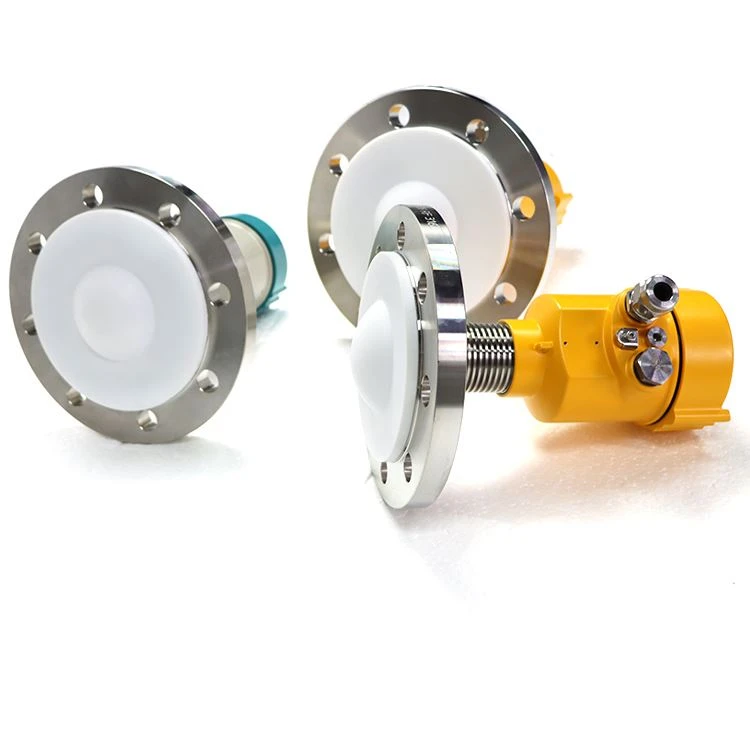
Zero Calibration
Zero calibration is like setting the baseline. It tells the sensor what "empty" looks like. First, make sure the silo is completely empty. This might seem obvious, but it's really important. Any leftover grain can throw off the calibration.

With the silo empty, go to the calibration menu on the sensor or software. Select the zero calibration option. The sensor will then send out radar signals and measure the distance to the bottom of the silo. It will use this measurement as the zero point. Once the calibration is done, double - check the reading on the display. It should show zero or very close to it. If it doesn't, you might need to repeat the zero calibration process.
Span Calibration
After zero calibration, it's time for span calibration. This is where you tell the sensor what "full" looks like. Fill the silo to a known level. You can use the measuring tape to measure the height of the grain from the bottom of the silo. For example, if you fill the silo to 15 meters, this is your reference height.
In the calibration menu, select the span calibration option. The sensor will send out radar signals and measure the distance to the top of the grain. Enter the known height (in our example, 15 meters) into the sensor settings. The sensor will then adjust its readings based on this new reference point.
Once the span calibration is complete, check the reading on the display again. It should match the known height you measured with the tape. If there's a significant difference, you may need to repeat the span calibration.
Fine - Tuning
Even after zero and span calibration, you might need to do some fine - tuning. Sometimes, there can be small errors due to things like temperature changes or the shape of the silo. Check the sensor readings over a period of time. If you notice any consistent errors, you can make small adjustments in the sensor settings.
For example, if the sensor is consistently reading a bit higher than the actual level, you can reduce the calibration factor slightly. Keep making these small adjustments until the readings are as accurate as possible.
Verification
Once you've calibrated and fine - tuned the sensor, it's time to verify the results. Take manual measurements inside the silo using the measuring tape. Compare these measurements with the readings on the sensor display. The difference between the two should be within an acceptable range.
If the difference is too large, go back and re - check your calibration steps. Make sure you followed all the procedures correctly. It might also be a good idea to check for any external factors that could be affecting the sensor, like electromagnetic interference or mechanical vibrations.

Maintenance After Calibration
Calibration isn't a one - time thing. You need to maintain the accuracy of the Grain Silo Radar Level Sensor over time. Regularly clean the antenna to keep it free of dust and debris. Check the wiring periodically to make sure there are no loose connections or damage.
Also, consider doing regular re - calibrations. Depending on the environment and usage, you might need to re - calibrate the sensor every few months or once a year. This will help ensure that the sensor continues to give accurate readings.

Related Products
If you're interested in other types of radar level sensors, we also offer [Non contact high - temperature radar liquid level measurement](/radar - level - meter/26g - radar - level - meter/flood - control - alarm - radar - level - gauge.html). These are great for measuring liquid levels in high - temperature environments. We also have [Radar level transmitter](/radar - level - meter/26g - radar - level - meter/bell - mouth - radar - water - level - gauge.html) and [Radar type water level sensor](/radar - level - meter/26g - radar - level - meter/river - water - level - detection - radar - level - gauge.html) for different applications.
If you're in the market for a Grain Silo Radar Level Sensor or need help with calibration, feel free to reach out. We're here to assist you in getting the most accurate and reliable level measurements for your grain silos. Whether you're a small - scale farmer or a large - scale grain storage facility, our sensors can make a big difference in your operations.
References
- Manufacturer's manual for Grain Silo Radar Level Sensor
- Industry standards for radar level sensor calibration





