

How does the RF Admittance Switch interact with other control systems?
Leave a message

In the complex landscape of industrial automation and process control, the seamless interaction between different control systems is crucial for ensuring efficient and reliable operations. As a leading supplier of RF Admittance Switches, I am often asked about how these devices interact with other control systems. In this blog post, I will delve into the details of this interaction, exploring the principles, applications, and benefits of integrating RF Admittance Switches with various control systems.
Understanding RF Admittance Switches
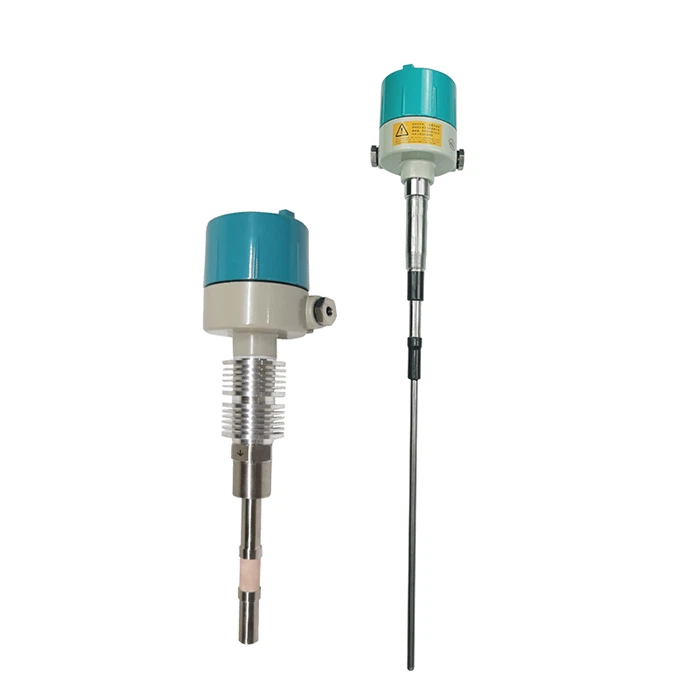
Before we discuss the interaction with other control systems, let's first understand what RF Admittance Switches are and how they work. RF Admittance Switches are level measurement devices that use radio frequency (RF) technology to detect the presence or absence of a material at a specific point in a container or process. They operate based on the principle of admittance, which is a measure of how easily an electrical current can flow through a medium.
When the RF Admittance Switch is in contact with a material, the admittance of the system changes, and this change is detected by the switch. The switch then sends a signal to indicate the presence or absence of the material. RF Admittance Switches are known for their high sensitivity, reliability, and ability to work in a wide range of applications, including bulk materials, liquids, and slurries.
Interaction with Programmable Logic Controllers (PLCs)
One of the most common control systems that RF Admittance Switches interact with is the Programmable Logic Controller (PLC). PLCs are widely used in industrial automation to control and monitor various processes. They are designed to receive input signals from sensors, process these signals according to a pre-programmed logic, and send output signals to control actuators.
When an RF Admittance Switch is connected to a PLC, it provides a binary input signal (either on or off) indicating the presence or absence of a material. The PLC can then use this signal to perform various functions, such as starting or stopping a conveyor belt, opening or closing a valve, or triggering an alarm. For example, in a grain storage silo, an RF Admittance Switch can be installed at the high-level point. When the grain level reaches this point, the switch sends a signal to the PLC, which then stops the filling process to prevent overfilling.
The interaction between an RF Admittance Switch and a PLC is relatively straightforward. The switch is typically connected to the input module of the PLC using a standard electrical connection. The PLC can be programmed to respond to the switch signal in a specific way, depending on the requirements of the process. This integration allows for precise control and automation of the process, improving efficiency and reducing the risk of human error.
Integration with Distributed Control Systems (DCSs)
Distributed Control Systems (DCSs) are another type of control system that RF Admittance Switches can interact with. DCSs are used in large-scale industrial processes, such as power plants, refineries, and chemical plants. They consist of multiple control stations that are distributed throughout the plant and are connected by a communication network.
RF Admittance Switches can be integrated into a DCS to provide level measurement data for various tanks, vessels, and pipelines. The switch signals are sent to the DCS through the communication network, where they are processed and used for control and monitoring purposes. The DCS can then use this data to optimize the process, adjust the flow rates, and ensure the safety and reliability of the operation.
For instance, in a chemical plant, RF Admittance Switches can be installed in different tanks to monitor the liquid levels. The switch signals are transmitted to the DCS, which can then control the pumps and valves to maintain the desired levels. The DCS can also generate reports and alarms based on the level data, providing operators with real-time information about the process.
Compatibility with Supervisory Control and Data Acquisition (SCADA) Systems
Supervisory Control and Data Acquisition (SCADA) systems are used to monitor and control industrial processes from a central location. They provide a graphical user interface (GUI) that allows operators to view and control various parameters of the process. RF Admittance Switches can be integrated with SCADA systems to provide level measurement data and status information.
When an RF Admittance Switch is connected to a SCADA system, the switch data is transmitted to the SCADA server through a communication protocol, such as Modbus or Profibus. The SCADA system can then display the level information on the GUI, allowing operators to monitor the process in real-time. Operators can also use the SCADA system to set up alarms and notifications based on the level data, ensuring that any abnormal conditions are detected and addressed promptly.
For example, in a water treatment plant, RF Admittance Switches can be installed in the water storage tanks. The switch data is sent to the SCADA system, which displays the tank levels on a dashboard. Operators can then use the SCADA system to control the water pumps and valves, ensuring that the water supply is maintained at the desired level.

Benefits of Integrating RF Admittance Switches with Other Control Systems
Integrating RF Admittance Switches with other control systems offers several benefits for industrial processes. Firstly, it improves the accuracy and reliability of level measurement. By using an RF Admittance Switch in conjunction with a control system, the level data can be processed and analyzed more effectively, reducing the risk of measurement errors.
Secondly, it enhances the automation and control of the process. The control system can use the switch signals to perform various functions automatically, such as starting and stopping equipment, adjusting flow rates, and triggering alarms. This reduces the need for manual intervention, improving efficiency and productivity.
Thirdly, it provides real-time monitoring and reporting. The control system can collect and analyze the level data from the RF Admittance Switch, providing operators with valuable information about the process. This allows for proactive maintenance and troubleshooting, reducing downtime and improving the overall performance of the plant.
Applications of RF Admittance Switches in Different Industries
RF Admittance Switches have a wide range of applications in different industries. In the RF admittance level measurement switch for measuring bulk materials industry, they are used to monitor the level of grains, powders, and other bulk materials in silos and hoppers. In the Rf admittance level measurement industry, they are used to measure the level of liquids in tanks and pipelines. In the Industrial liquid level switch industry, they are used to detect the presence or absence of liquids in hazardous environments.
In the food and beverage industry, RF Admittance Switches are used to monitor the level of ingredients in mixing tanks and storage silos. They ensure that the correct amount of ingredients is used in the production process, improving the quality and consistency of the products. In the pharmaceutical industry, RF Admittance Switches are used to measure the level of liquids in reactors and storage vessels. They help to maintain the proper dosage and concentration of the drugs, ensuring the safety and efficacy of the medications.
Conclusion
In conclusion, RF Admittance Switches play a crucial role in the interaction with other control systems in industrial automation. They provide accurate and reliable level measurement data, which can be used by control systems such as PLCs, DCSs, and SCADA systems to control and monitor various processes. The integration of RF Admittance Switches with these control systems offers numerous benefits, including improved accuracy, enhanced automation, and real-time monitoring.
If you are looking for a reliable and high-quality RF Admittance Switch for your industrial process, please feel free to contact us for more information and to discuss your specific requirements. Our team of experts is dedicated to providing you with the best solutions and support to ensure the success of your project.
References
- "Industrial Automation Handbook" by Peter Welter
- "Process Control Instrumentation Technology" by Curtis D. Johnson
- "Level Measurement Technology" by John R. Love





