
How does a Tank Radar Level Gauge work in tanks with a layer of sediment?
Leave a message

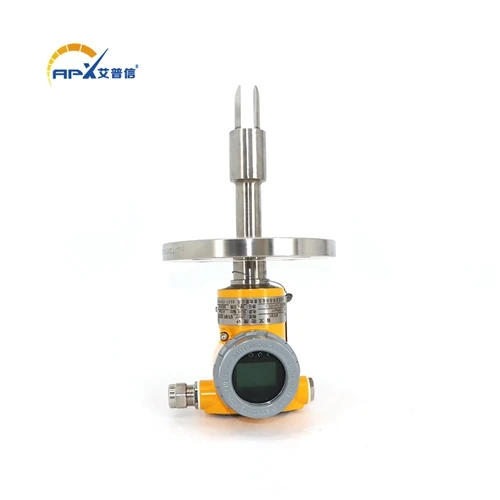
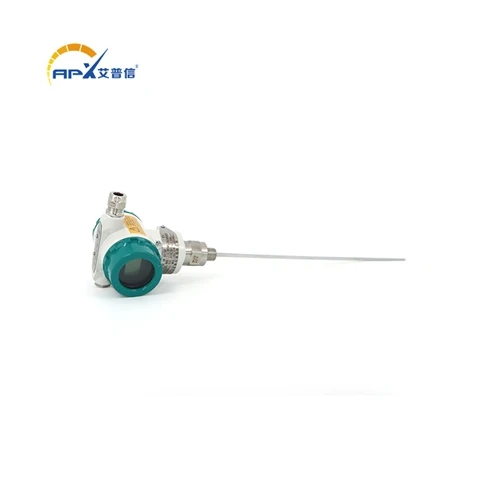
Hey there! As a supplier of Tank Radar Level Gauges, I've seen firsthand how these nifty devices work, especially in tanks with a layer of sediment. In this blog, I'm gonna break down the ins and outs of how a Tank Radar Level Gauge operates in such conditions.
Let's start with the basics. A Tank Radar Level Gauge is a device used to measure the level of liquid or solid materials in a tank. It's a non - contact measurement tool, which means it doesn't have to physically touch the substance inside the tank to get an accurate reading. This is a huge advantage, especially when dealing with corrosive, sticky, or hazardous materials.
Now, when we talk about tanks with a layer of sediment, things get a bit more interesting. Sediment can build up at the bottom of a tank over time due to various reasons, like the settling of particles in the liquid, chemical reactions, or the accumulation of debris. This sediment layer can potentially interfere with the accurate measurement of the liquid level.
So, how does a Tank Radar Level Gauge deal with this sediment? Well, it all comes down to the principle of radar technology. The gauge emits a radar signal, usually in the microwave frequency range, towards the surface of the material in the tank. This signal travels at the speed of light and bounces back when it hits the surface of the liquid or any other object in its path.
The gauge then measures the time it takes for the signal to travel to the surface and back. Using the known speed of light, it can calculate the distance between the gauge and the surface of the material. This distance is then used to determine the level of the material in the tank.
When there's a layer of sediment at the bottom of the tank, the radar signal first encounters the sediment. However, most sediment layers have different dielectric properties compared to the liquid above. The dielectric constant is a measure of how a material can store electrical energy in an electric field. Liquids and solids usually have different dielectric constants, and this difference is what the radar level gauge uses to distinguish between the sediment and the liquid.
The radar signal will penetrate through the sediment layer to some extent, depending on the properties of the sediment. If the sediment is loose and has a relatively low density, the signal may pass through it more easily. On the other hand, if the sediment is compact and dense, the signal may be partially or fully reflected by the sediment layer.
In cases where the signal penetrates the sediment layer and reaches the liquid surface, the gauge can accurately measure the distance to the liquid surface. It ignores the sediment layer as long as the difference in dielectric properties allows it to clearly distinguish between the two.
But what if the sediment layer is too thick or too dense, and the signal can't reach the liquid surface? Well, some advanced Tank Radar Level Gauges are equipped with algorithms that can analyze the reflected signal patterns. These algorithms can detect the presence of the sediment layer and estimate its thickness. By subtracting the estimated sediment thickness from the total distance measured from the gauge to the top of the sediment, the gauge can still provide an accurate measurement of the liquid level.
Another factor to consider is the shape of the tank. Tanks come in various shapes, such as cylindrical, rectangular, or spherical. The presence of sediment can also affect the shape of the liquid surface. For example, in a cylindrical tank, sediment may accumulate unevenly at the bottom, causing the liquid surface to be tilted. A good Tank Radar Level Gauge can compensate for these irregularities by using multiple radar beams or by analyzing the signal reflections from different angles.
Now, let's talk about some of the related products we offer. We have a great selection of Radar level transmitter that are highly accurate and reliable. These transmitters are designed to work in a variety of tank conditions, including those with sediment. They can provide continuous level measurements and transmit the data to a control system for further analysis.
We also have Radar level switch which can be used to detect specific levels in the tank. These switches are useful for applications where you need to know when the liquid level reaches a certain point, such as for overflow prevention or pump control.
And if you're looking for a solution for water level measurement, our Radar type water level sensor is a great option. It can accurately measure the water level in rivers, lakes, or tanks, even in the presence of sediment or other debris.
In conclusion, a Tank Radar Level Gauge is a powerful tool for measuring the level of materials in tanks, even when there's a layer of sediment. With advanced technology and algorithms, it can overcome the challenges posed by sediment and provide accurate and reliable measurements.
If you're in the market for a Tank Radar Level Gauge or any of our related products, we'd love to have a chat with you. Whether you're dealing with a small tank in a laboratory or a large industrial storage tank, we have the right solution for you. Contact us to start a discussion about your specific needs and let's work together to find the best level measurement solution for your tanks.
References

- Radar Level Measurement Handbook, Emerson Process Management
- Principles of Radar Technology in Industrial Applications, Honeywell