

How does a capacitive fuel level sensor communicate with the vehicle's ECU?
Leave a message

Hey there! As a supplier of capacitive fuel level sensors, I often get asked about how these nifty devices communicate with a vehicle's ECU (Engine Control Unit). So, let's dive right in and break it down.
First off, let's understand what a capacitive fuel level sensor is. Simply put, it's a device that measures the level of fuel in a tank. It works on the principle of capacitance, which is the ability of a system to store an electric charge. The sensor has a probe that is placed in the fuel tank. As the fuel level changes, the capacitance between the probe and the tank wall also changes. This change in capacitance is then converted into an electrical signal, which can be used to determine the fuel level.
Now, onto the main question: how does this sensor communicate with the vehicle's ECU? Well, there are a few different ways this can happen, and I'll go through the most common ones.
Analog Communication
One of the simplest ways for a capacitive fuel level sensor to communicate with the ECU is through analog signals. In an analog system, the sensor outputs a voltage that is proportional to the fuel level. For example, a low fuel level might correspond to a low voltage, while a full tank might result in a high voltage.
The ECU has an analog-to-digital converter (ADC) that takes this analog voltage and converts it into a digital value. The ECU can then use this digital value to calculate the fuel level and display it on the dashboard.
The advantage of analog communication is its simplicity. It's easy to implement and doesn't require a lot of complex electronics. However, it also has some limitations. Analog signals can be affected by noise and interference, which can lead to inaccurate readings. Also, the range of values that can be represented by an analog signal is limited, which might not be sufficient for some applications.
Digital Communication
To overcome the limitations of analog communication, many modern capacitive fuel level sensors use digital communication protocols. There are several digital protocols available, but two of the most common ones are CAN (Controller Area Network) and LIN (Local Interconnect Network).
CAN Communication
CAN is a widely used communication protocol in the automotive industry. It allows multiple devices, such as sensors and actuators, to communicate with each other over a single network. In a CAN network, the capacitive fuel level sensor sends digital messages to the ECU. These messages contain information about the fuel level, as well as other diagnostic data.
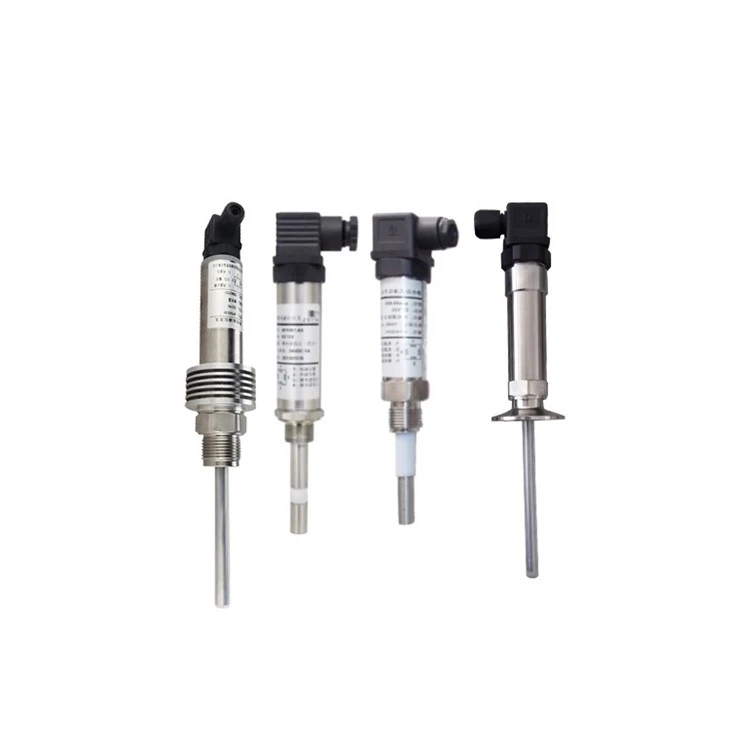

The advantage of CAN communication is its reliability and high data transfer rate. It can handle a large amount of data and is resistant to noise and interference. However, it also requires more complex electronics and software, which can increase the cost of the system.
LIN Communication
LIN is a simpler and more cost-effective alternative to CAN. It is designed for applications where the data transfer rate is not very high, such as in a fuel level sensor. In a LIN network, the sensor acts as a slave device, and the ECU acts as the master device. The ECU sends a request message to the sensor, and the sensor responds with a message containing the fuel level data.
LIN communication is less complex and cheaper than CAN, but it also has a lower data transfer rate and is less reliable in high-noise environments.
Signal Conditioning and Calibration
Before the sensor's signal can be used by the ECU, it often needs to be conditioned and calibrated. Signal conditioning involves amplifying, filtering, and otherwise processing the sensor's output to make it suitable for the ECU. For example, the sensor's output might be very small, so it needs to be amplified to a level that the ECU can handle.
Calibration is the process of adjusting the sensor's output to ensure that it accurately reflects the fuel level. This is important because different fuel tanks have different shapes and sizes, which can affect the relationship between the capacitance and the fuel level. Calibration can be done during the manufacturing process or in the field using specialized calibration equipment.
The Role of the ECU
The ECU plays a crucial role in the communication between the capacitive fuel level sensor and the rest of the vehicle's systems. It receives the sensor's data, processes it, and uses it to make decisions about the vehicle's operation. For example, if the fuel level is low, the ECU might trigger a warning light on the dashboard or adjust the engine's performance to conserve fuel.
The ECU also has the ability to diagnose problems with the sensor. If it detects that the sensor's output is abnormal or inconsistent, it can set a diagnostic trouble code (DTC) and store it in its memory. This code can then be read by a mechanic using a diagnostic tool, which can help in identifying and fixing the problem.
Why Choose Our Capacitive Fuel Level Sensors
As a supplier of capacitive fuel level sensors, we offer a range of high-quality sensors that are designed to provide accurate and reliable fuel level measurements. Our sensors are compatible with both analog and digital communication protocols, so you can choose the one that best suits your needs.
We also offer DC24V/AC220V RF admittance liquid level sensor and capacitive level switch, which are suitable for a variety of applications. And if you need a sensor for a high-temperature or explosive environment, our High temperature explosion-proof RF admittance level switch controller for silos is the perfect choice.
Our sensors are easy to install and maintain, and we provide excellent customer support. Whether you're a vehicle manufacturer, a fleet operator, or a DIY enthusiast, we have the right sensor for you.
Let's Talk
If you're interested in learning more about our capacitive fuel level sensors or have any questions about how they communicate with the ECU, please don't hesitate to get in touch. We're always happy to discuss your specific requirements and help you find the best solution for your needs. So, let's start a conversation and see how we can work together to improve your vehicle's fuel management system.
References
- Automotive Electrical and Electronic Systems, Third Edition, by William D. Hunter
- Fundamentals of Modern Manufacturing: Materials, Processes, and Systems, Fourth Edition, by Mikell P. Groover
- Controller Area Network (CAN) Specification, Version 2.0, by Robert Bosch GmbH





