How do capacitive switches work in different orientations?
Leave a message

Capacitive switches are a fundamental component in many modern electronic devices and industrial applications. Their operation is based on the principle of capacitance, which can change depending on the presence of an object or the environment around the switch. In this blog, as a capacitive switch supplier, I'll explore how capacitive switches work in different orientations and the implications of these orientations for their performance.
Basic Principle of Capacitive Switches
Before delving into the effects of different orientations, it's essential to understand the basic working principle of capacitive switches. A capacitive switch consists of a conductive sensing electrode and a reference electrode. When an object, typically a human finger or a conductive material, approaches the sensing electrode, it changes the capacitance between the electrodes.
Capacitance is defined as the ability of a system to store an electric charge. In a capacitive switch, the capacitance is determined by the distance between the electrodes, the area of the electrodes, and the dielectric constant of the material between them. When a finger or a conductive object comes near the sensing electrode, it effectively changes the dielectric constant of the medium around the electrode, increasing the capacitance.
The switch's control circuit continuously monitors the capacitance. When the capacitance exceeds a certain threshold, the circuit interprets this as an activation event and triggers the switch. This technology is widely used in touchscreens, proximity sensors, and industrial level sensors.
Capacitive Switches in Horizontal Orientation
In a horizontal orientation, capacitive switches are commonly used in applications such as touchpads on laptops or the control panels of household appliances. When the switch is placed horizontally, the influence of gravity on the operation is minimal. The sensing electrode is usually exposed on the top surface, and the user can interact with it by simply placing a finger on it.
The horizontal orientation provides a stable and predictable environment for the switch. The dielectric constant change caused by a finger is relatively consistent, as the finger makes a flat contact with the sensing surface. This results in a reliable and responsive operation. For example, in a touchpad, the user can smoothly move the cursor or perform multi - touch gestures because the capacitive switch can accurately detect the position and movement of the fingers.
However, the horizontal orientation also has its challenges. Dust, dirt, and liquids can accumulate on the sensing surface over time. These contaminants can act as additional dielectric materials, changing the baseline capacitance of the switch. This may lead to false activations or a decrease in the sensitivity of the switch. Regular cleaning and proper sealing are necessary to maintain the performance of the switch in a horizontal orientation.
Capacitive Switches in Vertical Orientation
Vertical orientation is often seen in applications like elevator control panels or wall - mounted touchscreens. In a vertical orientation, the effects of gravity and the way users interact with the switch are different from the horizontal case.
When the switch is vertical, the user usually has to reach up or down to touch the sensing surface. This can result in a more angled contact between the finger and the surface. The capacitance change may be less uniform compared to the horizontal orientation, as the contact area and the pressure distribution of the finger are not as consistent.
Another factor to consider is the potential for water or other liquids to run down the surface of the switch. If the switch is not properly sealed, liquids can penetrate into the internal components, causing damage or affecting the electrical properties of the electrodes. This is a significant concern in environments where moisture is present, such as bathrooms or outdoor applications.
However, the vertical orientation also has its advantages. It can save space, especially in areas where horizontal installation is not feasible. Additionally, in some industrial applications, a vertical orientation allows for better integration with other equipment or structures. For example, in a manufacturing plant, a vertical capacitive level switch can be easily installed on the side of a tank to monitor the liquid level.
Capacitive Switches in Inclined Orientation
An inclined orientation is less common but can be found in some specialized applications, such as control panels in vehicles or equipment with an ergonomic design. In an inclined orientation, the switch combines some of the characteristics of both horizontal and vertical orientations.
The angle of inclination affects the way the user interacts with the switch. A small angle of inclination may still provide a relatively stable contact similar to the horizontal orientation, while a larger angle may result in a more angled and less consistent contact, similar to the vertical case.
The influence of gravity on the accumulation of contaminants and liquids also depends on the angle of inclination. At a moderate angle, liquids may drain more easily compared to a horizontal surface, reducing the risk of liquid pooling. However, if the angle is too large, it may become more difficult for the user to operate the switch comfortably.
Industrial Applications and Orientation Considerations
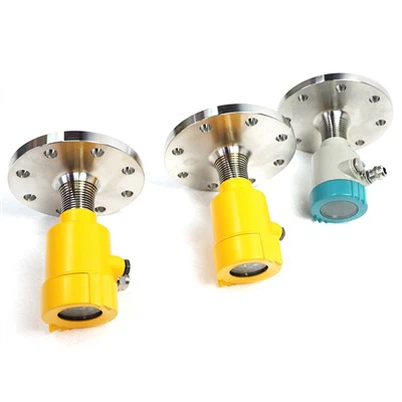
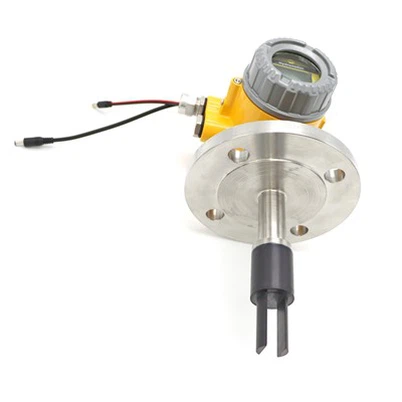
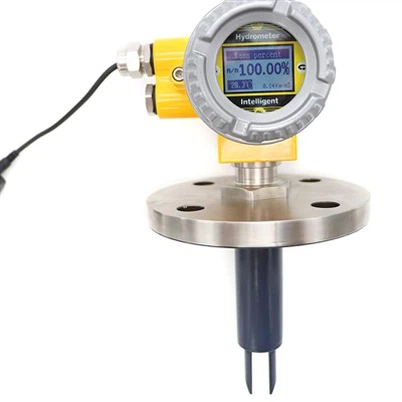
In industrial settings, capacitive switches are used for a variety of purposes, such as level sensing in tanks and containers. For instance, Capacitance Type Level Switch and Capacitance point level switch are commonly used to detect the level of liquids or solids in silos.
When using capacitive level switches in different orientations, the orientation can significantly affect the accuracy of the level measurement. In a horizontal orientation, the switch can accurately detect the presence of a liquid or solid at a specific height in a tank. However, in a vertical orientation, the switch may need to be calibrated more carefully to account for the non - uniform distribution of the material along the sensing electrode.
In some cases, the orientation can also affect the durability of the switch. For example, in a high - vibration environment, a horizontal switch may be more stable compared to a vertical or inclined one. Additionally, in applications where there is a risk of explosion, such as in silos storing flammable materials, High temperature explosion - proof RF admittance level switch controller for silos may be required. The orientation of this switch needs to be carefully considered to ensure proper ventilation and protection from potential hazards.
Conclusion
The orientation of capacitive switches plays a crucial role in their performance and reliability. Each orientation - horizontal, vertical, and inclined - has its own advantages and challenges. In horizontal orientation, the operation is stable but susceptible to surface contaminants. Vertical orientation saves space but may face issues related to non - uniform contact and liquid penetration. Inclined orientation combines features of both, with the angle of inclination affecting the user experience and the accumulation of contaminants.
As a capacitive switch supplier, we understand the importance of providing switches that can perform well in different orientations. We offer a wide range of capacitive switches with various designs and features to meet the specific needs of different applications. Whether you are looking for a switch for a consumer product or an industrial sensor, we can provide you with high - quality solutions.


If you are interested in our capacitive switches or have any questions about their application in different orientations, please feel free to contact us for procurement and further discussion. We are committed to helping you find the best capacitive switch solutions for your projects.
References
- Smith, J. (2018). Capacitive Sensor Technology: Principles and Applications. Springer.
- Jones, A. (2020). Industrial Sensors: A Comprehensive Guide. Wiley.
- Chen, L. (2019). Advances in Capacitive Touch Technology. IEEE Transactions on Electronics.