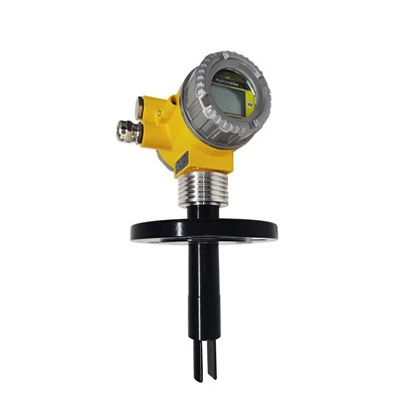
Can Mine Radar Level Meter measure in a frozen mine environment?
Leave a message

As a supplier of mine radar level meters, I often receive inquiries from customers about the performance of our products in various challenging environments. One question that frequently comes up is whether our mine radar level meters can accurately measure in a frozen mine environment. In this blog post, I'll delve into this topic, exploring the capabilities and limitations of our mine radar level meters under freezing conditions.
Understanding Mine Radar Level Meters
Before we discuss their performance in frozen environments, let's briefly understand how mine radar level meters work. These devices use radar technology to measure the distance between the sensor and the surface of the material being monitored. The radar signal is emitted from the sensor and travels towards the target. When it hits the target, a portion of the signal is reflected back to the sensor. By measuring the time it takes for the signal to travel to the target and back, the meter can calculate the distance and thus determine the level of the material.
There are different types of radar level meters, including High temperature 80G radar level gauge and Radar level sensor. Our CWFM radar is particularly designed for high - precision level measurement, using Frequency Modulated Continuous Wave (FMCW) technology.
Challenges in a Frozen Mine Environment
A frozen mine environment presents several challenges for radar level measurement. Firstly, the extremely low temperatures can affect the performance of the electronic components in the radar level meter. Electronic circuits are sensitive to temperature changes, and cold temperatures can cause components to become more brittle, potentially leading to malfunctions.
Secondly, ice and frost can accumulate on the antenna of the radar level meter. This accumulation can disrupt the radar signal, either by absorbing or scattering it. As a result, the reflected signal may be weaker or distorted, making it difficult for the meter to accurately measure the distance to the target.


Thirdly, the physical properties of the materials in a frozen mine may change. For example, if the material being monitored is a liquid that has frozen, its surface may become uneven or have a different dielectric constant compared to its liquid state. These changes can also affect the way the radar signal interacts with the target, leading to measurement errors.
Our Mine Radar Level Meters' Adaptability
Despite these challenges, our mine radar level meters are designed to withstand harsh conditions, including frozen mine environments. Our engineers have taken several measures to ensure the reliability and accuracy of our products in low - temperature settings.
Temperature - Resistant Design
The electronic components in our mine radar level meters are carefully selected to operate within a wide temperature range. We use high - quality materials that can maintain their performance even at extremely low temperatures. Additionally, the housing of the meter is insulated to protect the internal components from the cold. This insulation helps to maintain a stable temperature inside the meter, reducing the risk of temperature - related malfunctions.
Anti - Ice and Anti - Frost Features
To prevent ice and frost from accumulating on the antenna, our radar level meters are equipped with anti - ice and anti - frost coatings. These coatings have hydrophobic properties, which means that water droplets are less likely to adhere to the antenna surface. In addition, some of our models have built - in heating elements that can be activated to melt any ice or frost that may form on the antenna. This ensures that the radar signal can travel unobstructed, allowing for accurate measurements.
Signal Processing Algorithms
Our mine radar level meters are equipped with advanced signal processing algorithms. These algorithms can filter out noise and interference caused by ice, frost, or uneven surfaces. They can also compensate for changes in the dielectric constant of the target material due to freezing. By analyzing the characteristics of the reflected signal, the meter can accurately determine the distance to the target, even in challenging frozen mine conditions.
Case Studies
We have conducted several field tests in frozen mine environments to evaluate the performance of our mine radar level meters. In one case, a mine in a cold region was using our radar level meter to monitor the level of a frozen ore slurry. Despite the low temperatures and the presence of ice on the tank walls, the meter was able to provide accurate and reliable measurements. The anti - ice coating on the antenna prevented significant ice accumulation, and the signal processing algorithms compensated for the changes in the material's properties.
In another case, a mine was using our radar level meter to measure the level of a liquid that had partially frozen. The meter was able to distinguish between the frozen and liquid parts of the material and accurately measure the level of the liquid. This demonstrated the meter's ability to handle complex situations in a frozen mine environment.
Maintenance and Calibration in Frozen Environments
To ensure the continued accuracy and reliability of our mine radar level meters in a frozen mine environment, regular maintenance and calibration are essential.
Maintenance
During the cold season, it is important to regularly inspect the meter for any signs of ice or frost accumulation. If ice or frost is detected on the antenna, the anti - ice features should be activated or the antenna should be manually cleaned. It is also important to check the insulation of the meter housing to ensure that it is still effective.
Calibration
Calibration should be performed periodically to ensure that the meter is providing accurate measurements. In a frozen mine environment, the calibration process may need to take into account the changes in the material's properties due to freezing. Our technical support team can provide guidance on the calibration procedure and help customers adjust the meter settings as needed.
Conclusion
In conclusion, our mine radar level meters are capable of measuring in a frozen mine environment. Through temperature - resistant design, anti - ice and anti - frost features, and advanced signal processing algorithms, our products can overcome the challenges presented by low temperatures, ice, and changes in material properties. Our field tests have demonstrated the reliability and accuracy of our meters in such conditions.
If you are looking for a reliable mine radar level meter for your frozen mine operations, we invite you to contact us for more information. Our team of experts can provide you with detailed product specifications, application advice, and pricing information. We are committed to providing high - quality products and excellent customer service to meet your level measurement needs in any environment.
References
- "Radar Level Measurement Technology" - Industry Handbook on Process Instrumentation
- "Performance of Electronic Components in Low - Temperature Environments" - Journal of Electronic Engineering
- "Signal Processing for Radar Level Measurement in Harsh Conditions" - Proceedings of the International Conference on Instrumentation and Measurement