

Can a Radar Water Level Gauge be used for water level measurement in aquaculture ponds?
Leave a message

Can a Radar Water Level Gauge be used for water level measurement in aquaculture ponds?
As a supplier of radar water level gauges, I am often asked whether our products can be effectively used for water level measurement in aquaculture ponds. In this blog post, I will explore the feasibility, advantages, and considerations of using radar water level gauges in aquaculture pond applications.
Feasibility of Using Radar Water Level Gauges in Aquaculture Ponds
Radar water level gauges operate on the principle of emitting electromagnetic waves towards the water surface and measuring the time it takes for the waves to bounce back. This technology is highly suitable for aquaculture ponds for several reasons.
Firstly, aquaculture ponds typically have relatively calm water surfaces, which are ideal for radar wave reflection. Unlike in some natural water bodies where there may be significant waves, wind, or floating debris that can interfere with the measurement, the water in aquaculture ponds is usually well - controlled. This allows the radar water level gauge to accurately measure the distance between the sensor and the water surface, thereby determining the water level.
Secondly, radar water level gauges can work in various environmental conditions. They are not affected by factors such as water turbidity, temperature, or humidity. In aquaculture, the water in ponds may contain a certain amount of suspended solids, and the temperature can vary depending on the season and location. A radar water level gauge can still provide reliable measurements regardless of these conditions, ensuring continuous and accurate monitoring of the water level.
Advantages of Using Radar Water Level Gauges in Aquaculture Ponds
High Accuracy
Radar water level gauges offer high - precision measurements. They can detect even small changes in the water level, which is crucial in aquaculture. Maintaining the proper water level is essential for the health and growth of aquatic organisms. For example, if the water level is too low, the oxygen concentration in the water may decrease, and the waste products of the aquaculture species may accumulate more easily, leading to poor water quality and potential health problems for the fish or shrimp. On the other hand, if the water level is too high, it may cause overflow and loss of water and aquaculture products. The high accuracy of radar water level gauges helps aquaculturists to make timely adjustments to keep the water level within the optimal range.
Non - Contact Measurement
One of the significant advantages of radar water level gauges is that they are non - contact sensors. They do not need to be in direct contact with the water, which means there is no risk of corrosion or damage caused by the water or the chemicals in the aquaculture pond. For instance, some aquaculture ponds may use disinfectants or fertilizers, which can be corrosive to traditional contact - type water level sensors. With a radar water level gauge, this problem is avoided, and the sensor has a longer service life.
Easy Installation and Maintenance
Radar water level gauges are relatively easy to install. They can be mounted above the pond, either on a fixed structure or a floating platform. The installation process usually does not require complex procedures or a large amount of equipment. Additionally, maintenance is also straightforward. Since there are no moving parts in contact with the water, there is less wear and tear, and the need for frequent calibration or replacement of parts is reduced. This saves time and cost for aquaculturists.
Considerations When Using Radar Water Level Gauges in Aquaculture Ponds
Mounting Location
The choice of mounting location for the radar water level gauge is crucial. It should be installed in a position where it can have an unobstructed view of the water surface. Obstacles such as trees, buildings, or floating objects in the pond can interfere with the radar signal and affect the measurement accuracy. The gauge should be mounted at an appropriate height above the water surface to ensure that it can cover the entire range of water level changes in the pond.
Signal Interference
Although radar water level gauges are generally reliable, they can be affected by signal interference in some cases. For example, nearby electronic equipment or radio signals may cause interference with the radar signal. Aquaculturists should ensure that the radar water level gauge is installed away from potential sources of interference to guarantee accurate measurements.
Cost
Compared to some traditional water level measurement methods, radar water level gauges may have a relatively higher initial cost. However, considering their long - term benefits such as high accuracy, non - contact measurement, and low maintenance requirements, the overall cost - effectiveness is often high. Aquaculturists need to weigh the initial investment against the long - term advantages when making a purchasing decision.
Our Radar Water Level Gauge Products
We offer a variety of radar water level gauges suitable for aquaculture pond applications. Our DN100PN16 flange mounted radar level transmitter is designed with a flange - mounting structure, which is easy to install and can be firmly fixed above the pond. It has high - frequency radar technology, providing accurate and stable water level measurements.
Our Radar type water level sensor is specifically developed for water level detection in various water bodies, including aquaculture ponds. It can adapt to different environmental conditions and has a wide measurement range.
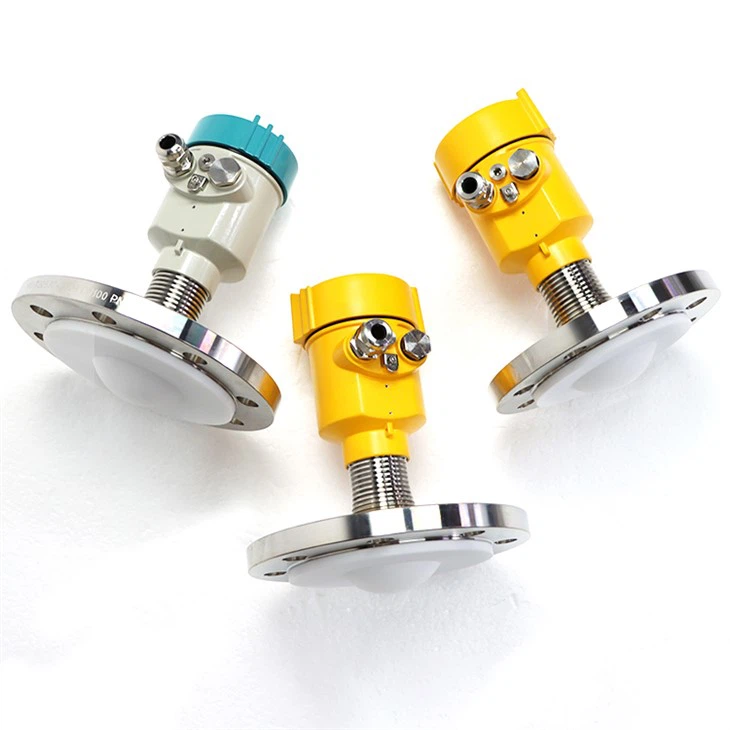
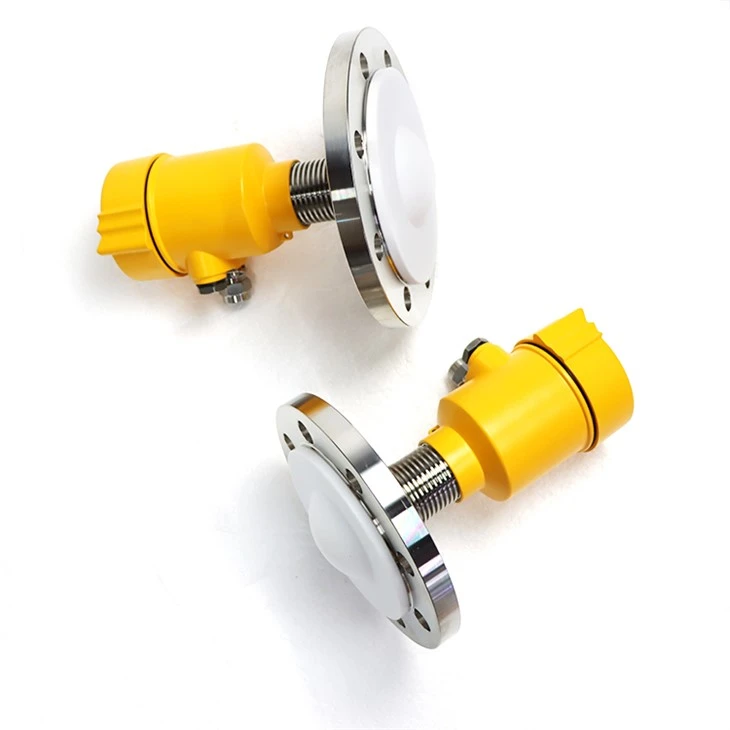
The Anti corrosion high - temperature antenna water level radar sensor is equipped with an anti - corrosion and high - temperature antenna, which is very suitable for the harsh environment in aquaculture ponds. It can work stably even in the presence of chemicals and high - temperature water.
Conclusion
In conclusion, radar water level gauges are a viable and advantageous option for water level measurement in aquaculture ponds. Their high accuracy, non - contact measurement, and adaptability to various environmental conditions make them well - suited for this application. Although there are some considerations such as mounting location, signal interference, and cost, the benefits they bring far outweigh the potential challenges.
If you are an aquaculturist or involved in the aquaculture industry and are interested in our radar water level gauge products, we welcome you to contact us for more information and to discuss your specific needs. Our team of experts is ready to provide you with professional advice and solutions to help you achieve efficient and accurate water level monitoring in your aquaculture ponds.
References
- Smith, J. (2018). Water level monitoring technologies in aquaculture. Aquaculture Journal, 45(2), 123 - 135.
- Johnson, A. (2019). Non - contact sensors for environmental monitoring in aquaculture. Environmental Science Review, 32(4), 234 - 246.





