What is the power consumption of a capacitive level sensor?
Leave a message

Hey there! As a supplier of capacitive level sensors, I often get asked about the power consumption of these nifty devices. So, I thought I'd take a deep dive into this topic and share everything you need to know.
First off, let's understand what a capacitive level sensor is. It's a type of sensor that uses the principle of capacitance to measure the level of a liquid or solid in a container. Capacitance is basically the ability of a system to store an electric charge. When the level of the substance in the container changes, the capacitance between the sensor electrodes also changes. The sensor then converts this change in capacitance into an electrical signal that can be used to determine the level.
Now, onto the main question: what's the power consumption of a capacitive level sensor? Well, it varies depending on several factors. One of the biggest factors is the type of sensor. There are different types of capacitive level sensors, such as those used for continuous level measurement and those used as level switches.
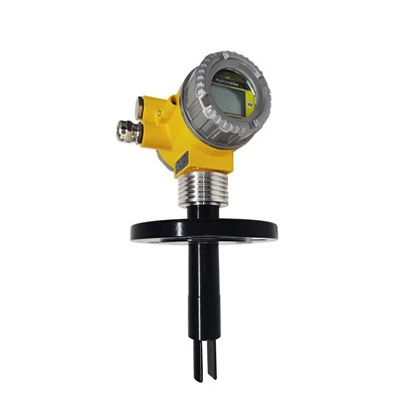
Let's start with the Capacitive liquid level sensor for continuous measurement of liquid level. These sensors are designed to constantly monitor the level of a liquid in a tank or container. They usually have a relatively low power consumption because they operate in a continuous mode, but they don't need a huge amount of power to perform their function. On average, a typical continuous measurement capacitive level sensor might consume anywhere from a few milliamperes to tens of milliamperes.


The power consumption of these sensors is influenced by things like the sensor's electronics, the frequency of measurement, and the output signal type. For example, if the sensor has a more complex signal processing circuit, it might consume a bit more power. Also, if it needs to measure the level at a high frequency, it'll use more energy. And if it outputs a 4 - 20 mA signal, which is a common industrial standard, it'll draw a certain amount of power to maintain that signal.
On the other hand, Level switch capacitance sensors are used to detect when a liquid or solid reaches a certain level. They're like on - off switches. These sensors usually consume less power compared to continuous measurement sensors because they only need to operate when the level crosses a preset threshold. They're in a standby mode most of the time, and only draw power when they're triggered. So, their power consumption can be as low as a few microamperes in standby and then jump up to a few milliamperes when activated.
Another factor that affects power consumption is the environment in which the sensor is used. If the sensor is in a harsh environment with high temperatures, humidity, or electrical interference, it might need to use more power to maintain its accuracy and reliability. For example, in a high - temperature environment, the sensor's electronics might need to work harder to compensate for the thermal effects on the capacitance measurement.
The power supply voltage also plays a role. Most capacitive level sensors can operate within a certain voltage range. If the power supply voltage is higher than the minimum required, the sensor might consume more power. However, modern sensors are designed to be quite efficient and can adapt to different voltage levels to some extent.
Now, you might be wondering why power consumption matters. Well, for one thing, in applications where power is limited, like in battery - powered devices or remote monitoring systems, low power consumption is crucial. A sensor with high power consumption will drain the battery quickly, which means more frequent battery replacements or recharging. This can be costly and inconvenient, especially in hard - to - reach locations.
In industrial settings, reducing power consumption can also lead to cost savings. Lower power usage means lower electricity bills, and it's also better for the environment. Additionally, in some applications, such as those in explosive or hazardous areas, low - power sensors are preferred because they generate less heat, reducing the risk of ignition.
Let's talk about some ways to optimize the power consumption of capacitive level sensors. One way is to choose the right sensor for the application. If you only need to detect a specific level, a level switch might be a better choice than a continuous measurement sensor. You can also adjust the measurement frequency of continuous measurement sensors to only measure as often as necessary.
Another option is to use power - saving features that some sensors offer. For example, some sensors can be put into a sleep mode when not in use. This significantly reduces their power consumption while still allowing them to quickly wake up and start measuring when needed.
If you're in the market for a Oil - water Interface Meter, it's important to consider the power consumption as well. These meters are used to detect the boundary between oil and water in a tank. They usually need to be quite accurate, and their power consumption can vary depending on the design and features.
When it comes to choosing a capacitive level sensor, it's not just about the power consumption. You also need to consider other factors like accuracy, reliability, and compatibility with your existing system. But power consumption is definitely an important aspect that can't be overlooked.
If you're interested in learning more about capacitive level sensors or have specific requirements for your application, I'd love to have a chat. Whether you're looking for a sensor with low power consumption or one with high accuracy, we've got a wide range of products to meet your needs. Just reach out, and we can start a discussion about how we can help you find the perfect capacitive level sensor for your project.
In conclusion, the power consumption of a capacitive level sensor depends on various factors such as the type of sensor, the environment, and the power supply. By understanding these factors, you can make an informed decision when choosing a sensor and take steps to optimize its power usage.
References:
- Industry standards and technical documentation on capacitive level sensors
- Research papers on sensor power consumption and optimization techniques