How to eliminate the influence of foam on a capacitive level meter?
Leave a message

Foam can be a real pain in the neck when it comes to using a capacitive level meter. As a supplier of capacitive level meters, I've seen firsthand how foam can mess up the readings and cause all sorts of headaches for our customers. In this blog post, I'm going to share some tips on how to eliminate the influence of foam on a capacitive level meter.


First off, let's understand why foam causes problems for capacitive level meters. A capacitive level meter works by measuring the capacitance between two electrodes. The capacitance changes depending on the level of the liquid in the tank. But when there's foam on the surface of the liquid, it can interfere with the capacitance measurement. Foam has a different dielectric constant compared to the liquid, which can lead to inaccurate readings.
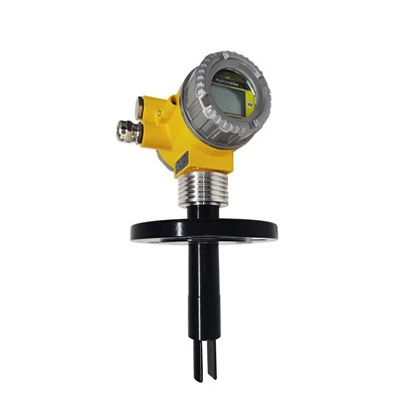
One of the simplest ways to deal with foam is to install the capacitive level meter at the right location. Try to place the sensor below the foam layer. This way, it can directly measure the level of the liquid without being affected by the foam on the surface. For example, if you're using a rod-type capacitive level gauge like the one described in Level switch capacitance, make sure it's long enough to reach below the foam.
Another option is to use a shielded sensor. A shielded capacitive level sensor can help reduce the influence of the foam. The shield acts as a barrier, preventing the foam from interfering with the capacitance measurement between the electrodes. Capacitive liquid level sensor for liquid level monitoring often come with shielding options that can be quite effective in dealing with foam.
You can also consider using anti - foam agents. These are chemicals that can break down the foam in the tank. By reducing the amount of foam, you can improve the accuracy of the capacitive level meter. However, you need to be careful when using anti - foam agents. Make sure they are compatible with the liquid in the tank and won't cause any chemical reactions that could damage the tank or the level meter.
In some cases, you might want to use signal filtering techniques. Most modern capacitive level meters have built - in signal processing capabilities. You can set up filters to smooth out the readings and eliminate the noise caused by the foam. For example, you can use a moving average filter, which calculates the average of a series of readings over a certain period. This can help reduce the fluctuations in the readings caused by the foam.
If the foam problem persists, you could think about using a different type of level measurement technology in combination with the capacitive level meter. For instance, you could use a ultrasonic level sensor to get an overall idea of the level in the tank and then use the capacitive level meter for more accurate measurements in the liquid phase. This way, you can cross - check the readings and get a more reliable indication of the liquid level.
Now, let's talk about maintenance. Regular maintenance of the capacitive level meter is crucial when dealing with foam. Foam can leave residue on the sensor, which can affect its performance over time. Make sure to clean the sensor regularly according to the manufacturer's instructions. You can use a mild detergent and a soft cloth to clean the sensor surface.
When it comes to choosing a capacitive level meter, it's important to select one that is designed to handle foam. Some manufacturers, like the Chinese factory manufacturing capacitor level gauge, offer models that are specifically engineered to be more resistant to the effects of foam. These meters may have special coatings or electrode designs that help minimize the influence of foam.
In conclusion, dealing with the influence of foam on a capacitive level meter requires a combination of proper installation, the use of appropriate technology, and regular maintenance. By following these tips, you can significantly improve the accuracy of your level measurements and avoid the problems associated with foam.
If you're having trouble with foam and your capacitive level meter, or if you're looking for a new level meter that can handle foam better, don't hesitate to get in touch. We're here to help you find the best solution for your specific needs. Whether you need advice on installation, want to learn more about our products, or are ready to place an order, we're just a message away. Let's work together to ensure you get accurate and reliable level measurements.
References
- General knowledge of capacitive level meter technology and foam interference
- Manufacturer's guidelines for capacitive level meters and related products