Can an Admittance Level Switch be used for powder level measurement?
Leave a message

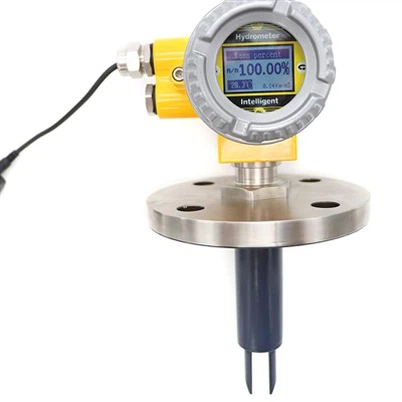
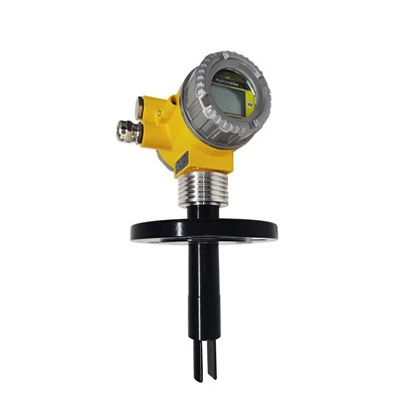
Hey there! As a supplier of Admittance Level Switches, I often get asked if these nifty devices can be used for powder level measurement. Well, let's dive right in and explore this topic.
First off, what exactly is an Admittance Level Switch? An Admittance Level Switch is a device that detects the presence or absence of a material at a specific point in a container. It works based on the principle of admittance, which is a measure of how easily an alternating current can flow through a circuit. In the context of level measurement, the switch senses changes in the admittance between its probe and the surrounding environment, which are caused by the presence or absence of the material being measured.
Now, when it comes to powder level measurement, things get a bit more interesting. Powders have different properties compared to liquids, and these properties can affect the performance of an Admittance Level Switch.


One of the key factors to consider is the dielectric constant of the powder. The dielectric constant is a measure of how well a material can store electrical energy in an electric field. Different powders have different dielectric constants, and this can impact the sensitivity of the Admittance Level Switch. For example, some powders may have a very low dielectric constant, which means they don't interact strongly with the electrical field generated by the switch's probe. In such cases, the switch may need to be adjusted or a different type of probe may be required to ensure accurate measurement.
Another important consideration is the bulk density of the powder. Bulk density is the mass of the powder per unit volume. Powders with a low bulk density may be more prone to dust formation and may not provide a consistent contact with the switch's probe. This can lead to inaccurate readings or false alarms. On the other hand, powders with a high bulk density may be more compact and may provide a better electrical connection with the probe, resulting in more reliable measurements.
The flowability of the powder is also a crucial factor. Some powders flow easily, while others tend to stick together or form bridges. If the powder has poor flowability, it may accumulate around the switch's probe, causing it to give false readings. In such cases, it may be necessary to install the switch in a location where the powder is more likely to flow freely or to use additional equipment to ensure proper flow.
Despite these challenges, an Admittance Level Switch can be a viable option for powder level measurement in many applications. For example, in industries such as food processing, pharmaceuticals, and chemicals, where powders are commonly used, Admittance Level Switches can provide reliable and accurate level detection. They can be used to monitor the level of powders in hoppers, silos, and other storage containers, helping to prevent overfilling or running out of material.
Let's take a look at some real-world examples. In a food processing plant, an Admittance Level Switch can be used to monitor the level of flour in a hopper. By detecting when the flour reaches a certain level, the switch can trigger an alarm or signal the need for a refill. This helps to ensure a continuous supply of flour for the production process and prevents costly downtime.
In a pharmaceutical manufacturing facility, an Admittance Level Switch can be used to measure the level of powder in a blending vessel. By accurately monitoring the powder level, the switch can help to ensure that the correct amount of powder is added to the blend, resulting in consistent product quality.
Now, you might be wondering how an Admittance Level Switch compares to other types of level measurement devices for powders. There are several other options available, such as ultrasonic level sensors, radar level sensors, and capacitance level sensors. Each of these devices has its own advantages and disadvantages, and the choice of which one to use depends on the specific application requirements.
Ultrasonic level sensors work by emitting ultrasonic waves and measuring the time it takes for the waves to bounce back from the material surface. They are non-contact sensors, which means they don't come into direct contact with the powder. This makes them suitable for applications where the powder is sticky or abrasive. However, ultrasonic sensors may be affected by dust, temperature, and humidity, which can reduce their accuracy.
Radar level sensors use radar waves to measure the distance to the material surface. They are also non-contact sensors and can provide accurate measurements in a wide range of applications. Radar sensors are less affected by dust, temperature, and humidity compared to ultrasonic sensors, but they can be more expensive.
Capacitance level sensors work by measuring the change in capacitance between two electrodes due to the presence of the material. They are simple and reliable sensors that can be used for powder level measurement. However, capacitance sensors may be affected by the dielectric constant and moisture content of the powder, which can require calibration and adjustment.
In comparison, an Admittance Level Switch offers several advantages. It is a relatively simple and cost-effective device that can provide reliable level detection in a wide range of applications. It can be used in both conductive and non-conductive powders, and it is less affected by dust and moisture compared to some other types of sensors. Additionally, Admittance Level Switches can be easily installed and maintained, making them a popular choice for many industries.
If you're in the market for an Admittance Level Switch for powder level measurement, we've got you covered. Our Admittance Level Switches are designed to provide accurate and reliable level detection in a variety of applications. We also offer a range of Industrial liquid level switch for liquid level measurement and RF admittance level transmitter for measuring fly ash material level for specific applications.
If you have any questions or need more information about our products, feel free to reach out to us. We'd be happy to discuss your requirements and help you find the right solution for your powder level measurement needs. Whether you're a small business or a large industrial facility, we're committed to providing you with high-quality products and excellent customer service. So, don't hesitate to contact us and let's start a conversation about how we can help you with your level measurement challenges.
References
- "Level Measurement Handbook" by Endress+Hauser
- "Process Instrumentation and Control Handbook" by Betty L. Oppenheimer