
Vibration-Type Online Viscometer for Surface Sizing Starch
Leave a message
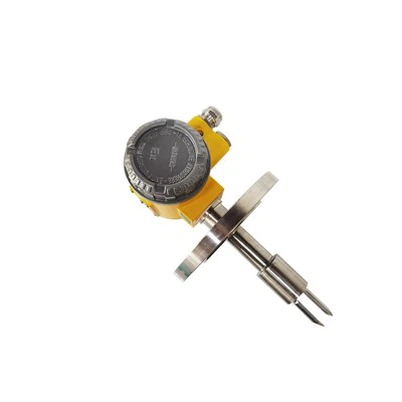
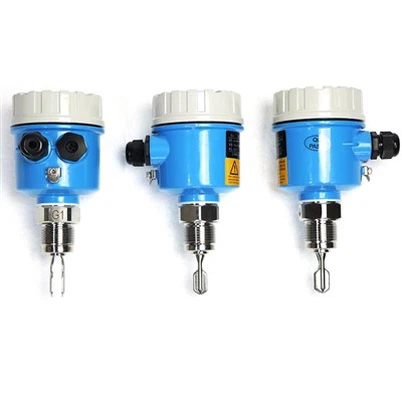
How it works. A small vibrating plate or fork is driven at constant frequency. As fluid viscosity changes, the drive current needed to hold constant amplitude changes with it, and viscosity is calculated from that current. No bearings, no rotating spindle, no dynamic seal in the fluid.
Nothing to seize. Starch gel wraps around spindles and hardens in bearing gaps, so a rotating inline viscometer in this service needs frequent cleaning and seal replacement. The vibration sensor has only a smooth plate and a fixed stem in contact with the fluid. No crevice for gel to collect. Cleaning means pulling the flange and rinsing with water.
It follows gelatinization in real time. Starch viscosity climbs sharply as it gelatinizes after cooking. A rotating spindle lags or stalls once gel forms around it. The vibrating plate disturbs the sample very little and tracks the sol-to-gel transition as it happens, so the operator sees whether the starch has cooked to target without waiting for a lab sample.
Low thermal mass. The small sensing plate does not create a cold spot or dead zone in a hot insulated line.

What buyers should know. A vibration viscometer does not reproduce a laboratory rotational reading. For non-Newtonian fluids the vibration reading is typically significantly lower than a coaxial cylinder rotational instrument, because particles and polymer chains may not follow the high-frequency motion of the vibrating element. Sizing starch is that kind of fluid. Treat the instrument as a process consistency indicator, not a copy of the offline value. The transmitter does not need to display 22 cP. It needs to show that today's batch behaves the same as yesterday's under the same pipe conditions. Once the reading is correlated with sizing performance - ring crush, water absorption, pick resistance - that trend becomes a reliable control signal.
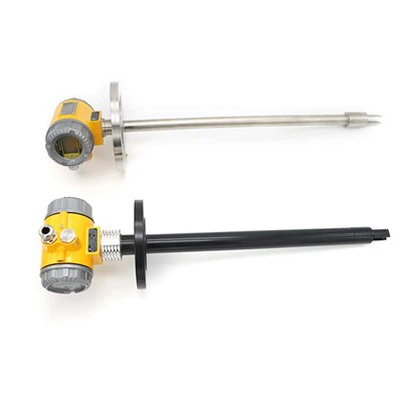
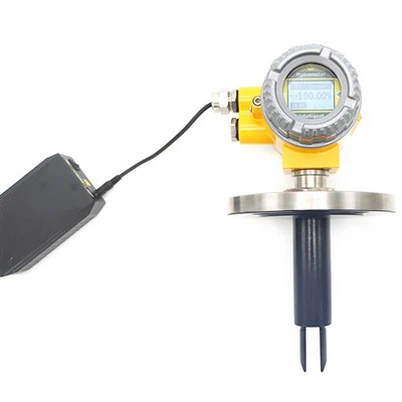
Specification notes. Wetted material 316L stainless steel minimum. Temperature rating above the maximum line temperature with margin. A 0–500 cP range gives headroom for sizing starch. Use a 2" ANSI 150# flange or sanitary clamp so the probe comes off without tools for rinsing. Output 4–20 mA to DCS; a second temperature output helps trend comparison. A local display visible to the patrol operator saves opening the DCS screen. Match insertion length to pipe size and avoid an unsupported cantilever in high flow.
Two installation notes. Mount the probe in a straight run, away from elbows and valves, fully immersed. Put a rinse water connection near the sensor flange so the probe can be flushed right after shutdown, before residual starch dries.
Inline viscosity monitoring of surface sizing starch is less about absolute accuracy and more about whether the instrument keeps measuring week after week. The vibration design trades a laboratory-style reading for no moving parts, high-temperature tolerance, and easy rinse cleaning. When comparing options, ask for the wetted material certificate, the temperature rating, and a clear statement of how the vibration reading relates to rotational laboratory values.