What is the difference between a Tuning Fork Level Switch and a capacitance level switch?
Leave a message

Hey there! As a supplier of Tuning Fork Level Switches, I often get asked about the differences between Tuning Fork Level Switches and Capacitance Level Switches. So, I thought I'd write this blog to break it all down for you.
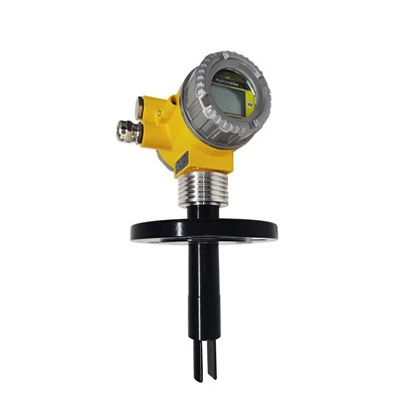
Let's start with the Tuning Fork Level Switch. It's a pretty nifty device. The basic principle behind it is vibration. The tuning fork vibrates at its natural frequency when it's in air. But when it comes into contact with a liquid or solid material, the vibration changes. This change in vibration is detected by the switch, which then triggers an output signal.
One of the biggest advantages of a Tuning Fork Level Switch is its reliability. It's not affected by things like foam, bubbles, or changes in the dielectric constant of the material it's measuring. This makes it great for a wide range of applications, from simple liquid level detection in tanks to more complex solid level monitoring in silos.
For example, if you're dealing with a liquid that tends to foam, a capacitance level switch might give false readings because it relies on the dielectric properties of the liquid. But a Tuning Fork Level Switch will just keep on truckin', accurately detecting the actual liquid level.
Another cool thing about Tuning Fork Level Switches is their versatility. You can get them in different sizes and materials to suit different applications. Whether you're working with corrosive chemicals or food products, there's a Tuning Fork Level Switch that's right for you. And if you're looking for a Tuning Fork Switch With Alarm, you can check out this Tuning Fork Switch With Alarm page on our website.
Now, let's talk about Capacitance Level Switches. These switches work based on the change in capacitance between an electrode and the container wall or another reference point. When the level of the material (liquid or solid) changes, the capacitance changes, and the switch detects this change and sends a signal.
Capacitance Level Switches are often used in applications where the material has a relatively stable dielectric constant. They can be quite accurate in these situations, but they do have some limitations. For instance, they can be affected by build-up on the electrode. If the material starts to stick to the electrode, it can change the capacitance reading and lead to inaccurate level measurements.
They're also not the best choice for materials with a lot of foam or bubbles. The foam can interfere with the capacitance measurement, just like it can with some other types of level switches.


In terms of installation, Capacitance Level Switches can be a bit more tricky. You need to make sure the electrode is properly positioned and grounded to get accurate readings. And if you're dealing with a conductive material, you might need to use a special type of electrode to avoid short circuits.
On the other hand, Tuning Fork Level Switches are usually pretty easy to install. They can be mounted in different orientations, and you don't have to worry too much about things like grounding or electrode positioning.
When it comes to solid level detection, a Vibrating Fork Level Switch For Solids is a great option. It can handle all sorts of dry solids, from powders to granules. The tuning fork design allows it to easily penetrate the solid material and accurately detect the level.
Now, let's compare the cost. In general, Tuning Fork Level Switches tend to be a bit more expensive upfront than Capacitance Level Switches. But when you consider the long-term reliability and lower maintenance requirements, they can actually be a more cost-effective choice in the long run. You won't have to worry about replacing parts as often or dealing with inaccurate readings that could lead to costly mistakes.
In terms of response time, Tuning Fork Level Switches are usually pretty fast. They can quickly detect changes in level and send a signal. Capacitance Level Switches can also have a fast response time, but it can be affected by factors like the type of material and the amount of build-up on the electrode.
So, to sum it all up, if you're looking for a reliable, versatile, and easy-to-install level switch that can handle a wide range of materials and conditions, a Tuning Fork Level Switch is probably the way to go. But if you're working with a material that has a very stable dielectric constant and you're not too worried about things like foam or build-up, a Capacitance Level Switch might be a good option for you.
If you're still not sure which type of level switch is right for your application, don't hesitate to reach out. We're here to help you make the best choice for your needs. Whether you're a small business or a large industrial operation, we can provide you with the right level switch and the support you need.
We've got a team of experts who can answer all your questions and help you with installation and maintenance. So, if you're ready to take the next step and start using a high-quality Tuning Fork Level Switch, get in touch with us today. We're looking forward to working with you and helping you solve your level detection challenges.
References
- General knowledge of level switch technology and industry standards.